
Andy Burnham entered Downing Street promising a decade of national renewal. Yet before he can reshape Britain’s economy, rebuild public services or reform Westminster, he inherits a geopolitical reality that offers little room for reinvention.
Ukraine will become one of the defining tests of his premiership.
The temptation for any incoming government facing weak growth, strained public finances and mounting domestic expectations is to narrow its horizons.
Voters understandably care most about living standards, taxation and the NHS. But foreign policy rarely waits for governments to settle in.
The war on Europe’s eastern frontier has entered a dangerous new phase.
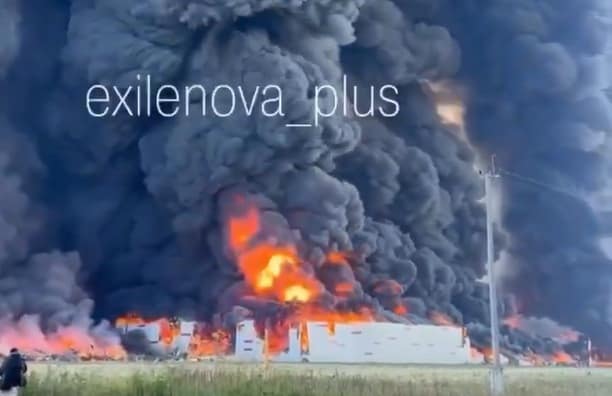
Ukraine is intensifying long-range strikes against Russian military logistics while Moscow continues to test Western resolve through attritional warfare.
At the same time, questions over defence spending are rising across NATO as allies prepare for what could become a prolonged confrontation with Russia.
For Burnham, the strategic dilemma is unavoidable.
His domestic programme points towards a more interventionist state, greater investment in public services and substantial regional regeneration. Those ambitions will compete directly with rising defence commitments for finite public resources.
That creates an uncomfortable political reality. Supporting Ukraine is no longer simply a question of military assistance. It is increasingly a question of fiscal priorities.
Every additional commitment to Kyiv must now compete with demands for housing, transport, welfare and industrial investment at home. The politics of solidarity become more difficult when governments are asking taxpayers to finance multiple competing priorities simultaneously.
Yet the cost of retreat could prove far greater.
A weakened Western commitment would not simply affect Ukraine. It would reshape Europe’s security environment for decades. Russia’s leadership has consistently demonstrated that strategic patience is one of its greatest assets. The Kremlin understands that democratic governments often struggle to sustain public support through long conflicts, particularly when economic conditions deteriorate.
This is where Britain’s leadership matters.
London has played an outsized role in supporting Kyiv since the invasion began, helping to shape allied policy and demonstrating that medium-sized powers can still exercise significant international influence. Abandoning that role would diminish Britain’s diplomatic weight at precisely the moment Burnham argues the country should regain international credibility.
The challenge is therefore not whether Britain should continue supporting Ukraine. It is whether Burnham can persuade voters that national security and economic renewal are complementary rather than competing objectives.
History suggests they are.
European stability has long been one of the foundations upon which British prosperity has depended. Allowing Russia to redraw borders through force would almost certainly require far greater military expenditure in future, while increasing economic uncertainty across the continent.
Putin’s strategy has never relied solely upon battlefield victories. It also depends upon convincing Western electorates that the costs of resisting Russia eventually outweigh the benefits.
That calculation has yet to succeed. Burnham now faces the responsibility of ensuring it remains unsuccessful.
His first months in office will inevitably be dominated by budgets, taxation and domestic reform. But one measure of his premiership may ultimately be whether Britain retains the strategic consistency that has characterised its support for Ukraine since 2022.
For Kyiv, continuity matters.
For Moscow, any sign of hesitation would be interpreted as opportunity. The battlefield remains in Ukraine. But one of the war’s most consequential political contests has quietly moved to Downing Street.


Leave a Comment