
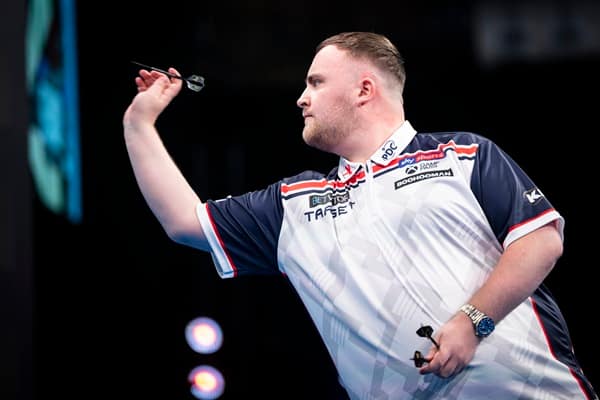
On the first Wednesday of 2024, the most watched programme on Sky Sports was two men throwing darts at a board. More than 4.8 million viewers followed the World Championship final between Luke Humphries and 16-year-old Luke Littler, peaking at 3.71 million, a record for the sport on the broadcaster.
Two years on, the question for anyone in the sports business is whether that night was a freak result. The numbers say it was the start of something bigger.
Growth you can measure
Let’s start with the prize money. When Littler returned to Alexandra Palace in December 2025 to defend his world title, the total fund had doubled to £5 million and the winner’s share to £1 million, the largest individual prize in the sport’s history. He collected it too, beating Dutch challenger Gian van Veen 7-1 in the final. Even the runner-up walked away with £400,000. At 18, Littler already holds two world titles and a level of mainstream recognition darts has never produced before.
The tournament itself grew with him. The field expanded from 96 to 128 players, which meant more sessions, more tickets and considerably more live broadcast hours.
What sponsors are really buying
Audience growth on that scale changes the commercial conversation. Darts gives brands something linear television now struggles to deliver: long stretches of live content, a young and vocal crowd, and title rights that put a sponsor’s name on the event itself. Advertisers chasing the under-35 audience have noticed that a darts session behaves less like a sports fixture and more like a night out that happens to be televised.
The title deals across the PDC calendar reflect that logic. The Grand Slam of Darts, which brings the sport’s biggest names to Wolverhampton each November, has carried the name of online casino brand MrVegas since 2023, and the partnership was extended in January 2026 to cover the Nordic Darts Masters as well. For an entertainment brand, an arena full of fancy dress and singalongs, with millions more watching at home, is about as precise a sponsorship match as the market offers. Deals like these also tell us how rights holders price momentum. A property with rising audiences and a bankable young star can renew on better terms every cycle, and the PDC has been doing exactly that.
A capacity problem of the good kind
Demand is now running ahead of supply, which is the kind of problem most rights holders would pay to have. The PDC’s answer, announced in December 2025, is to keep the World Championship at Alexandra Palace until 2031 while moving it into the venue’s larger Great Hall. Total tournament capacity rises to around 180,000 fans, an increase of more than 70,000, with individual sessions holding over 5,000 people.
There is a lesson here for the wider industry. The darts boom was built on cheap production, affordable tickets, a genuine once-in-a-generation talent and a format that treats entertainment as the product rather than a by-product. None of that required a streaming giant or a sovereign wealth fund. British sport spent years treating darts as an afterthought; the sport has answered by becoming one of the country’s most reliable live entertainment businesses.
The next five years will test whether the growth survives its own success, and on current evidence the arrows are still landing where the PDC aims them.
Please play responsibly. For more information and advice visit https://www.begambleaware.org
Content is not intended for an audience under 18 years of age



Leave a Comment