
Prime Minister accused of handing successor an ‘unexploded bomb’ that could force tax rises or spending cuts within weeks of entering Downing Street
Andy Burnham could be forced into painful tax rises or deep spending cuts in his first Budget after Sir Keir Starmer was accused of leaving behind a multi-billion-pound hole in his flagship defence spending plans.
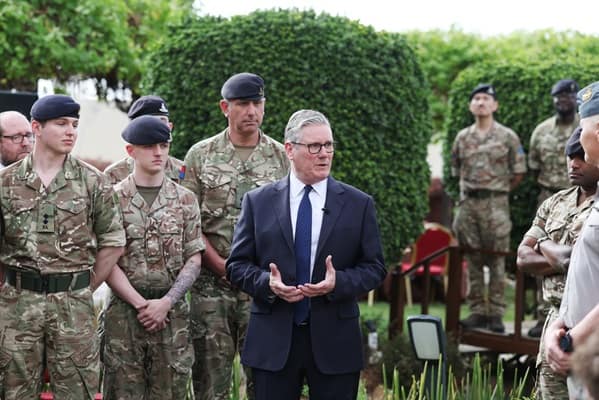
The row erupted after the outgoing Prime Minister unveiled his long-delayed Defence Investment Plan, promising an extra £15 billion a year for Britain’s Armed Forces as he sought to cement his national security legacy.
But buried in accompanying Treasury documents was a crucial detail.
Only £10.3 billion of the promised increase has actually been funded.
The remaining £4.7 billion has been deferred until Budget 2026, leaving whoever occupies Number 11 after Labour’s leadership transition to find the money.
The revelation has fuelled accusations that Sir Keir has handed his likely successor an expensive political headache just weeks before leaving office.
One Conservative source branded the move a “delayed-action poison pill”, warning the financial burden had simply been kicked into the future.
This is going to be a headache for Burnham and his new Chancellor,” they said.
According to reports, Mr Burnham was briefed on the Defence Investment Plan before it was published but allies claim they were not informed that almost a third of the promised funding had yet to be identified.
One figure close to the Burnham camp reportedly described the missing billions as an “unexploded bomb”, while a defence insider questioned why months of negotiations had still left such a large funding gap unresolved.
“It is madness after all that wrangling to have left a £4.7 billion black hole for someone else to fix,” the source said.
The dispute comes at a particularly sensitive moment.
Britain faces growing pressure to increase defence spending as Russia’s war in Ukraine continues and NATO urges members to strengthen military investment.
Starmer’s Defence Investment Plan was presented as the government’s answer to those challenges, with billions earmarked for drones, autonomous weapons, missiles and new military technologies.
However, critics argue that announcing spending without fully funding it simply transfers difficult decisions to the next government.
Treasury officials have sought to play down the controversy.
Sources insisted it is common practice for governments to announce long-term spending plans before final funding decisions are made at the next fiscal event.
Luke Pollard, Minister for Defence Readiness, defended the approach, arguing that leaving part of the funding until the autumn Budget followed established government practice.
But political opponents remain unconvinced.
Shadow Home Secretary Chris Philp accused the outgoing Prime Minister of leaving behind what he described as a “toxic legacy.
He claimed a third of the additional defence spending had no identified source of funding and argued the overall package still fell well short of what Britain’s Armed Forces require.
The financial dilemma now facing Mr Burnham is becoming increasingly clear.
He could choose to raise taxes, cut spending elsewhere or increase borrowing to fill the gap.
Each option carries significant political and economic risks.
Higher borrowing could unsettle financial markets already watching Labour’s transition closely, while tax rises or spending cuts would almost certainly dominate the new Prime Minister’s first Budget.
What was intended to be Sir Keir Starmer’s final statement on Britain’s security may instead become one of the first major political battles confronting the man expected to replace him.


Leave a Comment