
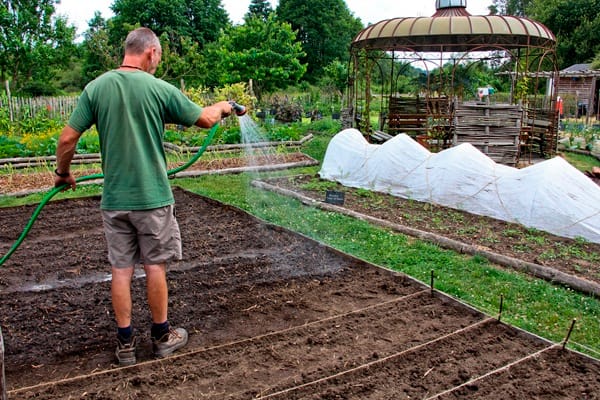
Millions of households across southern England will face tighter water restrictions from next week after South East Water expanded its hosepipe ban to four more counties, underlining the mounting strain that another exceptionally dry summer is placing on the region’s water resources.
The utility said customers in Sussex, Surrey, Hampshire and Berkshire will join those already subject to restrictions in Kent, with the latest temporary use ban taking effect at 12.01am on July 25.
The move follows one of the driest sustained periods in decades. Central and south-east England recorded more than two weeks without measurable rainfall between July 2 and July 15, the longest such spell since the 1990s, while repeated heatwaves have driven water demand sharply higher.
For South East Water, which supplies drinking water to around 2.3 million customers, the restrictions are designed to slow demand while protecting rivers, reservoirs and underground aquifers that have come under increasing environmental pressure.
In a statement, the company said lower-than-average rainfall combined with sustained hot weather had caused river levels to fall and groundwater reserves to decline.
Taps run dry, cash runs out as South East Water’s financial fault line exposed
Due to lower than average rainfall, continued hot weather and high demand, we’ve started to see a decline in river levels and need to protect some groundwater sources,” the company said.
The utility urged customers across the newly affected counties to begin complying with the restrictions immediately to safeguard supplies through the remainder of the summer.
The reasons for the restrictions differ slightly across the region but point to the same underlying challenge: reduced natural replenishment of water supplies during an unusually prolonged dry spell.
In Sussex, South East Water said it had been forced to suspend abstraction from the River Cuckmere because flows had fallen too low, leaving greater reliance on the Arlington Reservoir.
According to the company, the county has received only 55 per cent of its average rainfall since March, while forecasts offer little prospect of significant rainfall in the coming weeks.
“The river level of the Cuckmere means we have had to pause taking water from it, so we can protect it,” South East Water said.
That means Arlington Reservoir has dropped to a level where our Drought Plan states we must introduce these temporary restrictions.
In Surrey, Hampshire and Berkshire, the principal concern centres on reduced flows in the River Thames alongside mounting stress on groundwater aquifers.
The company said lower river levels required it to reduce the volume of water extracted for treatment, while underground sources also needed protection after months of below-average rainfall and three successive heatwaves.
Those areas have received only 64 per cent of their typical rainfall since March, according to the utility.
Despite the restrictions, South East Water stressed that its principal reservoirs remain comfortably above the critically low levels seen during previous drought periods.
Data collected on July 12 showed Ardingly Reservoir operating at 77 per cent capacity, while Arlington Reservoir stood at 79.9 per cent.
By comparison, during October 2025 the reservoirs fell to 24.6 per cent and 45.5 per cent respectively, their lowest recorded levels in recent years.
Together, the two reservoirs can store approximately 8.3 billion litres of water and account for around 8 per cent of the company’s drinking water supply.
South East Water said reservoir levels naturally decline through the summer before recovering during the wetter autumn and winter months.
However, the expansion of hosepipe restrictions highlights the growing challenge facing water companies as climate variability increases the frequency of prolonged dry spells across southern England. With rainfall remaining scarce and temperatures expected to stay elevated, utilities are seeking to balance customer demand with the need to protect increasingly fragile river ecosystems and groundwater reserves throughout the peak summer season.


Leave a Comment