
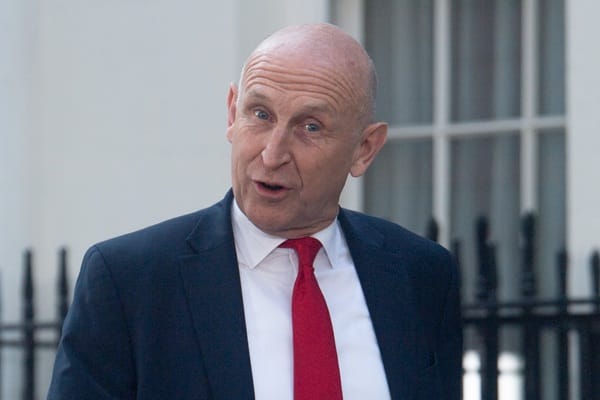
Half of small businesses have raised prices to offset mounting costs, while shop-front retailers are cutting staff hours and shedding jobs as Chancellor John Healey prepares to deliver his first Budget on Wednesday.
Britain’s small businesses are holding their nerve ahead of the Budget, but rising operating costs and uncertainty over government policy are increasingly shaping decisions on prices, staffing and investment.
Research by small business insurer Simply Business, based on a survey of 1,464 owners conducted between September 30 and October 7, found that 50 per cent had raised prices to offset higher costs. A further 44 per cent said they had absorbed the increases rather than pass them on to customers.
Supplier and raw material costs were the most frequently cited pressure, identified by 42 per cent of respondents as one of their two biggest cost increases. Energy bills followed at 36 per cent, while 19 per cent pointed to tax and regulatory compliance.
The strain appears particularly acute among businesses operating from physical premises. Six in 10 shop-front businesses surveyed said the revaluation of rateable values had affected them. Among those affected, 35 per cent had raised prices, 14 per cent had reduced employee hours and 13 per cent had made staff redundant.
Shop-front businesses were also more than three times as likely as those without a shop front to identify employment and payroll costs among their two biggest rising expenses: 35 per cent compared with 11 per cent.
The findings highlight the difficult choices facing smaller employers as they approach a Budget that could influence their costs and confidence in the months ahead. Raising prices risks deterring customers, while absorbing higher expenses can squeeze already pressured margins. Cutting hours or jobs offers another means of managing costs, but risks limiting businesses’ capacity to grow.
Despite the pressures, 45 per cent of owners said they were confident about their prospects over the next 12 months. Almost as many, however, remained uncertain, at 42 per cent.
The survey adds to Simply Business’s September SME Insights Report, which identified an unpredictable economy and financial uncertainty as a leading challenge for 48 per cent of owners. Uncertain or weak consumer demand was cited by 41 per cent, while 35 per cent highlighted high running costs.
For Healey, the figures offer a snapshot of the pressures facing smaller firms as he prepares his first Budget. Businesses are continuing to operate, but their decisions increasingly reflect the cost of doing so — and uncertainty about what comes next.
Julie Fisher, UK CEO at Simply Business, said: “The Autumn Budget is a golden opportunity for the new Chancellor to signal his support for the UK’s 5.7 million small businesses and place them at the heart of our economy’s growth plan.
“The message from small business owners is clear – they remain confident, but urgent support in key areas and a greater emphasis on long-term stability are needed if they are to fulfil their potential. From our research, 65% say political policy shifts are directly affecting their ability to plan. Without the stability needed to confidently invest in their business they are having to scale back their growth – whether that’s hiring employees or planning an expansion.
“These challenges are being further compounded by rising operational costs. Half of small businesses have raised their prices to offset these increases, and almost as many have absorbed them (44%). Taking a look at where costs are creeping up, supplier and raw material costs (42%) and energy bills (36%) were most often named as one of the two business expenses that had risen the most in the last 12 months.
“There have been positive indicators in recent months with support measures announced across business rates for pubs and bars, but the high street is an ecosystem. Among the bricks and mortar businesses we surveyed, 60% say the revaluation of rateable values has affected them. Of those, over a third have raised prices, one in seven (14%) have reduced employee hours and one in eight (13%) have made the hard decision to let employees go. These businesses also face a further cost disparity: employment and payroll costs were named as one of the two biggest cost rises by 35%, more than three times the rate for businesses without a shop front (11%). Support should reach beyond pubs, alongside structural reform so owners are not left guessing what next year’s bill will look like.
“The VAT cut on electricity is another welcome move, including for the many owners who work from home. Extending it beyond March, and opening it up to more of the smallest businesses who currently pay the full rate, would give owners valuable breathing space.
“These announcements are all steps in the right direction but it’s clear that the community needs long term support measures and less frequent policy changes if they are to thrive. Given the right conditions small businesses can plan for the future, creating jobs and driving the growth the government wants to see.”


Leave a Comment