
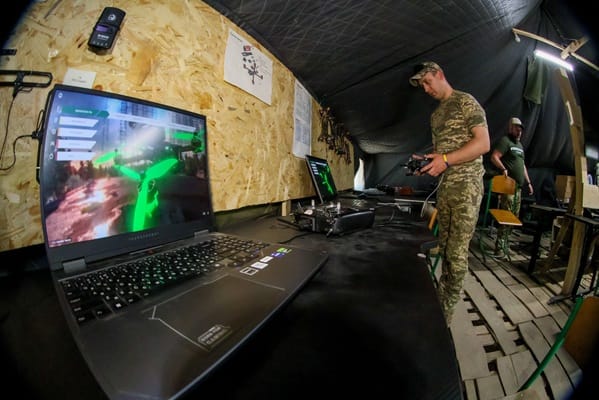
Colombian drug cartels are allegedly sending fighters to Ukraine disguised as foreign volunteers in a bid to learn advanced drone warfare techniques before bringing the deadly skills back to criminal battlefields, according to reports.
The Financial Times reported that Colombian criminal groups have made repeated attempts over the past year to send members to Ukraine’s armed forces, where they can gain frontline experience operating sophisticated military drones.
Security officials and humanitarian workers have warned that the recruitment efforts could allow organised crime groups to acquire battlefield technology developed during one of the world’s most intense modern conflicts.
“The recruitment schemes are very complex, but what worries me most is the level of specialisation they’re acquiring,” a Colombian humanitarian worker in Ukraine told the newspaper.
The individual claimed former paramilitaries, guerrillas and soldiers were learning alongside one another, gaining expertise in drone operations that could later be transferred to criminal organisations.
Ukraine’s military says it is aware of the threat and has introduced screening measures to identify suspicious recruits.
Taras Palianytsia, an officer at Ukraine’s Foreign Recruiting Centre, said individuals suspected of attempting to gain military knowledge for criminal purposes had been detected, rejected and returned home.
However, he stressed that many Colombian volunteers serving with Ukraine had proven highly capable fighters.
“The Colombians can learn and adapt really quickly and withstand the difficult conditions of service,” he said.
The growing interest from criminal groups reflects the rapid transformation of warfare caused by drones. Ukraine’s battlefield has become a testing ground for low-cost but highly effective unmanned weapons, particularly first-person-view (FPV) drones capable of striking targets with devastating precision.
Colombian security officials are increasingly concerned that cartels could use Ukrainian battlefield lessons to overcome existing counter-drone defences.
Among the technologies reportedly attracting interest are encrypted drone communications, methods for attaching explosive charges and fibre-optic-controlled drones that are resistant to electronic warfare systems.
Colombian armed forces have previously relied heavily on electronic jamming and other countermeasures, successfully neutralising the majority of attempted drone attacks. Criminal groups are now seeking ways to bypass those protections.
One Colombian drone operator fighting in Ukraine said criminal groups lacked expertise in areas such as securing communications and configuring explosive payloads — skills that could be learned on the battlefield.
Security analysts warn that preventing the spread of advanced military knowledge to international criminal networks will become an increasing challenge as drone warfare expands.
The Ukraine war has demonstrated how rapidly drone technology can evolve — and officials fear the lessons learned on Europe’s battlefield could eventually be exploited far beyond the conflict zone.


Leave a Comment