
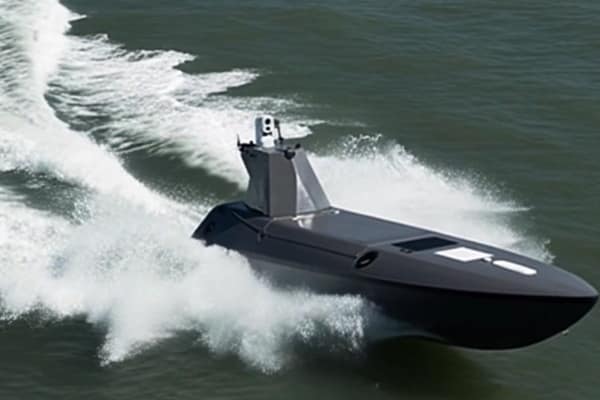
Britain’s attempt to build a new generation of military drones has been hit by a potentially serious security breach after Chinese-made cameras fitted to Royal Navy surveillance vessels were found transmitting routine signals to an internet address in China.
The cameras were installed on K3 Scout uncrewed surface vessels operated by the Royal Marines since March.
The £12 million fleet forms part of the Navy’s drive to integrate autonomous systems into frontline operations and was reportedly being prepared for missions in the Gulf, including efforts to protect shipping through the Strait of Hormuz.
A security investigation discovered that the cameras generated so-called “heartbeat communications” — signals indicating that the equipment remained connected and operational — to an IP address in China. The Ministry of Defence subsequently removed the cameras’ internet connectivity.
The discovery raises an uncomfortable question for Britain’s defence establishment: how much confidence can be placed in equipment described as British when critical components originate in opaque overseas supply chains?
Defence officials reportedly fear the cameras may have operated around sensitive facilities and meetings involving members of the Special Boat Service. There were also concerns over whether the equipment could continue recording when the vessels themselves were switched off.
The Real Scandal Behind Britain’s Compromised Drone Fleet
The Royal Navy’s compromised vessels appear to be Kraken Technology K3 Scout uncrewed surface vessels, modular drone boats designed for surveillance and maritime reconnaissance. The exact camera model involved has not… https://t.co/yeatLudczi pic.twitter.com/2BM6cUy6Jg
— EndGame Macro (@onechancefreedm) August 10, 2026
The MoD said there was no evidence that classified information, military systems or sensitive data had been accessed or transmitted overseas. It described the vulnerability as having been identified through a routine cyber-security assessment.
Kraken Technology Group, the British contractor behind the vessels, said some third-party cameras contained a limited number of components manufactured outside Britain. Following an audit with the Royal Navy, the company said it was confident no sensitive information had been disclosed and that the vulnerabilities had been closed.
But the episode exposes a wider strategic vulnerability.
Britain is spending billions on autonomous warfare while simultaneously relying on international supply chains for the electronics that make those systems work. China’s dominance in advanced manufacturing means that even equipment designed and assembled in Britain can contain components capable of creating unexpected security risks.
Alicia Kearns, the Conservative shadow security minister, said the incident raised fundamental questions about sovereignty.
“If we cannot say with confidence what is inside our own military equipment, we cannot say it is ours, or that we are sovereign,” she said.
The political sensitivity is heightened by the government’s parallel effort to improve relations with Beijing.
For Britain’s defence planners, the lesson is stark. A drone does not have to be hacked to become a security liability. Sometimes the vulnerability is already sitting inside it when it leaves the factory.


Leave a Comment