
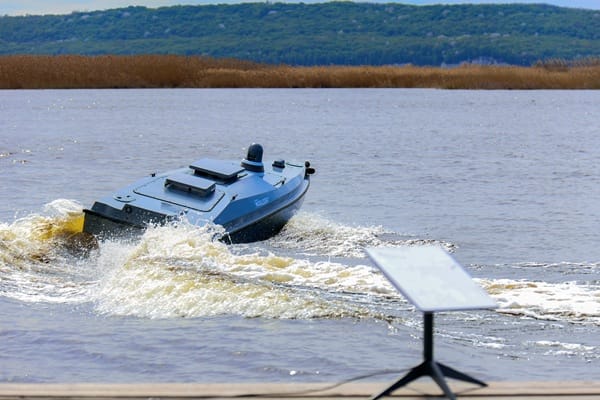
Ukrainian military units report cancelled operations after unexpected connectivity limits, intensifying concerns over Washington’s leverage, intelligence sharing and the future of American support as Russian missiles continue to strike Kyiv.
Ukraine’s battlefield operations have been disrupted by unexpected restrictions on Starlink satellite connectivity, with military units reporting cancelled drone missions and officials questioning whether the move is connected to the increasingly fraught political relationship between Kyiv and Washington.
Serhii “Flash” Beskrestnov, an adviser to Ukraine’s president, said on October 14 that SpaceX had introduced speed restrictions on Starlink terminals in motion overnight. The reported limit of 100 miles per hour, or 160 kilometres per hour, applied to the StarShield military service package, he said.
The consequences were already being felt on the battlefield. Ukraine’s 7th Air Assault Corps reported that drone operators in the Huliaipole sector had been forced to cancel several missions because of connectivity problems. A Ukrainian Defence Ministry source confirmed it had detected speed limitations and was investigating their cause.
The disruption threatens capabilities central to Ukraine’s war effort, including mid-range strike drones, interceptor drones used against Russian aerial attacks, reconnaissance, frontline logistics and communications relays. Kyiv’s mid-strike campaign has been designed to disrupt Russian supply lines and weaken Moscow’s ability to sustain operations at the front.
Read more related news:
British bosses given secret Whitehall briefings on Russian attacks
‘Absolutely unacceptable’: Bulgaria savages Moscow as a ship is sunk off NATO coast
NATO chief warns Russia we are ‘ready to fight tonight’ as ex-general raises conscription alarm
MI5 chief warns Britain faces ‘seismic shock’ as Russia prepares for years of confrontation
“Obviously, this action cannot be a coincidence and is associated with the current political situation,” Beskrestnov said, without providing evidence linking the restrictions to US pressure.
Serhii Sternenko, a Ukrainian activist and former adviser to ex-defence minister Mykhailo Fedorov, went further, suggesting that SpaceX had acted at the request of the Trump administration. Washington has not publicly confirmed such a connection, and the White House has not commented on the reported restrictions.
The suspicions come amid a turbulent diplomatic week. President Donald Trump has threatened to withhold intelligence and other assistance in an effort to persuade Ukraine to protect Russian oil refineries from attack. Kyiv has since refrained from striking those facilities, while Russian forces have continued their assault on Ukrainian energy infrastructure.
The reported Starlink restrictions have also raised fresh questions about intelligence sharing after two consecutive nights of Russian ballistic missile attacks on Kyiv, with limited or delayed warning for the first waves.
On October 12, five Russian S-400 missiles struck the capital shortly before air-raid alerts sounded. President Volodymyr Zelensky described the attack as “particularly vile”, saying Ukraine had received no early warning from its partners.
A further wave of ballistic missiles struck the following night. At least three women were killed and 24 people injured, including a seven-year-old girl, after a residential building was hit in Kyiv’s Desnianskyi district. Ukrainian officials said warnings had been received for subsequent waves, while Ukrainian and American sources told the Kyiv Independent that Washington had not decided to suspend intelligence assistance.
The uncertainty is particularly serious because Starlink has become a critical communications backbone for Ukrainian forces throughout the full-scale invasion. Earlier this year, Kyiv worked with SpaceX to disable unauthorised terminals used by Russian troops.
Now, any sustained disruption risks complicating Ukraine’s ability to coordinate operations at a moment when its access to Western intelligence and military support is under renewed scrutiny.
Sternenko accused Washington of applying pressure unevenly, saying Ukraine had not attacked Russian oil refineries while sanctions against Russia had been eased. His claim reflects growing frustration in Kyiv, but does not establish that the Starlink restrictions were ordered by the US government.
The central question remains unanswered: whether the reported limitations are a technical or operational measure, or part of a wider shift in the terms of American support. For Ukrainian commanders, however, the immediate concern is more concrete — whether the communications systems underpinning combat missions will remain dependable while Russian attacks continue.


Leave a Comment