
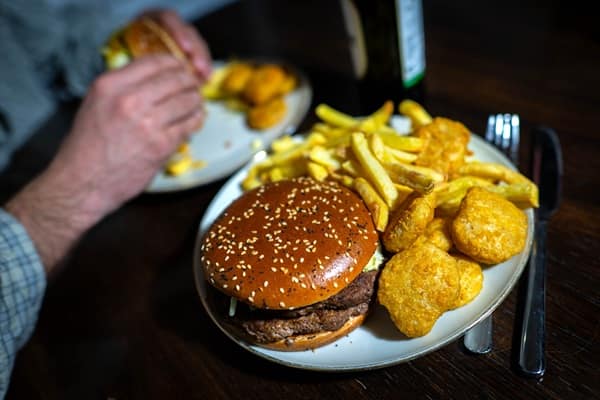
More than half of UK adults choose larger food portions when they believe they offer better value for money, highlighting how pressure on household budgets can influence eating habits as well as spending decisions.
A poll of 2,000 adults found that 51 per cent would choose a bigger portion if it appeared to be the better deal. A further 45 per cent said they would upgrade a meal, drink or snack when the additional cost was small, while 41 per cent believed meal deals encouraged people to consume more than they otherwise would.
The findings point to a broader tension between the economics of value and the amount of food people actually need. Larger portions have become increasingly common, potentially contributing to “portion distortion” — the tendency for bigger quantities to become normalised as an appropriate amount to eat in one sitting.
Hazel Shore, registered dietitian and SCOPE-certified obesity specialist at Phlo Clinic, the UK digital pharmacy that commissioned the research, said: “When the larger size costs only slightly more, the smaller one starts to feel like a waste of money. So price shapes how much we order before hunger has even entered the decision. That’s a rational response to household budgets under pressure. It just isn’t a reliable guide to how much anyone actually needs. Value tells you what you’re getting for your money, it tells you nothing about your appetite.
“Choosing the standard size can be the better buy. You’ve made one decision at the counter, rather than negotiating with yourself halfway through the meal, and there’s nothing to second-guess afterwards. It’s the same principle as not keeping certain foods in the house. You decide once, at the shop, rather than every evening. Making the decision in advance is far easier than making it while you’re looking at the food.”
Food waste is another factor shaping behaviour. Some 52 per cent of respondents said guilt about throwing food away led them to finish a portion even after they felt full, while 50 per cent regularly cleared their plates despite no longer being hungry.
The habit appears to have deep roots. Almost two-thirds, or 65 per cent, said they grew up being encouraged to “clean my plate”. That rose to 75 per cent among people aged 55 and over, compared with 50 per cent of 18 to 24-year-olds.
Shore said: “For many people, finishing everything on their plate is closely associated with avoiding waste and being sensible with money. These are understandable concerns, but continuing to eat when you feel comfortably full is not the only way to prevent food from being wasted.”
Despite 56 per cent believing they know the appropriate portion size for themselves, 41 per cent find serving guidance confusing and only 31 per cent regularly check recommended serving information on packaging.
Shore said becoming more portion-aware was not about “always choosing the smallest option”, but recognising when a deal was influencing the decision and considering whether extra food could be shared or saved for later.


Leave a Comment