
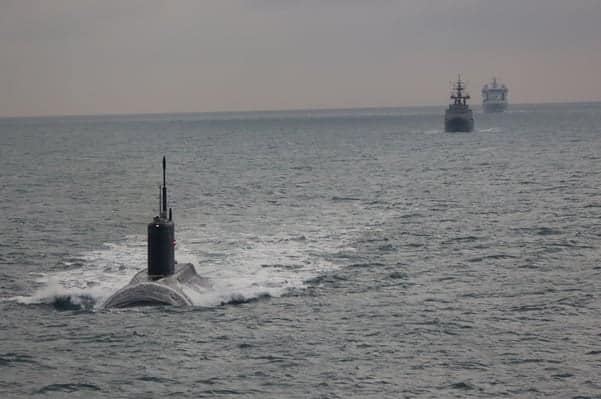
NATO allies disrupted a covert Russian naval operation in Arctic waters after detecting submarines training to deploy a new weapon designed to damage critical undersea cables, according to two Western officials familiar with the operation.
Russia’s Main Directorate of Deep-Sea Research, known as GUGI, conducted the exercise using deep-sea submersibles to simulate deploying what officials described as sophisticated technology capable of damaging critical infrastructure, such as the internet and banking, whilst leaving little evidence of an attack.
A joint operation involving Britain, Norway and the US tracked the Russian vessels and confronted them at sea, according to the officials, who spoke on condition of anonymity.
The Russian vessels were prevented from completing the exercise before eventually leaving the area, the Independent reported.
Read more related news:
Britain overhauls call-up rules as Russia and Argentina threatens UK
Zelensky’s plane ‘almost hit’ by a Russian drone
Russia warns either the war ends ‘on our terms’ or nuclear weapons will be used
Burnham reminded the ‘government’s first duty is defence of the realm’
Britain and Norway disclosed in April that they had identified covert Russian activity in Arctic waters. However, the development of the new weapon, the location of the operation and US participation have not previously been reported.
The confrontation comes amid growing concern among Western intelligence officials that Moscow is expanding its sabotage capabilities across Europe and preparing for a potential confrontation with NATO.
Norwegian defence minister Tore Sandvik said the operation had demonstrated that Russia could not conduct such activities undetected.
“Through our joint operation, we sent a clear message to Russia that they cannot operate covertly,” he said.
“We have made it unequivocally clear to Russian authorities that any attempt to target our critical infrastructure will be detected and met with consequences.
“It is in no one’s interest to escalate tensions in the High North.”
Russia’s Defence Ministry did not respond to a request for comment. The Kremlin has repeatedly denied conducting sabotage operations in NATO countries or preparing for confrontation with the alliance.
NATO referred questions to Norwegian and UK authorities.
Britain’s Ministry of Defence pointed to statements issued on April 9 acknowledging attempted covert activities by Russia’s GUGI in and around Norwegian and British waters. Washington and London have both imposed sanctions on the secretive directorate.
The White House did not respond to requests for comment, while the CIA declined to comment.
The incident highlights the vulnerability of Europe’s extensive network of undersea cables, which carries communications and supports critical energy and economic infrastructure, and the growing role of seabed warfare in the security relationship between Russia and NATO.


Leave a Comment