
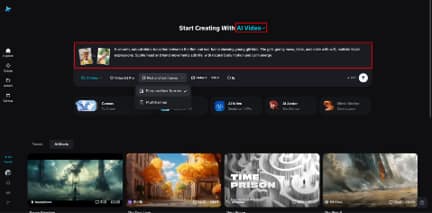
Creating professional-looking video content has traditionally required a combination of planning, filming, editing, visual effects, and technical knowledge. Today, artificial intelligence is changing that process by giving creators new ways to transform ideas into visual content. Instead of beginning with a camera or editing timeline, creators can begin with a concept and use AI to explore how that idea could look on screen.
Seedance 2.0 has gained attention within this evolving approach to AI video creation, particularly because it reflects the growing demand for tools that can connect written creative instructions with dynamic visual results. As the technology develops further, Seedance 2.5 represents another step in the direction of more flexible and sophisticated AI-assisted video workflows.
Understanding both technologies can help creators recognize where AI video generation is heading and how it can fit into modern content production.
Seedance 2.0 and the new approach to video creation
Seedance 2.0 represents a creative approach in which users can communicate a visual idea through instructions and use AI to turn that concept into video content. This changes the starting point of the production process.
In conventional filmmaking, creators need to think about locations, cameras, lighting, actors, sets, and post-production. With AI-assisted generation, the first stage can instead be an idea written in words.
For example, a creator may imagine a dramatic scene in a futuristic environment but have no practical way to film it. AI video generation provides an opportunity to explore that concept digitally before investing in traditional production.
Turning simple ideas into visual concepts
One of the most interesting aspects of AI video generation is the ability to experiment. A creator does not necessarily have to know advanced filmmaking techniques to begin exploring a visual idea.
A prompt can describe a character, location, atmosphere, movement, or artistic direction. The resulting video can then become a starting point for further refinement.
This makes the creative process more flexible. Instead of waiting until the production stage to discover whether an idea works visually, creators can experiment earlier and make decisions based on visual results.
The role of prompting in AI video
Prompt writing is an important part of working with AI video technology. The quality of an instruction can influence how effectively the system understands the creator’s intention.
A strong prompt can include details about the subject, environment, action, camera perspective, lighting, mood, and overall visual direction.
For example, a creator could describe a traveler walking through an ancient marketplace during sunset, surrounded by warm atmospheric lighting and slow cinematic camera movement. Such details provide a much clearer creative direction than simply asking for “a marketplace video.”
Learning how to communicate ideas precisely can therefore become an important skill for AI-assisted content creators.
Why Seedance 2.5 Represents an interesting development
As AI video generation continues to evolve, creators expect newer systems to provide more refined experiences and greater creative possibilities. Seedance 2.5 fits into this progression by representing a newer stage of AI-powered visual creation.
The evolution of AI video technology is not simply about producing higher-quality images. Video requires the system to deal with movement, timing, subjects, environments, and relationships between different elements.
For creators, improvements in these areas can make AI video more practical for storytelling, marketing, experimentation, and other forms of digital production.
Seedance 2.0 vs Seedance 2.5: Understanding the difference

Seedance 2.5
The comparison between Seedance 2.0 and Seedance 2.5 is best understood as part of the broader development of AI video technology.
An earlier generation can provide the foundation for prompt-based visual creation, experimentation, and creative exploration. A newer generation can build upon those ideas by offering an increasingly capable environment for creators.
For users who want to experience this type of AI-assisted workflow, Dreamina can be a useful way to explore Seedance 2.0, discover different creative possibilities, and experiment with prompts that turn written concepts into visual scenes.
However, the right choice depends on the specific workflow. Someone creating short experimental clips may have different requirements from a marketer developing campaign visuals or a storyteller working on multiple connected scenes.
Rather than focusing only on version numbers, users should consider what they actually need from an AI video tool.
AI video and creative storytelling
Storytelling is one of the strongest potential applications of AI-generated video. A writer may have an entire fictional world in mind but lack the resources required to visualize it.
AI can provide a way to explore those ideas through individual scenes and visual experiments.
Creators can use generated content to imagine characters, environments, transitions, and important story moments. Even when the generated material is not used in the final production, it can help shape the creative direction of a project.
This makes AI valuable as both a production technology and an idea-development tool.
Opportunities for social media creators
Social media creators constantly need fresh visual content. Producing every video through traditional methods can require significant time, especially when creators want to test multiple concepts.
AI video generation can make experimentation more accessible.
A creator might develop several versions of a visual concept, explore different moods, or create supporting visuals for a campaign. This can help reduce the distance between having an idea and testing it with an audience.
The technology is particularly interesting for creators who value speed and experimentation while still maintaining control over their creative direction.
AI video for businesses and marketing teams
Businesses can also benefit from AI-assisted visual production. Marketing teams often need creative material for advertisements, product launches, social campaigns, presentations, and promotional concepts.
Instead of immediately producing a complete video, teams can first explore different ideas using AI.
For example, a brand could visualize several possible campaign themes before selecting one for professional production. This approach can make brainstorming more visual and allow teams to communicate ideas more effectively with designers, editors, and production teams.
Exploring different visual styles
Another advantage of AI video creation is the ability to experiment with visual styles. Creators can explore cinematic, futuristic, realistic, dramatic, artistic, or imaginative directions depending on the concept.
This flexibility can be useful when developing a brand identity or planning a creative project.
Instead of being limited by the equipment available, creators can begin by asking what they want the finished concept to feel like. AI can then become part of the exploration process.
AI does not replace creative direction
Although AI can automate parts of video creation, human creative direction remains important. A generated video still needs a purpose, a message, and an audience.
Creators decide what story they want to tell, which visual result works best, and how the content should fit into a larger campaign or project.
This means the most effective approach is not necessarily to let AI make every decision. Instead, creators can use AI for rapid experimentation while keeping creative control in human hands.
The future of AI-powered video creation
The development represented by technologies such as Seedance 2.0 and Seedance 2.5 points toward a future where video creation becomes increasingly interactive.
Future AI systems may allow creators to control scenes with greater precision, maintain stronger consistency between shots, and develop longer visual narratives from relatively simple instructions.
As these capabilities improve, AI video could become a regular part of advertising, entertainment, education, social media, product marketing, and independent creative work.
Conclusion
Seedance 2.0 represents an important part of the shift toward idea-driven AI video creation, while Seedance 2.5 reflects the continuing evolution of this technology and its creative possibilities.
The biggest change is not simply that AI can generate video. It is that creators can increasingly begin with an idea and quickly explore what that idea could become visually.
Whether used for storytelling, marketing, social media, concept development, or creative experimentation, AI video technology gives modern creators another way to work. By combining thoughtful prompts with human creativity and clear creative direction, users can turn abstract concepts into visual experiences and build more flexible production workflows.


Leave a Comment