
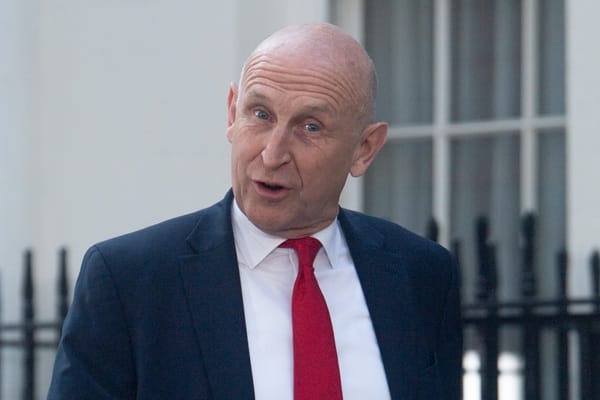
John Healey is reportedly preparing to abandon a controversial plan to slash the annual tax-free cash Isa allowance, in a Budget U-turn that would deliver relief to millions of British savers while raising fresh questions about how the government intends to coax more household money into the stock market.
The Chancellor is said to have concluded that cutting the allowance from £20,000 to £12,000 would do little to persuade people to invest in shares, according to the Financial Times.
Instead, he is understood to favour improving financial education and helping savers understand the potential benefits of equity investing.
If confirmed, the reversal would mark a retreat from one of Rachel Reeves’s most contentious savings reforms.
The former chancellor announced last year that the allowance for cash Isas held by people under 65 would be reduced from April 2027, with the aim of redirecting money away from cash deposits and towards stocks and shares.
The policy was intended to support the government’s wider ambition of mobilising more domestic savings for investment. But critics argued that restricting a familiar, tax-efficient savings product risked punishing people who were reluctant or unable to take on investment risk, without necessarily persuading them to buy equities.
The apparent change of direction highlights a central dilemma for policymakers: Britain needs more people to invest for the long term, but undermining confidence in a trusted savings vehicle may be a costly way to achieve it.
Individual savings accounts allow people to earn interest and investment returns free from income tax and capital gains tax, subject to the rules governing each account. They have become one of the country’s most popular financial products, offering households a straightforward way to build reserves without an immediate tax bill on returns.
HM Revenue & Customs figures released in September showed that £135.7bn was subscribed to adult Isas in the 2024-25 tax year, an annual increase of £32.7bn.
Cash Isas accounted for most of that growth. Subscriptions rose by £26.1bn, or 37.5 per cent, while contributions to stocks and shares Isas increased by £6.1bn, or 19.7 per cent. Lifetime Isa subscriptions rose by £472mn, or 20.1 per cent.
The figures underline the scale of Britain’s attachment to cash savings — and the challenge facing ministers seeking to change financial behaviour.
For banks and building societies, retaining the full allowance would also help preserve a valuable source of deposits, which can support lending and strengthen balance sheets. The reported reversal would offer the sector some relief ahead of a Budget in which financial institutions are widely anticipating additional tax pressure.
But the political argument extends beyond the banking industry. Personal finance specialists say the government risks confusing the act of saving with the decision to invest, which involves different financial needs, time horizons and tolerance for losses.
Maike Currie, vice-president of personal finance at PensionBee, said scrapping the proposed reduction would be a welcome reversal.
“Saving was never the problem; the challenge is giving people the confidence to take the next step into investing,” she said.
She warned that restricting cash Isas could penalise those who most need help building long-term wealth, particularly women. “You don’t persuade people to eat more meat by rationing their vegetables.”
Isabella Galliers-Pratt, senior investment director at Rathbones, described a potential reversal as “a victory for common sense”, adding: “You don’t create investors by penalising savers.”
Rachel Springall, a finance expert at Moneyfactscompare.co.uk, argued that investment should be encouraged through incentives and financial education rather than restrictions on tax-free cash savings.
“Confidence in investing is built over time, not overnight,” she said.
Will Stevens, a partner at Killik & Co, said cash Isas served important purposes beyond generating returns, including providing emergency funds, meeting short-term goals and helping households manage uncertainty.
If the government wants more people to invest in shares, he said, improving financial education and explaining the long-term benefits of investing would be more sustainable than limiting existing tax allowances.
Jason Hollands, managing director at Bestinvest by Evelyn Partners, warned that some savers affected by the proposed cut might simply have moved their money into taxable accounts, leaving them worse off without increasing their exposure to equities.
He argued that encouraging investment would require a broader cultural shift, better education and more accessible ways for people to participate in financial markets, including potentially through workplace investment schemes.
The reported U-turn would not resolve Britain’s wider investment challenge. Cash remains attractive to households seeking security, particularly when economic uncertainty makes the prospect of market losses harder to accept.
But it would signal a change in the government’s approach: rather than trying to force savers towards riskier assets by narrowing their tax-free options, ministers would seek to persuade them that investing is worth considering.
Whether that strategy succeeds will depend on more than the Isa rules. It will require sustained efforts to improve financial confidence and make investment easier to understand.
For millions of savers, however, the immediate question is simpler: whether the £20,000 allowance they know and rely on will survive the Budget.


Leave a Comment