
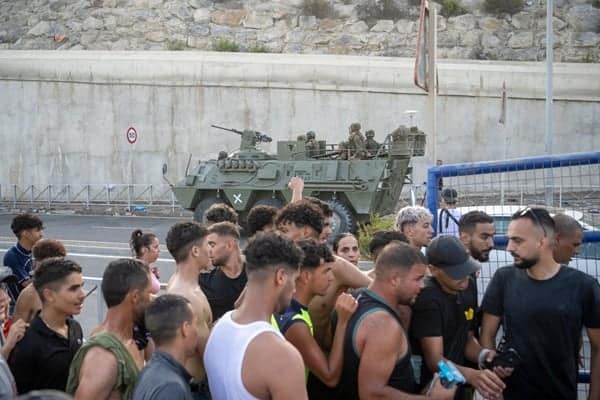
Europe’s migration challenge has entered a new and more volatile phase after an extraordinary surge of around 60,000 migrants crossed into Spain’s North African enclave of Ceuta from Morocco in just 24 hours — a movement equivalent to roughly 70 per cent of the city’s normal population.
The unprecedented influx has overwhelmed local authorities, triggered a major security response and reignited a fierce political battle over the future of Europe’s borders.
Juan Jesús Vivas, president of Ceuta, described the situation as “absolutely unsustainable”, warning that the tiny Spanish territory was facing a humanitarian and logistical emergency.
At least 41 migrants have died attempting the crossing, with some drowning in the waters between Morocco and Ceuta while others were reportedly killed during a chaotic rush towards border barriers.
Spanish Prime Minister Pedro Sánchez travelled to the enclave on Friday, condemning the breach as “a violation of Spain’s territorial integrity” while blaming criminal smuggling networks for exploiting migrants seeking entry into Europe.
“These organisations deceive so many young people and ultimately lead many of them to their deaths,” Sánchez said, warning that traffickers had turned desperation into a deadly business.
Spain’s Interior Ministry later released its own estimates, putting the number of arrivals at around 50,000 since Thursday. Officials said approximately half had already returned to Morocco, releasing footage of migrants walking back through a border gate.
The dramatic scenes have intensified pressure on Madrid and Brussels. European Commission President Ursula von der Leyen said images from Ceuta were “unacceptable”, insisting that Europe’s migration rules must be enforced.
“We cannot allow anyone to come to our Union without abiding by our rules,” she said, calling for dangerous crossings to stop and for smuggling networks to be dismantled.
The crisis has also highlighted tensions between humanitarian obligations and border control. Rights groups reported Moroccan security forces deployed additional personnel, water cannon and warning shots in attempts to prevent further crossings, yet thousands continued attempting the journey by sea.
The route from the Moroccan town of Fnideq to Ceuta is only around five kilometres, but migrants face dangerous currents and heavily guarded border zones.
Local officials said the situation was chaotic, with some migrants sleeping in parks and on streets after reception facilities became overwhelmed.
The sudden surge has been partly linked by Spanish authorities to a recent Supreme Court ruling preventing the automatic return of migrants intercepted at sea attempting to reach Ceuta and Melilla.
Sánchez said traffickers had misinterpreted the ruling and spread information through migrant networks, creating expectations that entry into the Spanish territory would guarantee protection from immediate deportation.
Morocco’s ambassador to Spain said the crisis was not wanted by Rabat and expressed hope that those who crossed would return, insisting Morocco supported “legal, orderly and safe migration”.
But for Europe, the events in Ceuta represent a warning: its southern borders remain vulnerable to sudden migration shocks, and political pressure to find a lasting solution is likely to intensify.


Leave a Comment