
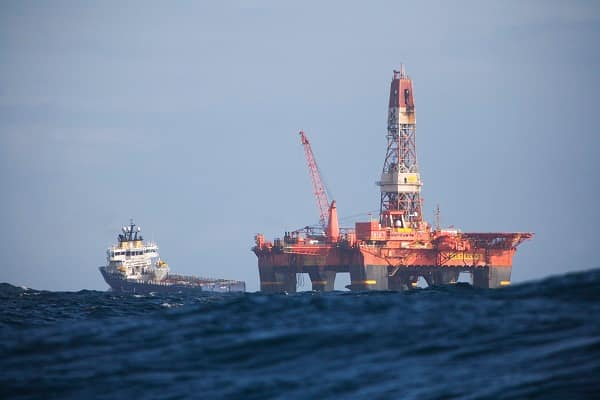
Almost two thirds of Labour voters want the Government to approve the controversial Rosebank oil and gas development in the North Sea, exposing a growing divide between the party’s environmental commitments and the energy priorities of its own supporters.
Polling commissioned by industry body Offshore Energies UK (OEUK) found that 65 per cent of people who voted Labour in the 2024 general election backed giving Rosebank the green light. Just 17 per cent wanted the project rejected, despite Labour’s election manifesto pledge under Sir Keir Starmer not to issue new oil and gas exploration licences.
The findings present a political challenge for Prime Minister Andy Burnham, whose Government faces an increasingly difficult balancing act between its commitment to a transition towards cleaner energy and demands to maintain domestic production, protect industrial jobs and reduce reliance on imports.
Rosebank, located north-west of Shetland, is the largest undeveloped oilfield in UK waters and has become a focal point in the debate over Britain’s future energy strategy.
The Opinium survey of 2,050 UK adults found that public support extends beyond Labour voters. Overall, 63 per cent backed approving Rosebank, while 55 per cent supported increasing Britain’s domestic oil and gas production.
The figures also suggest that voters are reluctant to abandon fossil fuels as a source of energy in the near future. Nearly three quarters of Labour supporters, 72 per cent, agreed that oil and gas would remain “essential for the foreseeable future”.
There was similarly strong backing for the Government’s decision to approve the Jackdaw gas field off the coast of Aberdeen, with 68 per cent of Labour voters agreeing that the development should proceed.
The results will strengthen the position of North Sea industry representatives, who have repeatedly argued that Britain risks undermining its own energy security by restricting domestic production while continuing to rely on imported oil and gas.
David Whitehouse, chief executive of OEUK, said the research should encourage ministers to reconsider their approach to the remaining pipeline of North Sea developments awaiting approval.
The findings, he said, “offer Government an opportunity to align with public opinion and start working through the pipeline of North Sea projects that are awaiting approval”.
He added: “The public are clearly in agreement with the new Prime Minister’s ‘pragmatic’ policy on the North Sea, which will once again be tested as the final decision on Rosebank is made in the coming months.”
Whitehouse argued that investment in the basin would support domestic manufacturers, supply chains and industrial communities while strengthening the country’s energy resilience.
“Investing in North Sea energy strengthens Britain’s economy, supports UK supply chains and industrial communities, and builds our energy resilience,” he said.
But the industry faces a significant political obstacle. The Government has introduced its Energy Independence Bill, which commits to issuing no new oil and gas exploration licences for new fields in the North Sea.
Rosebank occupies an unusual position in that debate. The development had previously received a licence under the Conservative government, but its approval was subsequently ruled unlawful, forcing ministers to reconsider the project.
The decision now facing Burnham therefore concerns whether an existing development should be allowed to proceed under a revised regulatory process, rather than whether the Government should abandon its wider commitment on new exploration licences.
Energy Secretary Miatta Fahnbulleh has defended the legislation as part of the Government’s wider transition strategy.
“Through this Bill, we will build a clean energy future which people feel in their pockets, households and communities, ensuring support reaches those who need it most,” she said.
Conservatives have seized on the polling to accuse Labour of ignoring the economic interests of its own supporters.
Andrew Bowie, the shadow energy secretary and MP for West Aberdeenshire and Kincardine, said the findings showed that “the message from the public could not be louder or clearer – support the extraction of North Sea oil and gas before it’s too late”.
He accused ministers of being “blatantly” out of touch with voters and described the proposed restrictions on exploration as increasingly difficult to justify.
“The reality is Andy Burnham is scared to back oil and gas because he is too weak to stand up against net zero zealots, both inside and outside his party,” Bowie said.
He warned that companies could cut jobs and leave Britain if the Government continued to restrict the sector, urging the Prime Minister to approve Rosebank.
The political stakes are considerable. North Sea communities and businesses argue that restricting production threatens skilled employment and investment, while environmental campaigners oppose new fossil fuel developments on climate grounds.
For Burnham, the poll presents an awkward political contradiction: voters who supported Labour appear considerably more favourable towards continued North Sea production than the party’s longstanding policy might suggest. Whether that translates into a change of direction on Rosebank will test the Government’s willingness to balance its climate commitments against energy security, employment and public opinion.


Leave a Comment