
British-German defence technology company Hypersonica has raised €100m in a funding round led by Lightspeed and General Catalyst, as Europe’s drive to build its own long-range weapons gathers pace amid mounting security concerns over the continent’s dependence on American military technology.
The Series B investment will finance faster development of the company’s hypersonic deep-strike systems, more frequent testing and an expansion of its operations across Europe. Existing investors Plural and 201 Ventures also participated in the round.
Hypersonica said the funding would support the creation of hundreds of highly skilled engineering and manufacturing jobs in the UK and Germany, marking a significant step in its ambition to establish a European industrial base for advanced strategic weapons.
The company, founded by chief executive Dr Philipp Kerth and chief technology officer Dr Marc Ewenz, is seeking to develop weapons capable of travelling at more than five times the speed of sound while manoeuvring in flight — characteristics that make them substantially more difficult for conventional missile defences to intercept.
“The debate about whether Europe needs hypersonic deep-strike capability is over,” the co-founders said. “Governments have recognised the requirement and begun funding programmes. The challenge now is delivery. Europe needs credible hypersonic long-range capability, and more value for every pound and euro it spends.”
They added that the latest investment marked a transition “from demonstration to delivery”, with the company aiming to accelerate development and increase its testing cadence.
The fundraising comes as European governments reassess their defence requirements following Russia’s full-scale invasion of Ukraine and renewed questions about the reliability of long-term American security support.
Long-range conventional strike has become one of the continent’s most prominent military capability gaps. Britain and France possess Storm Shadow and SCALP air-launched cruise missiles, with ranges measured in the low hundreds of kilometres. But Europe has limited access to ground-launched weapons capable of striking substantially further.
The removal of intermediate-range ground-launched missiles from European arsenals followed the 1987 Intermediate-Range Nuclear Forces Treaty between Washington and Moscow. With the treaty no longer in force, European governments have been looking to rebuild capabilities that could hold targets deep inside hostile territory at risk.
One option has been to procure American systems, but purchases can bring export-control restrictions and conditions on how weapons may be deployed. Hypersonica argues that developing and controlling the technology within Europe would give governments greater freedom over its use.
The company says its technology is free from the US International Traffic in Arms Regulations regime, which can give Washington influence over the export and use of weapons incorporating American-controlled components. European governments have increasingly emphasised the importance of avoiding such dependencies since 2022.
Public investment is beginning to follow the same strategic direction. The UK Defence Investment Plan allocates an initial £770mn over four years to the UK-German Deep Precision Strike programme under the Trinity House Agreement. A separate Nato-led multinational initiative, announced in July, envisages £37bn of investment in deep precision strike over the next decade, according to UKDJ.
Hypersonica is competing in a field where the technological challenge is formidable. Weapons travelling above Mach 5 must withstand extreme temperatures and aerodynamic forces while maintaining the ability to change course. Unlike ballistic missiles, which follow a more predictable trajectory, manoeuvrable hypersonic weapons can complicate an adversary’s calculations about where and when an attack will arrive.
Russia and China have already fielded hypersonic systems, increasing pressure on western governments to develop comparable capabilities and the defences needed to counter them. The European Long-range Strike Approach, involving France, Germany, Italy, Poland, the UK, the Netherlands and Sweden, represents a broader effort to address the continent’s long-range strike requirements.
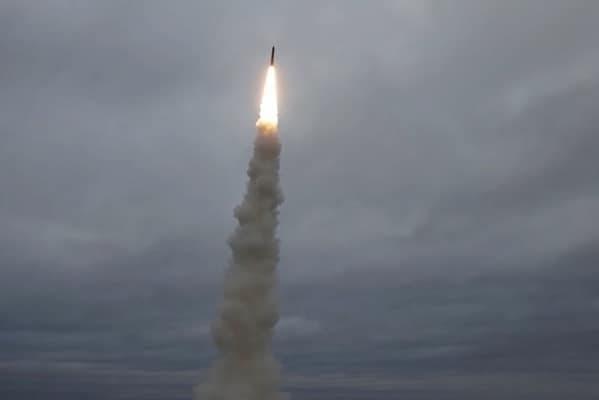
Hypersonica says it has already demonstrated progress. In February, its HS-1 prototype reached speeds exceeding Mach 6 over a distance of more than 300 kilometres. The company described the flight as the first achievement of its kind by a privately funded European defence company.
It also claims its development model can reduce costs by more than 80 per cent compared with conventional approaches — a potentially significant proposition for governments facing pressure to expand military capabilities while managing constrained defence budgets. The claim, however, will ultimately depend on whether the company can translate prototype performance into a reliable, producible and operational system.
Alexander Schmitt, a partner at Lightspeed, said the team combined “deep technical expertise with exceptional speed of execution”, adding that the investment reflected confidence in both its technology and its ability to deliver.
Jeannette zu Fürstenberg, president and managing director at General Catalyst, said strategic autonomy depended on building critical technologies “at speed, at scale and at a fraction of the cost of traditional systems”.
Hypersonica raised €23.3mn in a Series A round led by Plural in February, announced alongside the HS-1 flight. The latest €100mn investment represents a substantial increase in the capital available to the business as it moves towards its stated target of delivering hypersonic deep-strike systems by 2029.
Operating from Munich and London, the company now faces the difficult task of turning a successful demonstration into a weapon that can be manufactured at scale, integrated into European defence forces and delivered to governments on schedule.
For its investors, the opportunity extends beyond backing another defence start-up. Hypersonica is betting that Europe’s determination to reduce its reliance on foreign suppliers will create a market for domestically developed strategic weapons — and that the continent can build them quickly enough to close a gap that has become increasingly difficult to ignore.


Leave a Comment