
Sébastien Lecornu urged telecoms companies to shut down platforms including TikTok, Snapchat and Instagram ahead of unrest that prompted mass arrests and a major police mobilisation, as demonstrations spread across France, Italy, Spain and Albania.
France’s government sought to secure the power to shut down major social media platforms ahead of a fresh wave of protests, as alarm grew in Paris over online networks’ role in coordinating unrest and violent demonstrations spread across Europe.
Prime Minister Sébastien Lecornu wrote to four telecommunications companies urging them to impose a social media blackout in the event of “urban violence”, according to a letter first reported by French outlet Blast.
The proposed restrictions named Snapchat, TikTok and Instagram, with Elon Musk-owned X reportedly added to the list after the letter was sent.
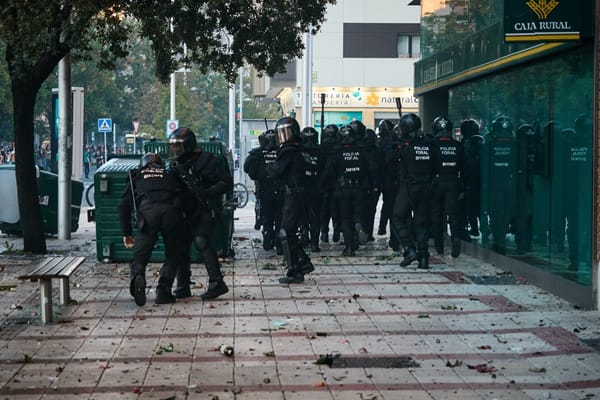
The intervention came as France faced mounting disorder, with nearly 1,000 arrests reported and around 70,000 police officers deployed to respond to demonstrations and violence on the streets.
Mr Lecornu argued that social media platforms had helped transform protests into a wider security threat, allowing unlawful slogans to spread rapidly and enabling demonstrators to coordinate violent activity.
“Clearly, several social media platforms played a decisive role not only in the crystallisation and viral spread of unlawful slogans but also as tools for the operational coordination of violence during the demonstration,” he wrote.
The Prime Minister said a “convergence of several protest and activist movements” had contributed to the unrest, with some individuals exploiting the resulting disorder to “smash, damage, set fire to, ransack and loot”.
His proposal raises a difficult question for the French Government: how to prevent online platforms from being used to organise violence without imposing sweeping restrictions on communications that peaceful protesters and the wider public also rely on.
The proposed blackout marks a significant escalation in the Government’s response to the demonstrations, which began as a student-led movement demanding greater investment in education.
Students had complained about teacher shortages and deteriorating school buildings. But the unrest has since spread beyond its original grievances, with clashes between protesters and police drawing national attention.
Footage from Paris showed officers deploying tear gas against demonstrators as tensions rose on the streets.
Mr Lecornu, who was reappointed by President Emmanuel Macron last October, sought to persuade Orange, SFR, Free and Bouygues Telecom to restrict access to named social media platforms if violence broke out.
The proposal places telecommunications operators at the centre of the Government’s response, potentially requiring them to restrict access to services used by millions of people.
Yet the approach also carries risks. A blanket shutdown could affect legitimate political speech, reporting, emergency communications and the ability of peaceful demonstrators to organise. The letter, as described in reports, establishes that the Government sought such restrictions; it does not by itself establish that a blackout was implemented.
The dispute reflects a broader challenge confronting European governments as protests become more volatile and political mobilisation increasingly takes place online: whether restricting digital communications can contain disorder without creating wider civil-liberties concerns.
The unrest has extended well beyond France, with violent demonstrations also reported in Italy, Spain and Albania on Saturday.
In Italy, protesters clashed with police in Turin, Rome and Bologna. Tear gas was deployed in the capital as demonstrators ran through streets and officers attempted to disperse crowds.
Footage circulating online appeared to show police repeatedly striking a demonstrator with a baton while he lay on the ground blocking a vehicle.
Italian police said at least 371 people had been detained, with nine arrested.
The scenes underline the difficulties facing authorities when demonstrations escalate into confrontations involving large crowds, property damage and clashes with security forces.
In Spain, around 100 people were arrested in Barcelona alone after hooded rioters looted shops and set fire to street furniture around the central Plaza de Catalunya.
Spanish authorities said approximately a quarter of those arrested were minors.
The scale of the arrests highlights the challenge of containing unrest when demonstrations draw in participants beyond the original political movement and violence spreads through busy urban centres.
The events have also raised concern about the possibility that protest movements in one country can inspire demonstrations elsewhere, even where local grievances differ.
In Britain, Green councillors have reportedly encouraged people “inspired” by the scenes in France to join a march in London, adding a domestic political dimension to the wider European unrest.
However, the existence of political support for a demonstration does not, in itself, establish support for violence or property destruction.
Albania witnessed some of the most alarming scenes, with protesters calling for the resignation of the country’s Prime Minister.
Videos appeared to show an officer catching fire after what looked like a Molotov cocktail was thrown during clashes.
Rioters also set government buildings and banks alight, smashed shop windows and pulled up paving stones to throw at police.
The violence illustrates how demonstrations can move far beyond their stated political objectives when confrontations escalate and public buildings, businesses and law enforcement officers become targets.
Authorities across the countries affected now face the immediate task of restoring order while determining how to respond to movements whose participants, demands and tactics may vary considerably.
Mr Lecornu’s intervention brings the debate over social media restrictions into sharp focus.
Governments have increasingly faced pressure to respond when online platforms are used to spread inflammatory messages or coordinate unlawful activity. But restricting entire platforms presents a different proposition from targeting specific criminal conduct.
A blackout could disrupt the networks used to organise violence, but it could also silence peaceful demonstrators, limit access to news and make it harder for people to share information during emergencies.
The French proposal therefore raises questions extending beyond the immediate unrest: how much power governments should have to restrict digital communications during periods of disorder, what legal safeguards should apply and who should decide when the threshold for a shutdown has been reached.
With violence reported across several European countries, the pressure on governments to demonstrate control is growing. But the response will be judged not only by whether it restores order, but also by whether it protects the rights of people who have committed no offence.
France’s proposed blackout offers one possible answer to the challenge of online mobilisation. It also risks opening a separate confrontation over the limits of state power in a democracy.


Leave a Comment