
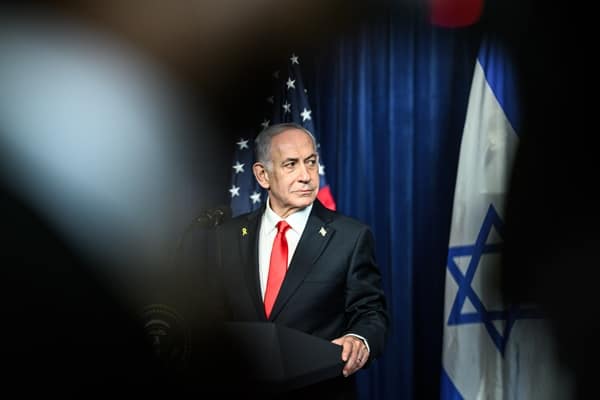
Benjamin Netanyahu has triggered fresh diplomatic tensions with Britain after Israel’s ambassador to the United Nations called for direct negotiations between the UK and Argentina over the Falkland Islands — a move reported to have been authorised at senior levels in Jerusalem.
The intervention has raised concern in Westminster because it touches one of Britain’s most sensitive sovereignty disputes, at a time when Argentina’s President Javier Milei is intensifying his campaign to advance Buenos Aires’ claim to the South Atlantic territory.
According to The Telegraph, Netanyahu instructed Israeli diplomats to align with Argentina’s call for bilateral negotiations, while acknowledging the Argentine public’s “historical connection” to the islands. The reported move falls short of formally endorsing Argentina’s sovereignty claim, but marks a significant diplomatic development in an increasingly strained relationship between London and Jerusalem.
The dispute comes against a backdrop of escalating tensions over British policy towards Israel. Last month, the UK imposed economic sanctions on West Bank settlements, drawing anger from the Israeli government. The row followed Britain’s recognition of Palestinian statehood last year and has contributed to a deterioration in relations between the two countries.
Read more related news:
UK in a ‘dangerous new chapter’ as British paratroopers prepare fresh Falklands conflict
‘900 million barrels of black gold’: Burnham warns Trump as Argentina moves to halt Falklands drilling
Milei warns UK ‘is being colonised by Islam’ as a new pretext to ‘recover the Falklands’
The diplomatic fallout intensified on October 8, when Britain’s consulate was downgraded, and senior British staff were expelled, according to reports cited in the dispute. Israel’s reported intervention over the Falklands now threatens to widen the disagreement beyond the Middle East and into the South Atlantic.
Argentina has renewed its diplomatic efforts to challenge British control of the islands, with Milei maintaining close ties with Netanyahu. Buenos Aires has also pursued legal challenges aimed at halting offshore oil and gas exploration north of the Falklands, adding an economic dimension to the long-running sovereignty dispute.
The timing is particularly sensitive for London following remarks by Donald Trump in September that raised questions about whether Washington would support Britain in a future conflict involving the islands.
At a United Nations session last week, Israel’s ambassador, Danny Danon, called for direct negotiations between Britain and Argentina over the territory’s future.
“Israel recognises the importance that the Argentine public attaches to this issue as well as its ongoing efforts through diplomatic channels and in accordance with the principles of international law,” Mr Danon told delegates.
He added: “Progress on this matter must be achieved while taking into consideration the full spectrum of relevant historical, legal and human aspects.”
The language stopped short of explicitly backing Argentina’s claim, but placed Israel behind calls for negotiations over a territory whose inhabitants have repeatedly voted to remain British.
Israeli sources cited in reports said the statement had been approved at senior levels in Jerusalem and reflected growing frustration with Britain’s rhetoric and sanctions policy.
The UK responded at the UN by reaffirming its position that sovereignty over the Falklands is not open to negotiation without the consent of the islanders.
Britain’s representative, Kate Foster, said: “The United Kingdom has no doubt over its sovereignty over the Falkland Islands, South Georgia and the South Sandwich Islands. There can be no dialogue on sovereignty without the consent of the islanders.”
The response underscores the central point of Britain’s position: the wishes of the Falkland Islanders must determine any discussion of the territory’s future.
For Argentina, the islands remain a long-standing national claim. For the UK, their status is underpinned by its assertion of sovereignty and the expressed wishes of the population. Israel’s intervention has brought that unresolved diplomatic confrontation into an already troubled relationship between two countries with longstanding security ties.
The Falklands dispute is the latest source of friction between London and Jerusalem, following disagreements over the war in the Middle East and Britain’s refusal to join strikes against Iran.
Marc Zell, head of Republicans Overseas Israel, criticised the UK’s decision not to participate in the strikes, calling it a “dastardly betrayal” and urging Washington to reconsider its position on the Falklands.
His remarks illustrate how arguments over Britain’s Middle East policy have begun to intersect with wider questions about its international relationships and the diplomatic backing it can expect in disputes with other countries.
Despite the public tensions, officials have maintained that practical intelligence and security cooperation between Britain and Israel remains strong behind the scenes.
An Israeli Embassy spokesman in London denied that any policy change had taken place, saying: “I categorically deny this allegation. No such directive exists.”
That denial leaves a key question unresolved: whether Danon’s remarks represent a deliberate shift in Israeli policy or a diplomatic statement that has been interpreted as taking sides in the Falklands dispute.
With relations already strained by sanctions, Palestinian statehood and disagreements over Iran, the episode risks adding another contentious issue to the agenda between London and Jerusalem.


Leave a Comment