
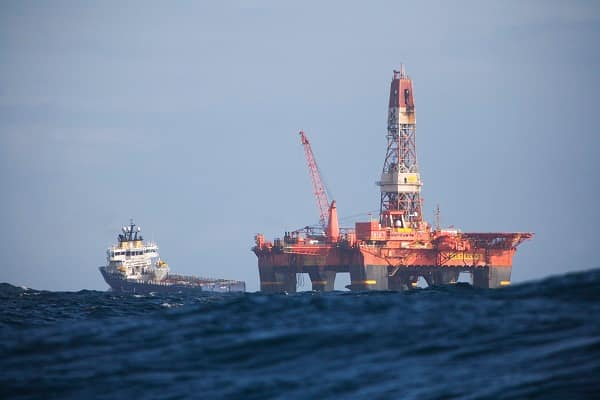
The future of the Rosebank oilfield has become the latest flashpoint in the battle over Britain’s energy strategy, with an Aberdeen MP urging the government to approve the controversial development after ministers gave the green light to the Jackdaw gas field.
Douglas Lumsden, the Conservative MP for Aberdeen South, has warned Energy Secretary Miatta Fahnbulleh that rejecting Rosebank would threaten jobs, investment and the economic prospects of communities heavily dependent on the North Sea industry.
His intervention follows the government’s decision on Wednesday to approve Jackdaw, a gas field about 150 miles east of Aberdeen that had faced years of uncertainty and a legal challenge. The decision has sharpened attention on Rosebank, a major oil development west of Shetland whose future remains uncertain.
Reports have suggested ministers could reject Rosebank, although the government has dismissed such claims as speculation, insisting that each project will be assessed individually.
In a letter to Fahnbulleh, Lumsden said he was “deeply concerned” by reports that she was considering rejecting the project and called on ministers to provide certainty for workers and businesses across north-east Scotland.
“The city of Aberdeen and my constituents in Aberdeen South depend on the continued extraction and exploration of oil and gas fields,” he said.
Rosebank is expected to support between 1,600 and 2,000 jobs during peak construction and provide up to 525 long-term jobs based in the UK, according to figures cited by Lumsden.
“There are simply not enough jobs in the renewable sector to replace the jobs in the oil and gas sector,” he said, arguing that a rejection would damage the prospects of his constituents.
“I simply do not understand why this Government fails to understand this. To deny this project would be to unnecessarily condemn the prospects of many of my constituents. It is cruel, unnecessary and uneconomic.”
Lumsden also called on the government to scrap the Energy Profits Levy, the tax on extraordinary profits from oil and gas production, and reverse Labour’s ban on issuing new licences for oil and gas exploration.
“If the Prime Minister wants to see growth in every postcode, then he must approve Rosebank, scrap the Energy Profits Levy, and remove Labour’s ban on all new licences for the people and businesses of Aberdeen South,” he said.
The dispute reflects the competing demands facing the government as it attempts to reconcile economic growth, energy security and its commitment to expanding renewable power. Supporters of North Sea development argue that domestic production sustains skilled employment and investment; opponents question the case for approving new fossil fuel projects as Britain seeks to reduce emissions.
The government’s position on Rosebank remains formally unresolved. A spokesman for the Department for Energy Security and Net Zero said: “This is speculation. As the Energy Secretary has said, each project will be assessed on its own merits.”
The controversy has also exposed tensions over who should benefit from Scotland’s energy resources.
On Wednesday, the government announced an energy wealth fund with an initial £2bn balance, to be bolstered by North Sea revenues and used to invest in renewable energy projects.
The announcement drew criticism from the Scottish National party, which argued that Scotland should have accumulated a sovereign-style oil fund decades ago.
Dave Doogan, the SNP’s Westminster leader, said Scotland “should have an oil fund worth at least £1 trillion”, accusing Westminster of failing to ensure that the country’s energy wealth benefited its own population.
“This week has cemented an injustice in the minds of Scots — it is Scotland’s energy and it should be in Scotland’s hands,” he said.
Doogan argued that the new fund would be inadequate unless revenues generated from Scottish waters were reinvested in Scotland. He linked the dispute to the SNP’s wider case for independence and closer European Union ties.
The competing demands highlight the political complexity of Britain’s energy transition. For Aberdeen, the immediate question is whether new oil and gas projects can sustain employment as the industry faces changing tax rules and the expansion of renewables. For ministers, the decision on Rosebank will test how they balance those economic concerns against their energy and climate objectives.
With Jackdaw approved but Rosebank still unresolved, the government faces renewed pressure to explain how its approach to North Sea production will deliver both economic opportunity and a transition towards cleaner energy.


Leave a Comment