
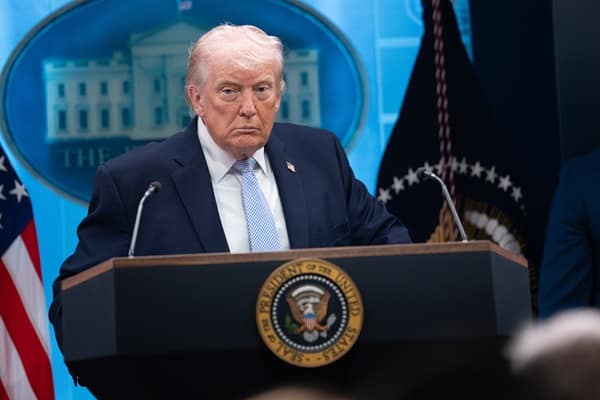
Russia and the United States will remain bitter enemies for decades, Dmitry Medvedev has warned, delivering a blunt rebuke to Donald Trump’s efforts to broker peace in Ukraine as Moscow prepares for another round of high-stakes diplomacy with Washington.
The former Russian president, now deputy chairman of Vladimir Putin’s Security Council, accused the US of poisoning relations between the nuclear powers through sweeping sanctions legislation, suggesting the measures could outlast both the current war and the leaders attempting to end it.
“We must acknowledge that relations between Russia and the US have once again been damaged for decades to come,” Medvedev wrote in a post on VK.
“We were, are, and will remain systemic adversaries.”
Read more related news:
Britain prepares for a new Home Guard as army chief warns public must be ready for war
NATO country warns of a ‘failed’ sabotage attack ‘on Europe’s communications’
Zelensky condemns Trump’s sanctions reversal as Moscow celebrates ‘historic’ reprieve
Kyiv fears intelligence blackout as deadly Russian missile strike deepens US rift
The extraordinary warning comes as Trump seeks to advance negotiations over Russia’s full-scale invasion of Ukraine, with envoys Steve Witkoff and Jared Kushner expected to travel to Moscow following discussions with Ukrainian and European representatives in Norway.
Medvedev also took aim at Trump personally, portraying the American president as a businessman whose pursuit of a deal with Moscow may be driven more by financial opportunity than strategic calculation.
“Let’s be frank — he’s not much of a strategist. But he has a good nose for business,” he said.
Medvedev suggested that proposed economic arrangements with Russia could deliver substantial benefits to Trump, claiming that “both the diesel deal with Russia and a number of other moves could bring him quite substantial dividends”. He offered no evidence in the remarks to substantiate the implication.
His attack focused particularly on legislation associated with the late Republican senator Lindsey Graham, which is designed to intensify economic pressure on Russia over its war against Ukraine. The proposed measures include tariffs of up to 500 per cent on countries purchasing Russian oil, gas and uranium.
Trump has held back the sanctions while pursuing negotiations. Although the legislation has been suspended rather than repealed, Medvedev warned that its provisions could cast a long shadow over future relations.
He accused European governments of helping sustain the pressure and said the measures were “designed to last for decades”.
“It is quite likely that our grandchildren will live under its provisions,” he wrote.
Comparing the legislation with Cold War-era Jackson–Vanik restrictions, which remained in force against Russia for decades, Medvedev argued that sanctions would become a recurring instrument of American pressure rather than a temporary response to the war.
He dismissed the prospect of Washington easing its approach in exchange for Russian concessions, declaring: “To hell with this law and the Americans’ leniency.”
Invoking the German philosopher Friedrich Nietzsche, he added: “What does not kill me makes me stronger.”
The rhetoric exposes the gulf between Trump’s attempt to negotiate a settlement and Moscow’s insistence that its confrontation with the West is structural and enduring.
Even if diplomacy produces an agreement over Ukraine, Medvedev’s message is that Washington should not expect a lasting reconciliation. The battlefield may eventually fall silent, but in the Kremlin’s telling, the strategic confrontation could continue for generations.


Leave a Comment