
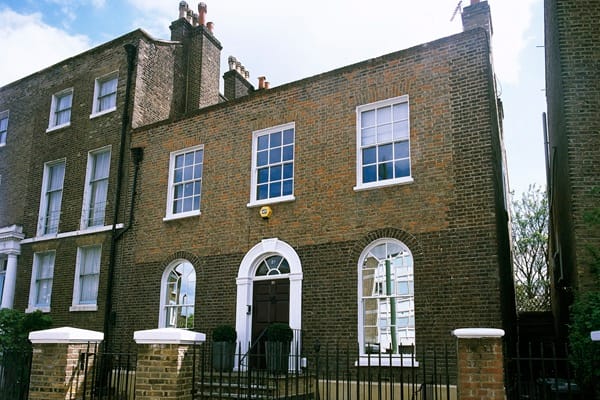
Secondary glazing is hardly new technology. It took off in the 1970s, when it was sold as a cheap way to blunt draughts: a second pane of glass in its own frame, fitted inside the window you already had. Yet across London it has become the growth product of the window market, and the explanation lies in what the capital is made of.
Street after street of homes predate cavity walls, and many stand in neighbourhoods where the planning system decides what a window is allowed to look like. Three main forces are driving the boom. Let’s get into it…
A housing stock older than the idea of insulation
The first force is age. The UK has the oldest housing stock in Europe, and London concentrates the extremes. In Kensington and Chelsea, 65% of all properties went up before 1919, the highest share in England and Wales. Most of the capital’s terraces and mansion blocks were built with solid brick walls and single-glazed timber sashes, decades before anyone drew up a building regulation about heat.
Solid walls are costly and disruptive to insulate, which leaves the windows carrying an outsized share of a period home’s heat loss. A single pane of Victorian glass will do very little to hold warmth in January, so owners chasing lower bills tend to start with the glazing. It’s usually the biggest gain available for the least structural upheaval.
Where the planning system closes the door
The second force is the planning regime, and this is where London differs from the rest of the country. Historic England’s mapping records 1,056 conservation areas across the capital, and inside them councils commonly refuse uPVC and aluminium replacement windows because they change a building’s appearance. Many boroughs add Article 4 directions that remove permitted development rights for windows altogether, while listed buildings need consent for almost any alteration at all.
So the standard fix, ripping out single glazing and fitting modern double-glazed units, is often legally off the table. A homeowner in a Camden or Islington conservation area can be refused the exact upgrade a neighbour two streets outside the boundary will install without asking anyone.
The one upgrade heritage rules allow
Secondary glazing solves the planning problem by sidestepping it. The second pane goes in on the room side of the original window, so nothing changes from the street and the historic fabric stays untouched. Because the installation is reversible, it rarely needs planning permission, and Historic England’s guidance describes it as, in most cases, the most appropriate measure for improving how windows in historic buildings perform.
That official blessing has turned a niche product into a growth market, and specialist firms now build their whole offer around heritage work. Take the popular Glasswise secondary glazing: the range is designed around Grade I and II listed properties, and the slim aluminium frames are colour-matched to the original joinery so the panels all but disappear from view. For conservation officers, that discretion is exactly what wins approval. For owners, it will often be the only window upgrade on offer.
Bills and noise are doing the selling
Planning explains where secondary glazing wins by default. The third force, running costs and noise, explains why demand keeps climbing. Heating bills have stayed high since the 2022 energy crisis, and a sealed second pane traps a layer of still air against the original glass, cutting the heat loss and draughts that make single-glazed rooms so expensive to keep warm.
Noise has grown into an equally strong driver. Anyone living near a main road, a rail line or a Heathrow flight path knows the problem, and this is where secondary glazing beats the modern alternative. The air gap between the original window and the new pane, often 100mm or more, disrupts sound waves far better than the narrow cavity inside a sealed double-glazed unit. For a bedroom facing a bus route, that gap will turn a constant rumble into a faint hum.
A 1970s product having its best decade
The product has barely changed since the 1970s, but everything around it has. The homes that need it most are now the most protected and often the most valuable, and the rules preserving their appearance have handed this old technology a near-monopoly on window upgrades across huge stretches of the capital.
That position will only strengthen from here. London’s period stock isn’t going anywhere, net zero deadlines will keep pushing retrofit spending, and nobody expects conservation rules to loosen. For owners of older homes, the job list has reordered itself, and the windows, once the part of the house nobody was allowed to touch, are now where the upgrade money goes first.





Leave a Comment