
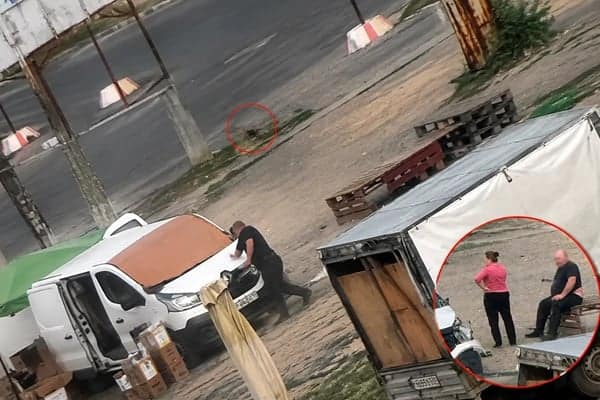
Russia is expanding its drone campaign around Kherson into a more systematic effort to hunt vehicles, raising the prospect of a widening threat to both Ukrainian military logistics and civilian life.
Ukrainian authorities say Russian forces have ordered drone operators in the region to conduct what they describe as “free hunting” for vehicles, using unmanned aircraft including fibre-optic-controlled drones that are difficult to disrupt with conventional electronic warfare.
Oleksandr Prokudin, head of the Kherson Regional Military Administration, said Russian forces had increased the number of drone operators in the area as part of the operation. Particular attention is reportedly being paid to vehicles that can be identified as belonging to Ukraine’s armed forces.
But the danger extends beyond military targets.
Prokudin warned that areas where vehicles congregate — including supermarkets, markets and petrol stations — could face heightened risks in the coming weeks. The geography of Kherson, where civilians and military personnel operate in close proximity, makes distinguishing legitimate targets from ordinary traffic particularly difficult.
The development marks a further evolution of Russia’s use of drones in and around the southern Ukrainian city. Fibre-optic drones are especially difficult to counter because their communications link is physically connected to the operator, limiting the effectiveness of electronic jamming.
🔴 Chilling video of Russia's "human safari" in Kherson.
A Russian FPV drone operator deliberately targeted a civilian bus as fleeing passengers desperately tried to run for safety. pic.twitter.com/ycH8odpgzd
— UNITED24 Media (@United24media) August 7, 2026
For residents, the consequence is a potentially lethal new layer of uncertainty. A routine journey to buy food or refuel a car could become an opportunity for a drone operator to track and attack a vehicle.
The warnings also come after an incident that illustrated how little separation there can be between military operations and civilian life in Kherson.
Days ago, a Russian military drone was reportedly filmed circling a market and pursuing a vehicle belonging to a civilian selling vegetables. According to Prokudin, the drone followed the vehicle for approximately a minute as it appeared to track the man.
The episode has intensified concerns that drones are being used not simply to strike military positions but to intimidate and terrorise people attempting to maintain ordinary life in a city that remains within range of Russian forces.
Kherson. A russian human safari — POV.
russians keep openly posting their war crimes without even trying to hide them.
This time, a “legitimate target” for russian terrorists was a biker.
This isn’t war. It’s hunting civilians.
And the world keeps allowing it. pic.twitter.com/ITgzQYe2EQ
— UAVoyager🇺🇦 (@CrimeanVoyager) August 8, 2026
Kherson’s vulnerability is rooted in its proximity to Russian-held territory across the Dnipro. The city has endured sustained shelling and drone attacks since Ukrainian forces liberated it in late 2022.
The emergence of organised “free hunting” tactics threatens to make movement itself a security risk.
For Ukraine, the challenge is therefore not only protecting front-line troops. It is keeping roads, markets and essential services functioning while Russian drones increasingly turn the spaces between them into potential kill zones.
The battlefield is no longer simply where armies meet. In Kherson, it can begin wherever a vehicle starts moving.


Leave a Comment