
Artificial intelligence is changing how healthcare professionals analyse information, while robotics is assisting precise tasks. Hair restoration is already part of that shift. Computer guided systems can support follicle harvesting, and digital imaging is expanding the information available during assessment.
Yet for patients, the most important question remains personal: who will turn those measurements into a treatment plan that suits their face, their hair and their future?
Technology that supports understanding
The value of technology starts before surgery. Imaging can help clinicians examine the scalp and explain their recommendations, giving patients a basis for discussing treatment.
Doku Arc Studio, used for three dimensional hair analysis at Dr. Serkan Aygin’s clinic, belongs within this planning process. Its relevance is the information it contributes to assessment. Decisions about suitability, hairline position and donor management still require clinical interpretation.
For someone considering a hair transplant, that distinction matters. A digital image can inform a conversation, but the consultation must also address medical history, expectations and the possibility of continuing hair loss.
Understanding FUE and DHI
Technology is not limited to robotic systems. Clinician operated instruments also play an important role in contemporary treatment.
Follicular unit extraction, or FUE, involves removing individual follicular units from the donor area. Direct hair implantation, commonly called DHI, generally refers to placing extracted grafts using an implanter pen. These terms describe different stages: FUE extraction can be combined with DHI implantation.
The choice of instruments should follow the individual treatment plan. Patients benefit from understanding why an approach is recommended, who performs each stage and how the team protects the available donor hair.
Reassurance through personal attention
A natural appearance depends on connected decisions. Hairline height, the distribution of grafts and the transition from finer hairs at the front to greater density behind must work together. Placement also needs to respect appropriate angles and directions.
Measurements help, but they need context. A design must account for facial proportions, existing growth, donor limitations and how the appearance could change with age.
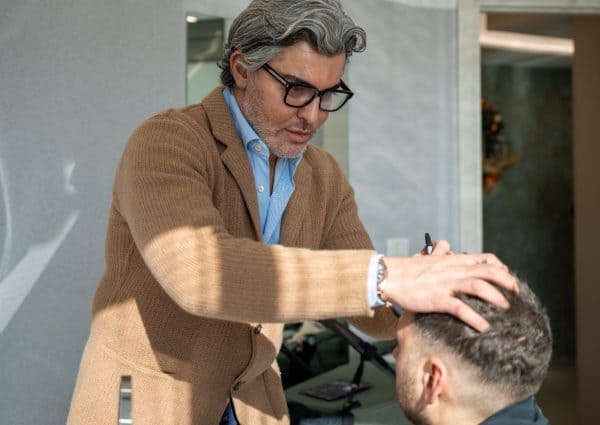
In clinician led care, reassurance comes from knowing that a qualified professional assesses those factors, explains the tradeoffs and remains responsible for the plan. During treatment, careful handling and attention to the scalp and grafts remain essential.
Neither manual instruments nor robotic equipment guarantee safety or a natural result. What matters is appropriate patient selection, competent execution and consistent clinical oversight.
What progress should deliver next
AI could increasingly help clinicians compare information, track changes and support planning. More connected imaging and treatment systems may also improve how decisions are documented and discussed.
These possibilities should be evaluated through evidence of patient benefit, rather than the appeal of automation alone.
For patients today, meaningful innovation should make care easier to understand and better tailored to their needs. The strongest relationship between technology and expertise is one in which better information supports thoughtful decisions, skilled treatment and clear communication throughout the patient journey, from the first consultation to follow-up care.




Leave a Comment