
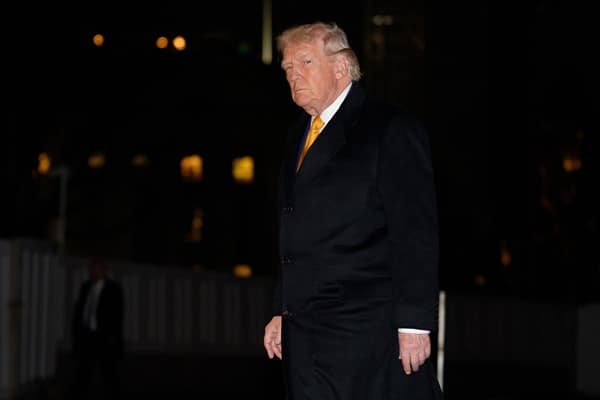
The Trump administration’s increasingly hostile approach towards Ukraine is raising serious questions over whether Washington’s decisions are weakening Ukrainian defences while Russia continues its relentless attacks on civilians and critical infrastructure.
With reports of restrictions affecting American-controlled military satellite communications, interruptions to intelligence warnings, and controversial sanctions exemptions involving Russian petroleum products, the White House faces growing questions about the consequences of its policies.
The latest developments come as Donald Trump has once again attacked Ukrainian President Volodymyr Zelensky, despite Moscow rejecting a proposed 60-day ceasefire intended to allow Ukraine to hold presidential elections.
Speaking on Newsmax’s Finnerty, Trump declared: “I’m not a big fan of Zelensky; they’ve destroyed that country.”
The remarks are extraordinary considering that Russia invaded Ukraine, has spent years systematically destroying its cities and continues to target civilian infrastructure, with Russian Foreign Minister Sergei Lavrov recently rejecting a proposed ceasefire, yet Washington continues directing much of its criticism towards Kyiv rather than Moscow.
It raises an increasingly uncomfortable question: What exactly is Vladimir Putin being asked to sacrifice in exchange for peace?
Read more related news:
Trump’s own party compares him to Neville Chamberlain for handing Putin a lifeline
Putin says Ukraine brought Russian retaliation on itself as they ‘started it’
Ellwood warns UK cannot rely on Trump and sees a pre-war world taking shape
Perhaps the most concerning development involves reports that restrictions affecting Ukraine’s Starshield satellite communications system originated inside the White House. According to Reuters, citing American and Western officials, the restrictions disrupted Ukrainian military communications and drone operations, including systems used to intercept Russian attack drones.
Starshield, developed by SpaceX using Starlink technology, provides military satellite communications capabilities supporting Ukrainian defensive operations.
Reported limitations affecting terminals travelling above approximately 160 kilometres per hour caused connectivity failures, while some Ukrainian units experienced disruption at considerably lower speeds. For Ukrainian forces attempting to intercept incoming Russian drones, losing connectivity can mean abandoning missions and potentially leaving civilian areas more exposed.
An American official denied that Trump personally ordered the restrictions, although Reuters reported that the instruction originated inside the White House, so who authorised these restrictions, why were they introduced, and what assessment was made of their potential consequences for Ukrainian civilians?
These questions become particularly important when considering the latest Russian attacks against Ukraine.
Kyiv suffers another devastating bombardment
During the night of 13–14 October, Russia launched another major assault against Ukrainian cities and critical infrastructure. According to figures provided by Zelensky, Russian forces launched 39 ballistic missiles and more than 120 attack drones, damaging 26 electricity facilities and four oil and gas installations.
At least 600,000 people were reportedly left without electricity, while casualty reports published on 14 October indicated at least ten people killed and 91 injured across Ukraine.
Three combined heat and power plants in Kyiv were also struck, alongside the Trypillya thermal power station outside the capital.
These attacks followed Washington’s announcement of a proposed energy ceasefire, which Ukraine reportedly observed for three days while Russia continued attacking Ukrainian infrastructure. Further concerns have emerged following reports that Ukraine experienced interruptions to its usual advance Western intelligence warnings of incoming ballistic missiles.
Although responsibility for those interruptions has not been established, the consequences of unreliable intelligence and communications during large-scale Russian attacks are potentially catastrophic.
For civilians living beneath Russian missiles, advance warnings and effective air defence systems can mean the difference between life and death, however, there is currently insufficient evidence to establish that American restrictions directly caused casualties during these attacks, but that does not diminish the need for an explanation.
Washington’s Russian oil arrangement raises further questions
The administration’s approach to Russian energy has created another bizarre situation, while Washington has pressured Ukraine to stop attacking Russian oil refineries, Trump has announced an arrangement involving an initial 300,000 tonnes of Russian diesel, with potentially larger volumes to follow.
The announcement was accompanied by sanctions exemptions permitting certain transactions involving Russian petroleum products, and this comes despite previous American efforts to restrict the energy revenues financing Russia’s invasion.
How can Washington simultaneously seek to restrict Moscow’s war financing while opening the door to transactions that could generate additional Russian petroleum revenues?
Zelensky has since confirmed that Ukraine will resume attacks against Russian refineries following Moscow’s failure to observe the proposed energy ceasefire, while these developments also come after a difficult September for Russian forces, marked by substantial reported personnel losses and Ukrainian territorial gains.
Europe must question its dependence on American military support
Beyond Ukraine, the implications for European security are considerable. Military communications, intelligence sharing, software access and continued technical support have become essential components of modern warfare.
If those capabilities can be restricted through political decisions in Washington, European governments must consider the risks associated with relying on American-controlled military systems. This is obviously particularly concerning for NATO members investing heavily in American defence equipment while expecting reliable long-term operational support.
The question is no longer simply whether American weapons are effective, but whether their continued operation can be guaranteed when political priorities change.
Russia remains entirely responsible for invading Ukraine, killing civilians, destroying infrastructure and occupying Ukrainian territory, however, that responsibility does not absolve Washington of the need to explain decisions that could weaken Ukraine’s ability to defend itself.
Trump may believe that pressuring Zelensky demonstrates diplomatic strength, but the danger is that Moscow interprets Washington’s actions as evidence that continuing its invasion carries fewer consequences than resisting American demands.
For millions of Ukrainians, these are not just diplomatic arguments.
They are questions of survival, and the White House’s decisions are increasingly raising concerns over whether American policy is helping to end Russia’s invasion or making it easier for Putin to continue it.


Leave a Comment