
Rockets or other homemade explosive devices were fired at a major German power substation in a suspected sabotage attack that damaged electricity lines and briefly disrupted supplies, according to local authorities and grid operator 50Hertz.
The incident took place on Tuesday morning at the Turnow-Preilack substation in Brandenburg, near the Jänschwalde coal-fired power plant.
German media reported that the facility was targeted several times with homemade rockets loaded with explosives, with some of the projectiles striking the site. Emergency crews subsequently discovered additional devices, including rockets that had apparently not been launched.
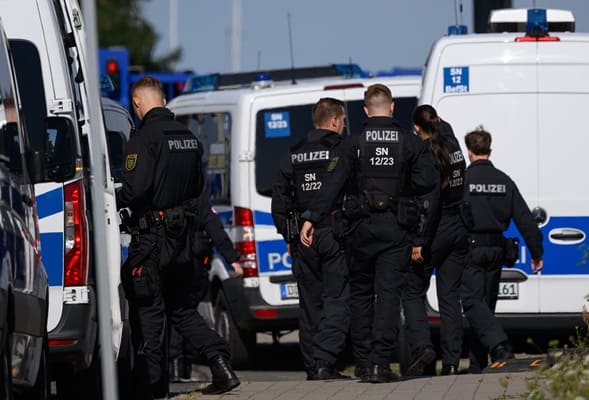
Bomb disposal experts were called to the substation and defused the devices as police opened an investigation.
Several power lines were damaged and electricity supplies were briefly interrupted. The wider electricity network was not affected, however, and the damaged lines were later returned to service, according to 50Hertz.
Jan Redmann, Brandenburg’s interior minister, said the attackers appeared to have attempted to short-circuit the grid in order to trigger a blackout, describing the incident as an “act of sabotage”.
Redmann said a double-digit number of devices were involved, although investigators had yet to establish an exact figure because the site remained under search.
Two attempts to disrupt the grid had succeeded, he said, while several others had failed.
No one was injured and police said there was no danger to the public.
LEAG, the operator of the Jänschwalde plant, described the incident as an attack on the substation, which transfers electricity generated at the power station into the transmission network.
One of Jänschwalde’s generating units, known as Block B, subsequently suffered a technical failure. LEAG said it was investigating whether the malfunction was connected to the attack while repairs were carried out and efforts made to restore the unit.
The precise nature of the devices has yet to be established, with accounts differing over whether they should formally be classified as rockets.
German reports initially described the weapons as rockets packed with explosives. 50Hertz said the projectiles appeared to be homemade devices resembling commercially available fireworks rockets and confirmed that further, unlaunched projectiles had been discovered at the scene.
Police have confirmed that “unconventional explosive and incendiary devices” were found, but have stopped short of officially characterising the incident as a rocket attack.
The attack comes as German authorities face heightened concern over suspected sabotage and other hybrid threats targeting critical infrastructure.
It follows a recent security incident at Leipzig/Halle Airport, where a drone carrying explosives was discovered near Ukrainian Antonov cargo aircraft.
German officials are expected, according to reports, to formally attribute that attempted attack to Russia, although Moscow has previously rejected accusations that it is responsible for similar incidents.
The Brandenburg power-substation incident has not been publicly attributed to Russia or any other foreign government.
The investigation is now focused on identifying those responsible, establishing how the devices were deployed and determining whether the apparent sabotage was deliberately intended to disrupt operations at Jänschwalde or cause wider instability across the electricity network.
The incident nevertheless illustrates the vulnerability of energy infrastructure to relatively unsophisticated attacks, particularly at facilities connecting large generating assets to the wider grid.
For German authorities, the immediate priority is securing the site and preserving evidence. The broader challenge is determining whether the attack was an isolated act of criminal sabotage or part of a wider campaign against the country’s critical infrastructure.


Leave a Comment