
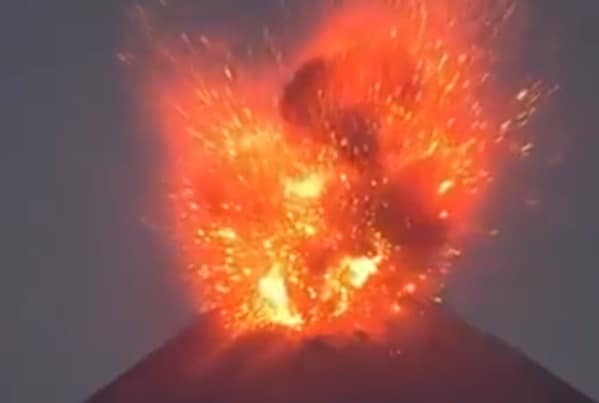
More than 150,000 people have been left stranded in Indonesia after an eruption of Mount Anak Krakatau disrupted air travel, forcing the cancellation of flights at the country’s main international gateway near Jakarta.
All flights at Soekarno-Hatta International Airport were cancelled after volcanic ash was detected in the airspace around the hub, while operations at five other airports were also suspended.
Indonesia’s transport minister, Dudy Purwagandhi, said 712 flights had so far been affected and urged airlines to consider diverting services to alternative airports as authorities monitored the volcano’s continuing activity.
The disruption follows a powerful 30-second eruption early on Sunday, after volcanic activity around Anak Krakatau intensified late on Friday.
Lana Saria, head of Indonesia’s Geological Agency, said the volcano had shown increased activity since July, with Sunday’s eruption the strongest during the current period of unrest.
The repeated eruptions suggested that magma and volcanic gases continued to be supplied beneath the volcano, she said, although authorities could not determine whether the activity would develop into a larger eruption.
🌋**Mount Anak Krakatau in Indonesia has erupted, leading to the cancellation of over 300 flights in 6 airports and the closure of schools,** according to Reuters.
The volcano reactivated on September 4th. Ash has already reached a height of 6,000 meters on the side of Java and… pic.twitter.com/YPMQ2iThCA
— Gianl1974 (@Gianl1974) September 6, 2026
“We continue to evaluate the volcano’s development based on all monitoring data, not solely on the number of eruptions or the height of the ash column,” Saria said in a video briefing.
She warned that the principal hazards included volcanic ash, high concentrations of gas and the ejection of hot rocks and other material around the crater.
Anak Krakatau has remained at alert level 3, the second-highest level on Indonesia’s four-tier volcanic warning system, since July 2.
The volcano’s heightened activity has added to concerns in a country that sits on the Pacific “Ring of Fire” and is home to numerous active volcanoes.
Four other Indonesian volcanoes are also currently at alert level 3: Mount Semeru in East Java, Mount Merapi, Lewotobi Laki-laki and Sinabung.
The disruption at Soekarno-Hatta has created significant knock-on effects for airlines and passengers, with hundreds of services affected as volcanic ash poses a potential risk to aircraft engines and flight operations.
Indonesia has temporarily suspended operations at six airports due to volcanic ash from Mount Anak Krakatau spreading across parts of western Indonesia.
The closed airports are:
Soekarno-Hatta International Airport (Jakarta’s main airport in Tangerang)
Halim Perdanakusuma… pic.twitter.com/XZDq1CbxW9— T_CAS videos (@tecas2000) September 6, 2026
Australian carrier Qantas said it was experiencing disruption to several services connected with the eruption.
“There are disruptions to a number of Qantas services linked to the eruption,” the airline said.
The carrier added: “Our meteorologists and operations teams are closely monitoring conditions in and around Jakarta and any impact on our operations.
“Safety remains our highest priority. We have contacted affected customers and are providing assistance. Services will resume when conditions allow.”
The scale of the disruption highlights the vulnerability of one of south-east Asia’s busiest aviation networks to volcanic activity. Even when eruptions do not directly threaten populated areas, ash clouds can force airlines to ground aircraft or reroute flights over large areas.
For passengers, the immediate impact is likely to depend on how long Anak Krakatau remains active and how volcanic ash moves through surrounding airspace.
For Indonesia’s aviation sector, meanwhile, the priority is to balance the economic cost of widespread cancellations and diversions against the potentially severe safety risks posed by operating aircraft in contaminated airspace.
With the volcano continuing to erupt and authorities unable to rule out further escalation, airlines are likely to remain dependent on updated geological and meteorological assessments before restoring normal schedules.


Leave a Comment