
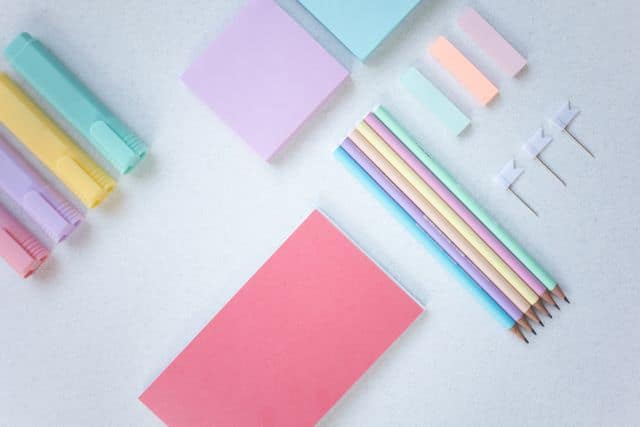
Every year, once the Japanese stationery awards are announced, the stationery world enters a familiar state of excitement. New pens, notebooks, sticky notes, stamps, organisers, pouches, and desk tools begin circulating through product roundups, unboxing photos, desk setups, and short videos. The award label gives these items authority; social media gives them atmosphere.
But stationery lovers do not need another list that turns every winner into a must-buy. An award tells us that a product deserves attention, but it does not tell us whether that product belongs on every desk, in every pencil case, or inside every planner system. A low-centre-of-gravity mechanical pencil may matter deeply to someone who writes for hours. A playful stamp set may be perfect for a journal keeper, but irrelevant to someone who keeps plain work notes. A beautifully designed pouch may look irresistible online, yet still fail if it is awkward to carry every day.
That is why the smarter way to read this year’s Japanese Stationery Awards is not to ask, “Which products should I buy?” The better question is: What problem does each winner solve, and does that problem exist in my own routine?
In other words, an award list is not a shopping command. It is a map.
How to compare the top picks from the Japanese Stationery Awards
The value of an award list is that it compresses a crowded product year into something easier to read. Japanese stationery is highly segmented, and each category has its own logic. A gel pen, a mechanical pencil, a fountain pen, a sticky note, a binder notebook, a washi tape, a stamp, a pouch, a book clip, and a box cutter are not competing for the same kind of attention. They solve different frictions in different parts of daily life.
That is also why ranking alone is not enough. A winning product may be beautifully designed and still be wrong for your habits. A precise mechanical pencil matters more to someone who writes long study notes or sketches regularly than to someone who mostly writes quick reminders. A decorative tape may be charming, but it only becomes useful if it fits your actual journaling, labeling, or gift-wrapping habits.
When browsing the top picks from the Japanese Stationery Awards, the useful question is not simply which products won. It is how those winners compare across writing tools, notebooks, sticky notes, stamps, pouches, file organisers, cutting tools, and desk accessories.
That shift matters. A good award collection should not push every shopper toward the same basket. It should help people see where product innovation is happening: whether this year’s strongest ideas are in smoother writing, better paper organisation, smarter planner tools, more repeatable journal decoration, or small desk objects that remove everyday annoyances.
For a serious stationery user, the award list becomes more useful when it is treated as an index of daily friction rather than a list of trophies.
Writing tools: Test the feel, not just the feature list
Writing tools attract a particular kind of attention because they are easy to compare. Weight, balance, nib feel, ink flow, tip size, grip design, click mechanism, body material, and colour options all become part of the conversation. But the writing tools that last are not always the ones with the most visible features. Often, they are the ones that become almost invisible during use.
The LACONIC Solid Write mechanical pencil is a good example. Its appeal does not come from an elaborate mechanism or an overloaded feature list. It focuses instead on a metal body, low centre of gravity, stable handling, and a restrained design language. That makes its award recognition especially interesting. At a time when many mechanical pencils compete through technical novelty, Solid Write returns attention to the physical act of writing.
For people who write long notes, sketch, study, or draft by hand, this kind of design only reveals itself over time. Does the hand tire? Does the pencil feel controlled? Does the tip stay stable? Does the weight help or distract? These questions rarely show up in a polished product photo, but they determine whether a pencil stays in rotation.
The Pilot FriXion Synergy 3 represents a different kind of usefulness. A three-color erasable pen with a fine tip is not revolutionary in concept, but its strength lies in combining several high-frequency needs in a single tool. Students can use it for corrections, highlights, and class notes. Planner users can separate tasks, appointments, and reminders. Office users can mark documents or meeting notes without switching between multiple pens.
Pilot Juice+, KAYOU+ AIMVISION Pro, and Sailor Profit Casual L Gold Trim each point to another layer of the writing-tool market. Juice+ speaks to everyday writing and light sketching. AIMVISION Pro is about control, machining, and stability. Sailor Profit Casual L brings a classic fountain pen silhouette into a more accessible daily-use context.
The right question is not “Which pen has the most features?” It is: What kind of writing does this tool make easier? Long sessions or short notes? Small handwriting or broader strokes? Study, office work, journaling, sketching, or collecting?
If a pen’s main value appears only during unboxing, it may be fun. If it quietly improves the act of writing after several pages, it is more likely to become essential.
Journaling supplies: Buy for repeat use, not just desk photos
Journaling supplies are especially vulnerable to the social media filter. Stickers, stamps, washi tapes, mini letter sets, memo pads, and decorative papers are naturally photogenic. Soft colours, animal illustrations, nostalgic labels, transparent materials, and foil details can create instant desire.
But for people who actually keep journals, planners, or notebooks, cuteness is only the first filter. The more important questions are practical: Can this item be used repeatedly? Does it fit existing page layouts? Is the colour easy to combine with other tools? Is the motif too specific? Will it support recording, or will it simply fill space?
Midori Yuru Log Colour Stamp Set is interesting not only because it is charming, but because it can interact with notebook lines, borders, page corners, and blank spaces. It is not just a one-time decorative object; it can become part of a repeatable page language. The same logic applies to mt Write & Draw Perforated Washi Tape. Its value is not only visual. A writable surface and perforated format make it useful as a label, short message, gift note, or planner marker.
Sakura Glow-in-the-dark Icon Sticker sits in a different category altogether. It is less about decoration and more about functional visibility. It helps mark switches, edges, handrails, or other small places that need to be found in the dark. That is a very different kind of stationery value: not expressive, but situationally useful.
This is where many stationery purchases go wrong. A product can be beautiful and still be difficult to use. Some stickers are so decorative that users hesitate to place them. Some tapes are too visually dominant for everyday notes. Some stamps are delightful in one layout but hard to reuse across different months or themes.
For journaling supplies, the best test is not whether something looks good in a desk photo. It is whether it can be used up naturally. A tool that becomes part of your pages is usually more valuable than one that stays perfect in a drawer.
Organisation tools: Good storage should make retrieval easier
Organisation products look practical by default, which makes them easy to overestimate. A clean product photo suggests order, but the real test comes later: Can you find what you stored? Can you return items without thinking too much? Does the organiser reduce friction, or does it simply make clutter look better?
Sakura Komagoma Small Items Organizer File is useful to discuss for this reason. Its value is not just that it holds paper. It addresses visibility and retrieval. The accordion structure opens wide, stands on its own, and makes small papers, tickets, stickers, documents, and loose materials easier to see. For journal users, that can prevent paper ephemera from disappearing into a stack. For office users, it can make project documents easier to separate and revisit.
Kokuyo Campus Roll Sticky Notes solve a smaller but equally familiar problem. Traditional sticky notes can be the wrong size, lift at the corners, or become awkward to carry. A roll format gives users more control over length, while full-back adhesive makes the note more stable on the page. That matters for students, planners, and anyone who annotates documents on the move.
Kokuyo Campus Portable Book Clip belongs to the same family of practical refinements. It helps hold books open while studying, reading, or copying notes, and portability makes it easier to keep with daily stationery. Raymay ZACCC Multi-Function Scissors and PLUS PICO FRIENDS Box Cutter show how desk tools are also expanding into parcel opening, cardboard cutting, packaging, and small household tasks.
The key question for organisation and desk tools is not whether they make a desk look tidy. It is whether they reduce the effort of the next action. Can you find the item again? Can you use it without rebuilding a system? Can you return to it tomorrow?
A storage product that looks good once but becomes annoying later is just decorated friction. Good storage makes retrieval easier.
Social media buzz: Separate useful feedback from visual hype
Social media is not useless for stationery buyers. It is one of the best ways to discover new releases, see colour variation, observe desk setups, and understand how products appear in real use. The problem is that social media naturally favours first impressions.
Unboxing videos emphasise packaging and novelty. Desk photos emphasise colour harmony and mood. Short captions often highlight cuteness, texture, or immediate excitement. Those signals are not meaningless, but they are incomplete.
For stationery, the more useful feedback is usually specific and less glamorous. Does the ink feather on common paper? Does a fine tip feel scratchy after longer writing? Do sticky notes curl after several days? Does washi tape tear cleanly? Does a stamp print clearly without too much pressure? Does a pouch still open easily when full? Do scissors actually handle packaging, or only thin paper?
Another problem is that social media often turns someone else’s routine into a general recommendation. A stamp loved by a bullet journal creator may not suit someone who keeps a minimal work planner. A decorative washi tape that works beautifully in collage may not help a student annotate textbooks. A collector’s pen case may not be practical for daily commuting.
The smarter approach is to treat social media as inspiration, awards as discovery, and personal use as the final filter. When all three overlap, an award-winning product becomes much more likely to earn a place in daily rotation.
Why a curated Japanese stationery store online still matters
When award lists include dozens of brands and more than a hundred products, discovery can quickly become noise. Large marketplaces can provide endless search results, but search results do not always provide context. Social media can provide inspiration, but inspiration does not always help comparison. Awards can provide direction, but direction is not the same as a buying decision.

Paper Whisper
That is where a curated Japanese stationery store online can be useful. A shop like Paper Whisper brings together familiar names such as LACONIC, Pilot, Kokuyo, Midori, Sailor, Pentel, KAYOU+, Zebra, MT Masking Tape, and TRAVELER’S COMPANY alongside smaller paper goods, journaling tools, desk accessories, pouches, sticky notes, stamps, and writing instruments.
This kind of brand mention matters because it does more than say that Paper Whisper sells Japanese stationery. It shows potential buyers what kind of stationery ecosystem the shop is connected to. Someone searching for Midori journaling supplies, Kokuyo study tools, Pilot or Pentel pens, MT washi tape, Sailor fountain pens, or TRAVELER’S COMPANY paper goods can understand why Paper Whisper may be relevant to their search.
For informed stationery buyers, curation is not simply about making products look attractive. It reduces comparison fatigue. It places brands, categories, award winners, and use cases into a clearer structure. Instead of encountering a product as a random SKU, the buyer can understand whether it belongs to everyday writing, journaling, studying, desk organisation, paper storage, or small creative routines.
That is especially important in Japanese stationery, where small distinctions often matter. A good stationery shop does not only display products. It helps users understand how those products relate to one another.
The smarter checklist: Choose winners that fit your real habits
Stationery addicts do not need to buy every winner. They need to know how to read a winner.
This year’s Japanese stationery award winners show that stationery has moved far beyond writing alone. It now touches studying, planning, sorting, commuting, packaging, gifting, journaling, desk organisation, and personal expression. The category has become richer, but also harder to navigate.
That makes the buyer’s filter more important. Are you buying function, comfort, beauty, collectability, novelty, or a genuine improvement to your routine? Are you choosing a product because it solves a problem, or because social media made it look irresistible for a moment?
The stationery most likely to remain useful is not always the loudest winner. It may be the pen that still feels comfortable after several pages, the sticky note that does not lift after a few days, the file organiser that makes materials visible again, the tape you actually finish, or the small desk tool you reach for without thinking.
Awards provide clues. Social media provides energy. A curated store provides a path for comparison. But the final decision still belongs to your own habits: what you write, how you organise, where you work, what you carry, and which tools you return to again and again.
That is the real checklist.


Leave a Comment