
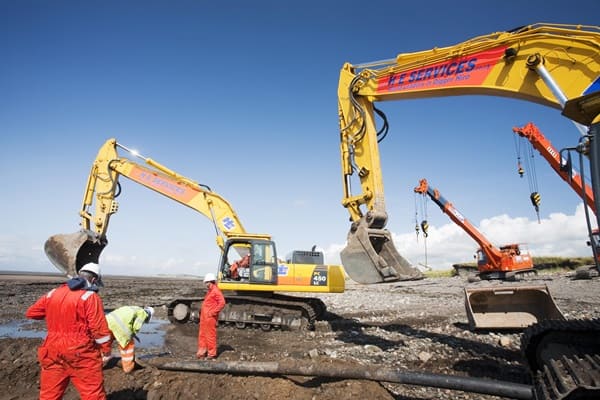
Essex Police recovered almost £65,000 of stolen construction equipment in June 2026. The haul included a £40,000 JCB telehandler taken from a site at Roxwell and traced to Norton Heath near Ongar four days later, plus a £20,000 digger stolen from Hutton and a £4,500 trailer taken from Rochford, both found at Cold Norton. Good result for the force’s Rural Engagement Team, which has recovered 67 vehicles linked to theft or criminal activity in twelve months.
It also tells you something less comfortable. Plant moves fast in this county, and it moves in one direction.
What a stolen machine actually costs a site
A stolen telehandler costs a contractor four things: the replacement value, the hire rate for a stand-in, the programme days lost while you wait for it, and the premium at next renewal. The machine itself is usually the smallest number on that list.
Lead times on replacement plant run 4 to 12 weeks depending on the model, so a theft in week nine of a groundworks package lands in the middle of a sequence you cannot reorder. Allianz Cornhill puts the annual cost of theft to UK construction at over £800 million once delay and insurance impact are counted. The BauWatch Crime Report 2025 found 31% of sites experienced delays as a direct result of theft, vandalism or intrusion.
Then there is the part nobody budgets for. A telehandler on a housing scheme unloads deliveries, moves blocks, lifts pallets and feeds three or four subcontractors at once. Lose it overnight, and the groundworkers, the bricklayers, and the delivery schedule all stop together, turning a £40,000 insurance claim into a six-figure commercial problem by the time the delay damages are settled.
Why North Essex carries a different risk profile
Geography is the reason. Essex Police has checked more than 200 lorries and containers at Harwich International Port since May 2026 as part of an intelligence-led operation against plant theft, with rural engagement officers inspecting HGVs queuing for North Sea ferries. Sergeant Jamie Horton has been direct about why: stolen machinery and vehicles are exported to Europe through the county’s ports.
That puts sites in and around Colchester at risk. The city sits on the A12 between the M25 and Harwich, with the A120 running roughly 20 miles east to the port itself. A machine lifted from a compound at 1 am can be inside a container before the site manager unlocks the gate at seven. The National Crime Agency reports that UK and international organised crime groups work together to steal and export construction machinery, and the Metropolitan Police raid on an Ilford property in January 2026 recovered close to £2 million of stolen equipment, roughly ten lorry loads, including tools taken from Balfour Beatty subcontractors on Lower Thames Crossing access roads.
This is not opportunistic. It is logistics.
What actually leaves site
Small kit, mostly. The same BauWatch research found 72% of operational costs come from assets valued under £7,400, meaning tools, generators, sensors and specialist parts rather than yellow plant. HSB puts the annual value of small tools stolen across the UK at £98 million, up 5% year on year.
Copper is the other constant. Cable, pipe and tank stock disappear during first fix and second fix, and the damage done pulling cable out of ducting routinely exceeds the metal’s value. Diesel takes a close third.
Heavy plant gets the headlines because recovery is so poor. Fewer than 10% of stolen plant vehicles come back to their owners, which is why the Essex recoveries in June made trade press at all.
Where fencing, cameras and trackers stop
Physical measures record and deter; they do not intervene. Heras panels get lifted off their feet in under a minute. CCTV towers capture footage of people in balaclavas, useful for the claim and rarely for the recovery. Trackers work well, and the June telehandler recovery leaned on tracking data alongside local intelligence, but a tracker tells you where your machine went, not that it is still yours.
The gap sits between the last operative leaving and the first arriving. That window runs roughly twelve hours on weekdays and stretches past sixty hours across a bank holiday weekend, and it is the window where 55% of sites that report repeat theft get hit.
Developers running phased schemes on the northern edge of the city often bring in construction security Colchester teams for exactly those windows, particularly around first fix when copper and boiler stock sit on site in volume, and the perimeter is still hoarding rather than a locked building envelope.
Officers versus systems: how the decision usually gets made
The decision comes down to what the site holds and how long it holds it. A cleared plot with a fenced compound and two machines suits a monitored alarm and a tracker package. A live scheme with stored materials, an active plant fleet and multiple subcontractor lock-ups needs someone physically present who can challenge access, log deliveries and call it in.
Licensing sets the floor, not the standard. Alpha Security Services and every other SIA-licensed contractor working in the county operate against the same Security Industry Authority baseline for their officers, so the difference between providers shows up in supervision, assignment instructions, patrol logging and how fast an incident reaches Essex Police rather than in the badge itself.
Ask any site manager who has run both. Budget holders comparing manned guarding Colchester rates against the cost of a single week of programme slippage tend to reach the same conclusion, especially on schemes with liquidated damages attached.
Five checks before you appoint
- Verify every officer’s SIA licence number against the public register before the first shift.
- Request site-specific assignment instructions rather than a generic template.
- Confirm patrol logging (NFC or GPS checkpoints) and agree who receives the nightly report.
- Set the escalation route, including the named on-call supervisor and the Essex Police reporting method.
- Agree the handover with your principal contractor’s site manager in writing.
Questions Essex site managers ask
Does a security officer reduce insurance premiums?
Insurers price manned cover into risk assessments, and a third of UK firms saw premium increases after equipment theft. Confirm the arrangement with your broker before renewal, because the discount depends on the policy wording, not the guard.
How many officers does a residential site need?
One officer covers a single-entrance site of up to roughly two acres. Sites with multiple gates, split levels or active plant compounds need two, since a lone officer on patrol leaves the entrance unmanned for the duration of the loop.
Is CCTV enough on a small site?
Monitored CCTV with a keyholding response suits sites holding low-value stock. Sites storing copper, plant or fuel need a physical presence, because response times from an off-site keyholder run longer than the ten minutes a theft team needs.
What happens to stolen plant in Essex?
Most stolen machinery heads for a port. Essex Police inspections at Harwich International Port target freight containers precisely because organised groups export construction equipment to Europe, and machines that leave the country rarely return.
Site crime in this county is now a supply chain with a route, a market and a deadline. Build the security programme around that reality, and the numbers make sense on their own.



Leave a Comment