
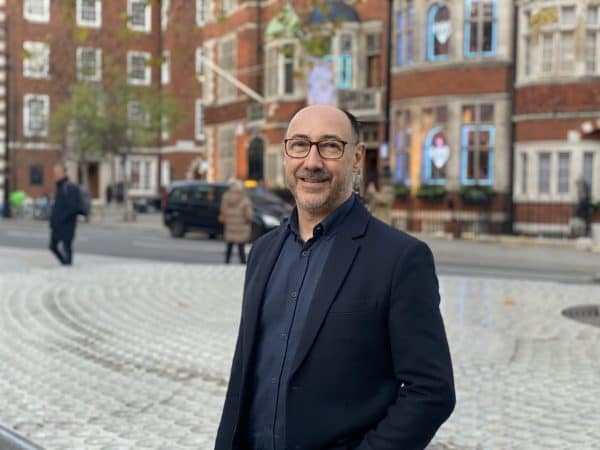
After a distinguished 25-year career in investment management, Paul Christie made a bold pivot into healthcare innovation and launched forward-thinking medtech company, Tachmed.
Combining decades of experience in data-driven financial decision-making with firsthand insights into the limitations of modern health systems, he set out to reimagine how technology could transform patient care and is now on the brink of launching TachShield: an intuitive at-home digital diagnostics device that aims to make healthcare accessible to all.
Here, Paul provides insight into the personal journey behind Tachmed’s creation, how his financial background shaped its business model, and why he believes the next decade will see an explosive transformation in digital health driven by data and AI.
You had a successful 25-year career in investment management before founding Tachmed. What inspired you to pivot to the healthcare sector?
My ‘pivot’ was inspired by a combination of factors based on my experience of healthcare services in the UK, the role of data in decision-making in my financial career and how I foresaw its role emerging in a digital, tech-enable health system of the future.
I lost my first son because of a midwife error confusing the foetal heartbeat with the maternal in delivery. An experience like that leaves you questioning how that happens in in a modern health service. There is no way that should happen given the tech we have today and the arrival of AI in every facet fo health service provision. In my eyes, the health services sector looked antiquated and inefficient back in 2010, the debate sourrounding Smart Cities of the future was just starting and Africa was leading the work in medtech and other smart health apps. It felt like the fintech revolution was just about to arrive in health.
How has your background in finance and investment influenced your approach to building and scaling Tachmed?
It was significant and a great training ground which informs how you look at the world and organise a business to operate within it. I owe the business model Tachmed has developed to the many, many mistakes I made and observed in others. One of the most overlooked factors in successful investor management businesses is the ability to manage your own operational risk whilst building the portfolio you’re paid to do. It’s always about good organisation, good people and facing up to your failures fast so you can pivot.
TachShield has been described as an “intuitive health tech device.” How exactly does it work and what makes it unique compared to existing diagnostic tools?
Its designed so a child can use it. We called it a Nespresso machine for health from the start to reflect the goal of testing being as easy as your daily coffee! When fully launched the idea is you will go online and pick your tests which will be delivered within the hour. Then you test, report the results, speak to your clinician and if needed, receive your prescription via next day delivery. At Tachmed, we believe this will be the future of digital health!
From the beginning our goal was to make TachShield ubiquitous for home diagnosis, enabling virtual primary health consultations with automated follow-up services. The best way to do that is to make home testing a regular non-event which is most powerful when the data it produces effortlessly informs how users choose to behave in the future. If you can make it accessible to the whole family, building better health behaviours becomes naturally intuitive.
How do you see digital diagnostics and AI reshaping preventative medicine over the next decade?
It’s explosive – all about the data! There’s too little usable patient data right now. TachShield is disruptvie because in being widely deployed it disrupts old models with real time, precise, frequent test data. This will train models driving downstream use of AI to automate and inform patients and their clinicians to optimise outcomes and will transform decision-making with speed and accuracy.
TachShield is set to launch in 2026. What markets or regions are you targeting first, and why?
We plan to launch in the US first closely followed by the UK. It’s an exciting market leading the development of med tech, data science and value-based health services.
There are many health accelerator platforms to support the launch of new technologies like TachShield into the market. Add to this that the FDA pathway is clear and respected, the CDRH is a huge supporter of home diagnostics throught its Home Health Hub initiative and the system of reimbursement and health service provision fits the business model well.
How do you plan to balance affordability and accessibility, particularly in underserved or remote regions?
This really plays to Tachmed’s strengths as a disruptive force for better access to health services. Tachmed’s SaaS based model is highly cost effective, encouraging frequent use. Additionally Tachmed will be launching its own community health initiative called Jamii Sasa (Community Health in Swahili). Tachmed will partner with online primary health services to bring easy and very low or in some cases zero cost access to these frontline services through remote diagnosis to under-served communities.
Anything else to add?
Tachmed has recently moved into new lab facilities at ARC West London. I’m very excited about this move and we are focused on making it a dedicated hub for our innovative assay development team who will drive the next generation of testing.





Leave a Comment