
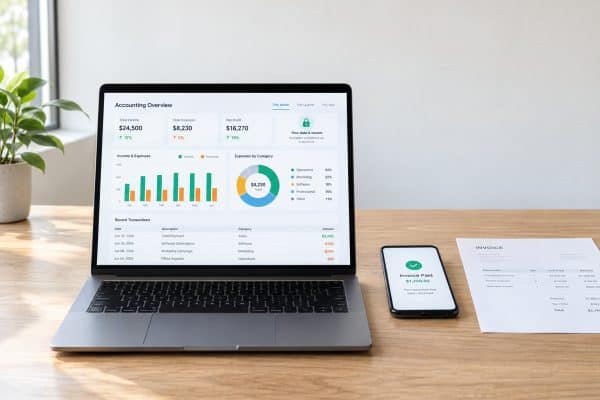
Cloud-based accounting platforms are reshaping how London and UK businesses manage their finances, supporting flexible operations and compliance in a rapidly evolving regulatory environment. This article examines the growing adoption of cloud accounting among London-based firms and the practical benefits it offers finance teams working within the UK market.
Cloud-based accounting has shifted from being a niche solution to a core component of finance management for London and UK businesses. As companies across the capital and the wider UK adapt to remote and hybrid working, cloud platforms now play a key role in supporting operational flexibility, compliance, and faster financial reporting. For businesses operating across several sites, or for London-based finance teams managing complex group structures or reporting deadlines, cloud solutions can help deliver the speed and adaptability required in today’s business environment. Developments in cloud-based systems are also shaping trends in accounting in Denmark and other European markets undergoing similar digital transformations.
Transforming finance operations with cloud-based solutions
Cloud-based accounting stands out for its ability to provide secure, real-time access to ledgers, reports, and audit trails from any location with an internet connection. For London finance professionals, this means it is possible to manage books remotely, whether working in the office, from home, or while travelling internationally. Regular automated software updates help ensure teams are always using the latest versions and remain compliant with evolving UK regulations, reducing downtime and minimising compliance risks.
In daily operations, these platforms streamline core accounting tasks. Transaction data can be synchronised instantly between departments, with digital audit trails tracking every financial action. This makes month-end close processes more efficient, as ledgers are kept up-to-date and supporting documentation is more easily accessible for audit and compliance in the UK context.
Business benefits: Speed, accuracy, and visibility
For London’s growing businesses, migrating to cloud accounting typically reduces manual data entry and reliance on spreadsheets. Automation assists with reconciliations, while centralised dashboards provide improved visibility over cash flow, critical for UK businesses needing timely and accurate information for decision-making. Enhanced transparency makes it easier to flag issues early, optimise resource allocation, and drive informed strategy across all areas of the business.
Collaboration and control in the cloud
Modern cloud accounting platforms promote efficient collaboration, essential for London-based teams that often include remote or flexible working patterns. Role-based permissions and robust approval workflows allow businesses to give controlled access to auditors, advisers, or other departments, reducing reliance on email and supporting stronger data security. This improves cooperation within finance functions and across the wider UK business network, as well as with external partners.
Staying compliant and managing governance
Meeting regulatory requirements is a major priority for businesses in London and the UK. Cloud-based systems aid compliance by maintaining mandatory records and version control, with automatic logs tracking data access and amendments. For companies expanding internationally, these platforms can be adapted to accommodate a range of regulatory regimes, though aligning with UK standards remains central for London firms dealing with evolving finance and data protection rules.
Security and risk considerations
While cloud accounting offers many benefits, it is essential for UK businesses to prioritise security and risk management. Protecting sensitive financial data, controlling user access, and ensuring robust vendor due diligence are key elements of a responsible approach. Finance leaders in London should look for providers with recognised security certifications and reliable backup protocols, and prepare for business continuity in the event of outages or cyber incidents.
Smoother implementation and the road ahead
Implementing cloud accounting in London businesses involves careful planning. Common pitfalls include data migration errors, potential conflicts during chart of accounts redesign, gaps in integration with legacy systems, and insufficient staff training. To guarantee a smooth transition, proactive change management, including open communication, pilot testing, and ongoing support, is vital.
The future of cloud accounting for London and UK businesses is likely to feature greater automation and more deeply integrated analytics. As solutions become increasingly connected with tools for invoicing, payroll, and payments, financial management is set to become more agile and responsive, helping businesses in the capital remain competitive as markets evolve.




Leave a Comment