
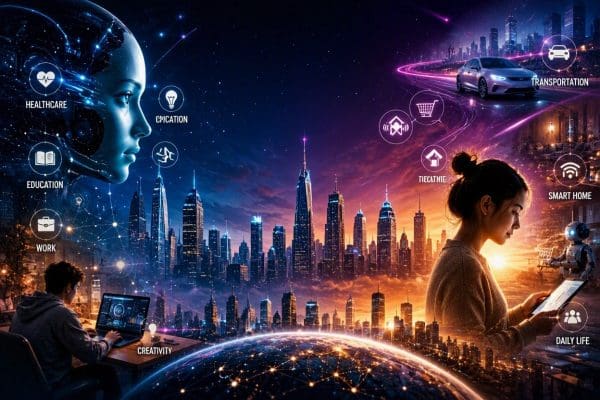
Artificial intelligence is no longer a thing that only belongs in science-fiction movies or those futuristic laboratories. It is already woven into daily life—quietly, so quietly that we barely notice it at all. From the way we search for information to how we craft images, generate text content, edit videos, and talk back and forth, AI is shifting what people can do, and how fast they can do it.
What makes this Perya color game shift especially striking is the speed of it. Technology that once felt impossible is now becoming reachable for regular users, via smartphones and computers. And it’s not just that AI is changing tools or machines. It’s also adjusting our habits, raising expectations, reshaping creativity, and changing how we relate to information, in general.
AI has become part of everyday life
Think about how often you bump into AI on a regular day. Recommendation systems sorta pitch what to watch, navigation apps calculate routes, smartphones get better at photos, and search engines help answer questions, like you did not even ask.
And even if someone does not intentionally open an AI tool, intelligent systems might still be working behind the curtain.
So this expanding presence is making AI slowly feel less like a special technology, more like an everyday Perya colour game utility.
AI is changing how we create
One of the most exciting developments is the rise of generative AI; honestly, it feels like things are moving faster than before.
Now people can use AI tools to assist with producing all kinds of things, like:
- Written articles, narratives, and rough ideas
- Digital illustrations and realistic images
- Videos plus animated sequences
- Voice and other audio content
- Presentations and visual layouts
- Short film ideas, or even scene breakdowns
- Marketing materials, social media posts
And what’s wild is that making something that used to need specialised software, technical knowledge, and hours of work can now start with just a simple Perya colour game written prompt.
That doesn’t mean human creativity is suddenly optional. Instead, AI offers creators an additional instrument for converting thoughts into something more tangible, which is… kind of the whole point.
AI Can Generate Images and Videos
AI-made visuals have really come a long way. Today’s systems can take a plain description and then produce sharp, detailed images. They can also reshape or rework existing artwork, upgrade visual quality, and try out different artistic styles kinda endlessly.
And video generation is moving fast too. AI can help with scenes, characters, animations, Perya colour game and even short video runs based on text cues, or using reference material as a guide. Sometimes you can iterate quickly, just adjusting a phrase and getting a different outcome.
All this actually creates some unusual opportunities for filmmakers, designers, marketers, teachers, and regular creators too.
Like, if someone has a notion for a short film, they might use AI-assisted tools to sketch the idea, build visual mood boards, generate scenes, and run storytelling experiments before going into the normal, traditional production steps.
AI Enhancement Is Getting Smarter
Another place that’s seeing big, noticeable improvement is AI enhancement. You know, the kind that kinda feels like it’s getting better every week. AI can help with a bunch of things, like:
- Upscaling lower-resolution images
- Removing unwanted visual noise
- Improving image clarity
- Enhancing audio quality
- Restoring older photographs
- Improving video resolution
- Assisting with editing and production
With these abilities, older or less sharp content can become more useful, and users don’t really have to learn complicated editing techniques, not even close.
The tech is still not perfect, though, but the progress is pretty clear Perya colour game. It shows just how fast AI-powered creative tools are evolving.
AI is changing how we work
AI is also reshaping workplaces in quiet ways. Instead of spending hours on the same repetitive stuff, employees can use AI for brainstorming ideas, summarising information, arranging material, drafting documents, analysing data, or assisting with research.
That kind of help can free people up to focus on responsibilities that really need judgment, careful communication, creativity, and decision-making, not just speed.
But it brings a real, and pretty important challenge too. Workers have to learn to use these tools responsibly. Being able to evaluate an AI-produced answer may become Perya colour game just as necessary as knowing how to generate one, because the two parts go hand in hand, kinda.
Our expectations are changing too
Maybe the most notable change is psychological.
People start getting used to instant answers, fast revisions tailored recommendations, and automatic help. As AI gets quicker, our expectations for tech, naturally, rise.
Things that used to take an hour might start to feel kind of slow if an AI tool can deliver a similar result in just minutes. You know, that mental “wait-time” bar goes down.
So it brings a bit of both, Perya colour game opportunity and pressure. People can get more productive, but they may also become restless with those steps that still need normal effort or older processes.
AI does not replace human judgment
Even with all its impressive skills, AI still has limits. It can spit out inaccurate information, miss context in a subtle way, carry bias from its training data, or create really convincing text that just is not factually correct.
Human judgment stays essential.
Using AI responsibly really comes down to checking the key information, protecting private data, and staying mindful about what it cant actually do. Also, think of the tool as more of an assistant, not something unquestionable that you just blindly trust.
In the end, the strongest results often show up when human creativity and AI abilities work together.

digiplus
Final thoughts
So, How AI Is Changing Us Faster Than We Realise is, in the end, a story about adapting. AI is reshaping how we make things, get work done, look things up, talk with others, and solve everyday puzzles—and its growth really doesn’t show much sign of pausing.
It started with generating images and videos, sure, but now it is also lifting older content and helping creators turn rough ideas into short films. In other words, it has moved well beyond plain automation. It’s turning into a co-creator, and also a productivity assistant, even if that sounds a bit dramatic.
Now, the future won’t just belong to AI. It will belong to the people Perya color game who know how to use it wisely, with imagination, and responsibly.
Please play responsibly. For more information and advice visit https://www.begambleaware.org
Content is not intended for an audience under 18 years of age




Leave a Comment