
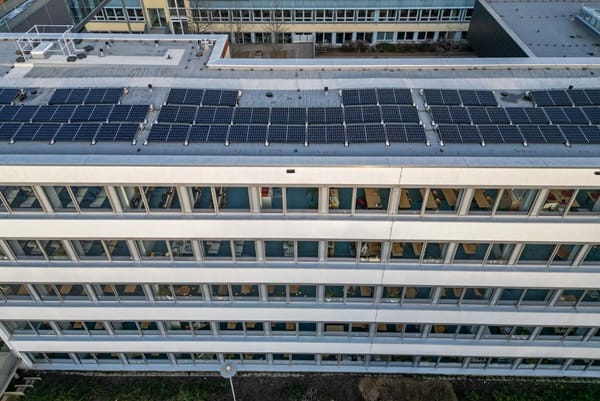
Industrial buildings often have a major advantage for rooftop solar: substantial roof area. But having a large roof does not mean a conventional solar installation will be practical.
Some warehouses, factories, distribution centres, and other industrial facilities were built without rooftop solar being part of the original design. Some have limited structural capacity, lightweight metal roofing, curved or uneven surfaces, or operations that make extended installation disruptions difficult. Under these conditions, lightweight flexible solar panels may be worth considering.
Unlike conventional glass modules, some lightweight flexible panels can be installed on suitable roofs using a simpler mounting approach. Some are designed without glass and can be bonded directly to suitable roof surfaces, which may reduce the need for heavy mounting equipment or ballast. The exact installation method depends on the roof and the panel system.
For a business evaluating rooftop solar, these factors can affect whether a project is practical.
1. They may suit roofs with limited load capacity
Roof loading is an important consideration when assessing solar panels for industrial buildings, particularly on structures with limited capacity for additional loads.
A conventional rooftop system does not add the weight of the glass modules alone. The installed load can also include rails, brackets, ballast, wiring, and other components. Wind and other site-specific loads also need to be considered in the structural assessment.
This can be a consideration for older industrial buildings or structures with limited capacity for additional dead load. Structural limitations can prevent some industrial and distribution-centre roofs from supporting conventional rooftop PV without reinforcement. Structural reinforcement may involve work on roofing, insulation, purlins, trusses, columns, or girders, potentially adding complexity to the project.
Lightweight flexible panels can reduce the weight contributed by the solar equipment itself. Some lightweight flexible modules are available at relatively low weights per square meter, although the exact figure varies by technology and design.
That does not mean a lightweight panel can be installed on any roof without assessment. The complete installed system still needs to meet applicable structural, wind, fire, electrical, and roof-specific requirements.
Where roof loading is the main obstacle, reducing the weight of the solar system may provide another option for the project.
2. They may suit industrial roofs with complex surfaces
Industrial roofs do not always provide a simple, flat surface. A facility may have profiled metal sheets, curved sections, membrane roofing, roof equipment, changes in level, or other features that make conventional racking more difficult.
Rigid glass panels need a mounting arrangement that keeps the modules in their required position. Flexible panels can take a different approach because some are designed to follow gently curved or uneven surfaces.
This can be useful when the available roof area includes shapes or contours that are difficult to accommodate with rigid modules.
The potential benefit is the ability to use some roof surfaces without relying on the same mounting geometry required for rigid panels. Depending on the system, this may reduce the need for additional mounting structures on certain roof surfaces.
For an industrial facility with a large but complex roof, this may increase the amount of area that can be evaluated for solar installation.
The specific roof membrane, surface, bend radius, attachment method, and panel specifications still need to be checked before installation.
3. Installation may reduce disruption to an operating facility
For an industrial business, installation time can also affect day-to-day operations. A factory may have production lines running during the day. A warehouse may be handling deliveries. A distribution centre may need continuous access for loading and dispatch.
A solar project that requires extensive structural work, heavy equipment, or major roof modifications can create additional coordination challenges.
Some lightweight flexible solar systems can be installed directly onto suitable roof surfaces without conventional racking or ballast. Certain systems use adhesive bonding and non-penetrating installation methods, which may reduce the number of components that need to be assembled on the roof.
This may simplify parts of the installation process.
A lightweight panel may also be easier to transport and handle during installation than a heavier glass module. That can reduce the need for some of the lifting and handling arrangements associated with conventional panels.
The exact installation time depends on the roof, access, electrical work, weather, system size, and installation method. For a business where prolonged disruption is a concern, the installation approach can therefore be an important consideration.
4. A simpler system may affect installation costs
The cost of the solar module is only one part of the overall project cost. A conventional rooftop project can involve mounting rails, brackets, ballast, lifting equipment, structural modifications, roof penetrations or attachment systems, and additional labour.
If the roof needs reinforcement before conventional panels can be installed, that can change the overall project costs. Structural reinforcement may involve work on roofing and structural components, while the associated construction work can also affect building operations.
Some lightweight solar panel systems use fewer mounting components and can be bonded directly to suitable roof surfaces. Some manufacturers report fewer balance-of-system components and shorter installation processes for these systems compared with conventional racking.
Depending on the project, this may simplify installation. However, lightweight solar is not automatically cheaper on a cost-per-watt basis. A more useful comparison is the total installed project cost.
For example, a conventional panel may have a lower module price but require roof reinforcement, additional mounting hardware, or longer installation work. A lightweight system may have a different module cost while avoiding some of those expenses.
For decision-makers, the relevant comparison is the total cost of making the building solar-ready and completing the installation, rather than the purchase price of the panels alone.
5. They may allow more of the existing roof to be considered for solar
Industrial roofs can have large areas that look suitable for solar but are difficult to use efficiently. Roof-mounted equipment, drainage routes, access areas, structural features, and the shape of the roof can all affect the final layout. A conventional mounting system may also need space for its supporting structure.
Flexible panels can sit closer to the roof surface and, where the roof and system allow it, follow its shape. That can provide another way to use sections of the roof where raised rigid panels may be difficult to install.
The amount of usable roof area is an important factor when determining the potential size of an industrial solar installation. A warehouse with 10,000 square meters of roof does not necessarily have 10,000 square meters available for PV. The usable area needs to account for shading, roof equipment, maintenance access, structural limitations, orientation, and the electrical design.
A lightweight flexible system may allow additional sections of the roof to be considered, provided they meet the relevant installation requirements.
When should an industrial business consider lightweight flexible solar?
The potential advantage of flexible panels is not limited to their lower weight. Their lower weight and flexible installation approach may help address some of the constraints that can make conventional rooftop solar difficult to install.
For example, a manufacturing facility may have a lightweight metal roof with enough area for a useful solar installation, but a structural assessment may show limited capacity for additional loads. A conventional system might require structural reinforcement before installation. That could mean additional engineering, construction work, cost, and disruption to the facility.
A lightweight flexible system may provide another option to assess, provided the roof, attachment method, wind conditions, fire requirements, and electrical design are suitable.
A similar consideration may apply to an older warehouse with a serviceable roof that was not designed with the additional weight of a conventional PV array in mind.
What should decision-makers check before choosing?
The assessment should begin with the building and roof rather than the panel.
Before selecting a lightweight flexible solar system, assess:
- Roof load capacity: How much additional load can the structure safely support?
- Roof condition: How much service life remains, and is the surface suitable for the proposed attachment method?
- Roof geometry: Is the surface flat, curved, profiled, or affected by equipment and other obstacles?
- Installation access: Can materials and workers reach the roof without disrupting operations?
- Energy requirements: How much electricity does the facility use during solar production hours?
- Total installed cost: What will the complete project cost, including engineering, installation, electrical equipment, and any required roof work?
- Maintenance: Can the solar system and roof remain accessible for future inspection and repairs?
A structural assessment should be completed before installation where required by applicable standards, project specifications, or the structural engineer. The existing roof structure and the additional loads created by the PV system should be evaluated rather than assuming the roof can support the array.
Conclusion
Lightweight flexible solar panels are not suitable for every industrial roof, but they may provide a practical alternative when limited load capacity, complex roof geometry, installation access, or operational disruption makes a conventional glass-panel system difficult to implement.


Leave a Comment