
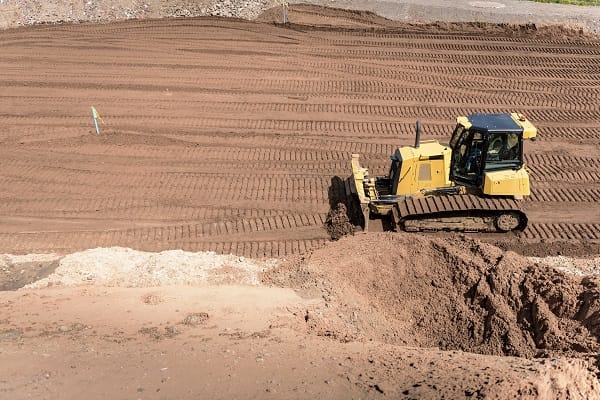
The foundation of any construction project is accurate sitework planning, and the bedrock of that planning is the earthwork takeoff. Traditionally a manual, time-intensive process, modern technology has ushered in a new era: AI-driven earthwork takeoff software. For contractors and estimators aiming for optimal efficiency and profitability, leveraging the best earthwork takeoff software is no longer optional—it’s essential for competitive advantage.
This blog explores the transformative power of AI in sitework estimation, delves into key features that define top-tier solutions, and provides actionable metrics to illustrate their value.
Why earthwork estimating needs an upgrade
Earthwork and sitework estimating is uniquely challenging:
- You’re dealing with large volumes, variable subsurface conditions, and design revisions.
- You’re under pressure to turn around more bids in less time.
- You’re trying to protect margins in a market where labor and materials are volatile.
Meanwhile, construction teams already struggle with productivity and data issues:
- 45% of construction professionals say they spend more time than expected on non-optimal activities.
- Rework and quality deviations can consume 5–20% of the contract value, depending on project type and region.
When your estimators are tied up in manual earthwork calculations, cross-checking plan sheets, and rebuilding takeoffs after addenda, you get:
- Fewer bids out the door.
- Less time to strategically review scope, risk, and value-engineering options.
- Higher probability of quantity errors that eventually show up as rework or change orders.
Purpose-built earthwork takeoff software is designed to attack exactly these pain points.
What is earthwork takeoff software (and how is AI changing it)?
Traditional earthwork takeoff software helps estimators:
- Import digital plans and surfaces.
- Trace regions, define subgrades, and assign soil types.
- Generate cut/fill volumes, topsoil strip/replace volumes, and export reports.
AI-driven platforms take this a step further. Instead of tracing everything by hand, AI can:
- Auto-detect contours, pads, and site features on plan sheets.
- Read notes, callouts, and legends to understand design intent.
- Flag discrepancies between sheets or revisions.
- Re-run updated takeoffs automatically when addenda arrive.
According to recent industry research, contractors using AI-driven estimating tools report win-rate improvements of around 20% compared with those relying on purely traditional methods, thanks to faster bid turnaround and better data.
In practical terms, the best earthwork takeoff software should turn what used to be days of manual plan review into hours—or even minutes—while giving you a clear audit trail of how quantities were produced.
Key features to look for in the best earthwork takeoff software
When you’re evaluating the best earthwork takeoff software, it’s easy to get lost in feature lists. Instead, focus on a few core outcomes and the capabilities that support them.
Speed and automation
Look for AI-driven automation that genuinely reduces clicks—not just digitized tracing:
- Automatic recognition of grading regions, pads, roads, and utility corridors.
- One-click generation of cut/fill volumes and topsoil quantities.
- Automatic detection of plan revisions and addenda so you’re not starting over.
Platforms like Beam AI, for example, focus on fully automated takeoffs that help estimating teams save up to 90% of takeoff time and bid on 2x more jobs by removing manual takeoff work, entirely.
Accuracy and consistency
Given that rework can easily consume 5–10% of project costs and sometimes more, every bit of accuracy you gain at estimate stage matters. PlanRadar+1
The best earthwork takeoff software should help you:
- Apply consistent assumptions about soil shrink/swell, compaction, and over-excavation.
- Maintain a clear history of revisions so you can see how quantities changed.
- Export structured quantities that tie directly to your cost codes and assemblies.
Ideally, you want QA processes that let senior estimators quickly review and validate AI-generated outputs, instead of rebuilding them from scratch.
Handling complex site conditions
Not every site is a simple pad with uniform soil. Your earthwork takeoff software should make it easy to:
- Break the site into multiple zones with different design elevations and soil properties.
- Incorporate geotechnical data where needed.
- Account for haul distances, borrow pits, and disposal locations in your analysis.
Some AI platforms can also highlight potential constructability issues or inconsistencies between grading, utilities, and structures, giving you a chance to ask questions before bid day.
Collaboration and data integration
Estimating doesn’t happen in isolation. Many studies have found that teams using integrated digital platforms make decisions faster and with fewer communication issues, improving project performance.
The best earthwork takeoff software should:
- Live in the cloud so estimators, PMs, and leaders can see the same takeoff, in real time.
- Integrate with your estimating system, spreadsheets, or bid platform, so quantities flow through automatically.
- Provide shareable views and reports for internal reviews or owner negotiations.
Beam AI, for instance, is cloud-based and built for team collaboration, so your entire precon team can review sitework scopes, quantities, and assumptions from anywhere.
How AI-driven earthwork takeoff software fits into your sitework workflow
Here’s what a typical AI-assisted workflow can look like:
Upload your plans
You upload PDFs or plan sets for a new sitework package into your earthwork takeoff software and define basic project information.
AI parses and quantifies
The AI engine identifies grading elements, contour lines, pads, and key annotations, then generates preliminary cut/fill, topsoil, and trench volumes.
Estimator review and adjustment
Your estimator reviews AI-generated regions, adjusts any special conditions (e.g., rock excavation, unsuitable soil removal), and confirms shrink/swell factors.
Scenario comparison
You can quickly run “what if” scenarios—different haul strategies, alternate pad elevations, or phasing changes—without redoing all the takeoff work.
Export to estimating/bid system
Final quantities are exported into your estimating platform or cost spreadsheet, tied to your earthwork cost codes and production rates.
Because the system keeps your project data structured and reusable, future revisions are faster. When an addendum arrives, you don’t repeat steps 1–4 from scratch: the AI highlights changes, reruns the takeoff, and you review and approve.
When to make the switch?
If any of these statements are true, it’s worth seriously considering AI-driven earthwork takeoff software:
- Your estimators regularly decline bid invites because they “don’t have time for another takeoff.”
- You’re seeing frequent margin erosion on sitework packages due to missed quantities or underestimated scope.
- Your team spends days redoing takeoffs whenever an addendum hits the inbox.
- You want to expand into more complex civil work but can’t justify hiring another full-time estimator.
Given that estimators often spend the majority of their time on takeoffs, even a 50% time reduction can unlock significant capacity. But modern AI tools, including Beam AI, are now demonstrating savings closer to 80–90% of manual takeoff effort—enough to double the number of bids you can comfortably chase without burning out your team.
Before you go
Choosing the best takeoff software isn’t about chasing buzzwords. It’s about:
- Protecting your margins on high-risk sitework scopes.
- Freeing up your estimators to focus on strategy instead of tracing.
- Building a repeatable, data-driven preconstruction process that scales as your business grows.
If you’re evaluating options, start with a live demo of an AI-driven platform like Beam AI on a real project you’ve already bid. Compare how long it takes to get to “bid-ready” quantities, how easy it is to validate the results, and how well it fits into your current estimating stack.
That side-by-side experience will tell you very quickly which earthwork takeoff software truly sets you up for sitework success—and which tools belong in the past.
FAQs
1. What is earthwork takeoff software and why do contractors need it?
Earthwork takeoff software helps estimators calculate cut/fill volumes, topsoil stripping, trenching quantities, and other sitework elements without manual tracing. It reduces errors, speeds up bid preparation, and ensures more accurate quantities compared to traditional methods.
2. What makes the best earthwork takeoff software different from traditional digital takeoff tools?
The best earthwork takeoff software uses automation and AI to detect contours, grading regions, pads, and notes instantly. Unlike manual tools, it can update quantities automatically when drawings change, helping teams handle more bids in less time.
3. How does AI improve the accuracy of earthwork estimating?
AI-powered earthwork takeoff software reads plan notes, identifies discrepancies across sheets, and rebuilds takeoffs when addenda arrive—reducing the risk of missed quantities. This leads to more consistent, audit-ready estimates and fewer rework issues during execution.
4. Is AI-driven earthwork takeoff software difficult to adopt for estimating teams?
No. Modern platforms make setup simple by automating most of the takeoff work. The best earthwork takeoff software offers intuitive interfaces, cloud access, and review controls so estimators can validate AI-generated quantities without changing their entire workflow.
5. Can earthwork takeoff software help contractors win more bids?
Yes. Faster takeoffs mean you can submit more bids in the same amount of time, and higher accuracy leads to more competitive pricing. Contractors using advanced earthwork takeoff software often report increased win rates because they’re able to focus on strategy—not tracing plans.
6. How does Beam AI compare to other earthwork takeoff tools?
Beam AI is fully automated, cloud-based, and built to help contractors bid 2x more jobs by reducing 80–90% of manual takeoff effort. As one of the best earthwork takeoff software options for sitework teams, it handles earthwork, utilities, paving, and civil scopes in one platform—ideal for companies looking for AI-first estimating workflows.


Leave a Comment