
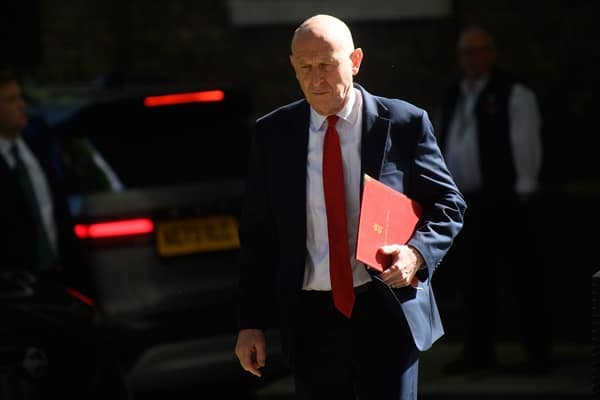
UK growth slumped to just 0.1 per cent in August, leaving the Chancellor facing a fragile recovery, squeezed households and mounting pressure over taxes and interest rates.
Britain’s economic recovery lost momentum in August, intensifying the pressure on Chancellor John Healey ahead of the Autumn Budget as economists warned that further tax increases could undermine growth and deepen the squeeze on businesses and households.
Gross domestic product rose by just 0.1 per cent, down sharply from 0.4 per cent in July, according to the Office for National Statistics. The figure was nevertheless stronger than economists’ expectations of a 0.1 per cent contraction, with robust factory production helping the economy avoid a monthly decline.
The ONS also revised June’s growth estimate upwards, from 0.3 per cent to 0.4 per cent. Over the three months to August, the economy expanded by 0.7 per cent, suggesting that underlying activity has proved more resilient than the latest monthly figures imply.
ONS director of economic statistics Liz McKeown said growth over the latest three-month period had been led by services, while production and construction both fell.
For Mr Healey, however, the figures offer limited comfort as he prepares a Budget against a backdrop of stubborn inflation, elevated borrowing costs and growing concern over the outlook for investment.
The Chancellor described August’s growth as “welcome news”, pointing to an upgraded International Monetary Fund forecast for 2026 and the UK’s projected deficit position among G7 economies by 2029.
But economists warned that the Government faces an increasingly difficult balancing act: raising taxes risks draining spending power from households and discouraging business investment, while unfunded spending commitments could unsettle financial markets and drive borrowing costs higher.
Professor Joe Nellis, head of economic research at MHA, said inflation was weighing on consumer confidence while higher employment costs and taxes were squeezing business profits and deterring recruitment, particularly among smaller firms.
Suren Thiru, chief economist at ICAEW, said strong manufacturing output had helped the economy outperform expectations, but warned that rising energy prices and pre-Budget uncertainty could weaken September’s performance.
He expects the Office for Budget Responsibility to raise its growth forecast for this year from 1.1 per cent to 1.4 per cent. Yet stronger data could also strengthen the case for higher interest rates, adding another potential burden for borrowers.
Kevin Brown of Scottish Friendly warned that higher living costs remained a challenge for families, while stronger economic figures could support interest rates staying elevated for longer.
The message for the Chancellor is stark: Britain is still growing, but the recovery remains vulnerable. With the Budget approaching, the risk is that attempts to repair the public finances could further weaken the very growth the Government needs.


Leave a Comment