
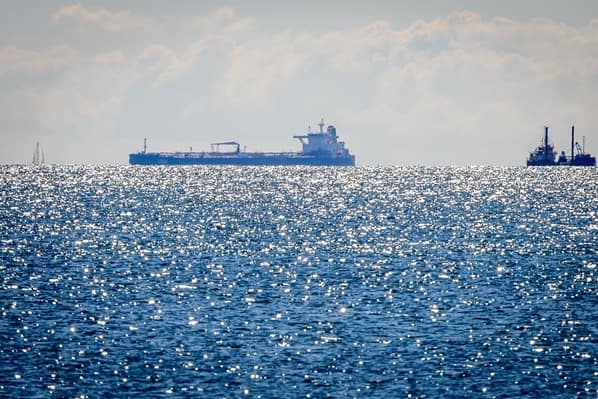
Vladimir Putin’s fishing trawlers have been observed spending hundreds of hours near vital undersea communications cables linking Britain to the wider world, raising fears that Moscow is mapping the infrastructure it could target in a future conflict with NATO.
An analysis of satellite-based vessel-tracking data by The Telegraph identified more than 500 incidents involving Russian civilian vessels hovering above fibre-optic cables, with 17 ships spending prolonged periods moving at low speeds near charted cable routes.
The activity suggests Russia could be using ostensibly civilian vessels to survey the seabed and identify the precise positions of cables that carry the data underpinning Britain’s banks, hospitals, transport systems and mobile phone networks. The vessels’ movements do not, in themselves, establish that espionage took place.
But military officials have warned that an attack on the cables could cause widespread disruption, striking at the digital infrastructure on which modern economies depend.
One trawler, designated Ship A, was tracked near nine separate cables connecting western Europe, including Britain, with the US. North of Scotland, Russian fishing boats spent a combined 337 hours over the Atlantic Crossing 1 communications cable, including 322 hours in April 2023 alone, according to the newspaper.
Ship A was observed spending about eight hours at the cable’s exact latitude in a single day, travelling at speeds of less than two knots.
Another vessel, Ship B, crossed the transatlantic Hibernia Express cable on multiple occasions, at one point spending almost an hour moving at less than two knots.
Footage of the vessel was shown to a senior naval officer, who said it “could be easily used for other activities to store an uncrewed surface vehicle or remotely operated vehicles (ROVs)”.
Such equipment could allow a vessel to investigate the seabed without attracting the attention that might accompany an overt military operation. Tethered remotely operated vehicles fitted with sonar could help locate cables with considerable precision.
“If you put a sonar-equipped ROV 100 metres above a feature of interest, you can map it with millimetre precision,” a serving naval officer said.
A third trawler, Ship C, was observed following the route of an old, decommissioned communications cable for 10 miles before reversing course and tracing it in the opposite direction. It was also seen slowing as it crossed two operational cables: Google’s Grace Hopper, which links Britain and the US, and Amitié, which connects the UK with France and Spain.
General Sir Gwyn Jenkins, the Royal Navy’s First Sea Lord, has warned that Moscow is “probing, testing and mapping” the seabed on a scale not seen since the Cold War. He has raised the prospect that Russia could cut Britain’s underwater cables on the first day of a future conflict, echoing Britain’s own targeting of German cable connections during the first world war.
The Royal Navy deploys an average of two warships a week to monitor Russian vessels and Moscow’s so-called shadow fleet, Jenkins has said.
“Russia is probing, testing and mapping,” he said. “It seeks advantage in the grey zone, particularly around the critical undersea infrastructure on which modern societies rely.”
Concerns have intensified following the disclosure last month that Britain had foiled an alleged Russian military plot targeting crucial undersea cables near Norway’s Svalbard archipelago.
The findings also expose a potential gap in Britain’s response. The EU has sanctioned two Russian fishing companies, Norebo and Murman Seafood, over suspected espionage and surveillance. Both companies deny wrongdoing. Norebo, which denies spying or acting on behalf of Russian security services, is challenging the sanctions, arguing that the EU has provided no supporting evidence.
Britain has not sanctioned either company, and no law currently prevents Russian vessels from surveying undersea cables.
The revelations come as US envoy Steve Witkoff returns from Russia amid hopes of a trilateral peace meeting involving Kyiv, Moscow and Washington by early November. The Kremlin has also released Stephen Hubbard, a retired American schoolteacher who had been held in Russia since 2022, in what was presented as a gesture of goodwill.
The diplomatic overtures have done little to dispel concerns over Moscow’s activities beneath the sea. While the movements of the fishing vessels do not prove an operational plan to sabotage Britain’s communications, naval officials fear that the seabed is becoming another front in Russia’s campaign to gain strategic advantage below the threshold of open war.


Leave a Comment