
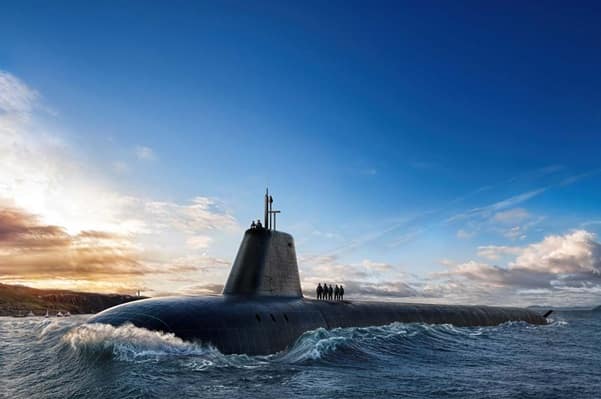
Britain has fired a heavyweight torpedo from an unmanned underwater vessel for the first time, marking a significant step towards autonomous naval warfare as western governments seek new ways to counter Russian activity beneath the sea.
The Royal Navy launched the weapon last week from XV Excalibur, a 12-metre uncrewed submarine built in Plymouth, during trials in British waters. The test was conducted with the US under the AUKUS defence partnership, which is developing advanced capabilities including autonomous systems, artificial intelligence and undersea warfare technology.
The heavyweight torpedo was jointly developed by the US and Australia and is designed to attack surface warships and submarines. Neither Britain nor the US had previously launched such a weapon from an uncrewed underwater platform, according to the report of the trial.
The Ministry of Defence described the test as a “significant breakthrough for Euro-Atlantic security and NATO’s undersea advantage”.
The trial underlines the growing importance of autonomous systems in a maritime environment where Britain and its allies are increasingly concerned about threats to critical infrastructure.
Excalibur is the Royal Navy’s first extra-large uncrewed underwater vehicle, developed through Project Cetus. Built by Plymouth-based MSubs, the 19-tonne vessel is designed as a testbed for military payloads and future autonomous operations rather than as an operational submarine. It is undergoing an extensive sea-trial programme.
The Royal Navy has already demonstrated that Excalibur can be controlled from thousands of miles away. During an AUKUS exercise, British operators controlled the vessel in UK waters from a remote operating centre in Australia, more than 10,000 miles from Plymouth.
The advance comes as NATO governments focus increasingly on the vulnerability of subsea cables, pipelines and other infrastructure to Russian surveillance and sabotage.
In September, Reuters reported that British, Norwegian and US forces had disrupted a Russian operation near Svalbard in which deep-sea equipment was allegedly being used to practise potential attacks on critical fibre-optic cables. The cables connect Svalbard with mainland Norway and carry satellite data from one of the world’s largest satellite ground stations.
The episode has intensified concerns among Western intelligence agencies that Russia could seek to probe NATO’s response to attacks on critical infrastructure.
Britain has separately deployed naval assets to monitor Russian submarines operating near undersea cables and pipelines in the North Atlantic. The Royal Navy has warned that Moscow is increasingly testing Western vulnerabilities beneath the surface.
For AUKUS, the Excalibur trial represents a shift towards a naval force in which crewed submarines operate alongside autonomous platforms capable of surveillance, seabed warfare and potentially strike missions.
The strategic attraction is straightforward, uncrewed vessels can undertake dangerous missions without placing sailors directly at risk, while potentially providing greater persistence and allowing navies to deploy larger numbers of systems.
The torpedo launch therefore goes beyond a single weapons test. It shows how Britain, the US, and Australia are trying to move autonomous undersea technology from experimentation toward a future battlefield capability.


Leave a Comment