
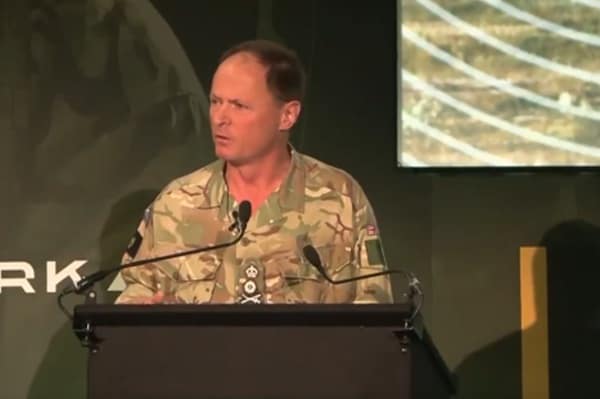
General Sir Roly Walker says political leaders must confront the public with the risks facing the country as defence becomes a national priority.
Britain’s political leaders must prepare the public for a stark conversation about the threats facing the country, and the sacrifices required to defend it — the head of the British Army has warned.
General Sir Roly Walker delivered the message to troops at Catterick Garrison in North Yorkshire, declaring that the nation would need its soldiers and that citizens must accept a greater role in national security.
General Walker told soldiers: “You didn’t know this, but our nation is going to need you. There was a time when our nation didn’t want to think of a time when it would need its soldiers to fight in a war.”
That era of complacency may be ending.
“Indeed, very soon, the political leaders of this country will start to have a frank conversation with the citizens of this country about just what is going on and where the risk lies.
Read more related news:
Expert fears UK and Europe ‘will wake up only after capitals are hit’ then ‘it’s too late’
Streeting warns Britain faces unprecedented risk of war with Russia
NATO chief warns Russia we are ‘ready to fight tonight’ as ex-general raises conscription alarm
Ellwood warns UK cannot rely on Trump and sees a pre-war world taking shape
They are going to try to explain to our citizens that they have to consent to sacrifices to prioritise defence and security.
And then they are going to ask those citizens, for whom we are not necessarily at the front of their mind, that they too need to play a part in the defence and security of this country. They need to understand what we do for them. They need to consent to allow us to do that. Which means sacrifices by them.
“And ultimately we are going to need them to back us, to back you to do the one thing that you do that nobody else gets to do, and that is to take the fight to the enemy.”
Sir Roly’s words place public consent at the heart of Britain’s defence debate. Military readiness depends not only on soldiers and equipment, but also on political decisions and the country’s willingness to bear the costs.
Walker’s warning was unmistakable, that Britain must prepare its people and armed forces for a more demanding security environment.
This week NATO’s top military commander has warned that alliance forces are ready to fight Russia “tonight”, promising to destroy the entire system sustaining any attack on member territory as European governments confront mounting fears over the continent’s preparedness for war.
General Alexus Grynkewich, the US Air Force officer serving as Supreme Allied Commander Europe, delivered the stark message at a security conference in Warsaw after an address by Ukrainian President Volodymyr Zelenskyy.
He stressed that he did not believe conflict with Moscow was “imminent or inevitable”. But his warning was unequivocal; any Russian assault on NATO territory would trigger a response designed not merely to repel the attacking troops, but to dismantle the military machinery supporting them.
“Should the adversary choose to press the attack or commit his reserves, we will break the warfighting system engaged against us,” Grynkewich said.
“This includes not just the attacking force itself, but anything and everything that supports, sustains, and controls that force.”
The commander said NATO would block, blunt and break an attack against any of its members, ensuring that an aggressor’s objectives became impossible to achieve.
“If someone is foolish enough to attack us, we will fight,” he said. “We will stop the attack and deny them the ability to achieve their objectives, whatever those might be.”
He added: “We will, in short, ensure any attack against any ally proves utterly futile.”
Sir Richard Shirreff, a former deputy supreme allied commander Europe, recently argued that Britain’s armed forces could require some form of conscription to generate the manpower needed for a major war.
Comparing today’s atmosphere with the years before the First World War, he told the BBC: “In a sense it’s now a bit like those Edwardian summers before 1914, when there was a lot of talk of war, but the notion of actually going to war seemed so far-fetched as to be beyond belief, and I think that’s where we are at the moment.”
He warned that an army of about 70,000 regular personnel would be insufficient for the conflict Britain might face, arguing that the country should examine recruitment and training systems used elsewhere in Europe.
Shirreff highlighted Norway’s approach to registering young people for military service and selecting recruits for training, suggesting national service could also strengthen employment prospects.
“The case has to be made honestly by political leaders who must really look the population in the eye and say ‘this has got to be done for us to be secure’,” he said.
The two warnings expose Europe’s central security dilemma; NATO’s leaders want Moscow to believe an attack would fail, while governments must still persuade their own populations that the continent has the forces, resources and political resolve to make that deterrence credible.


Leave a Comment