
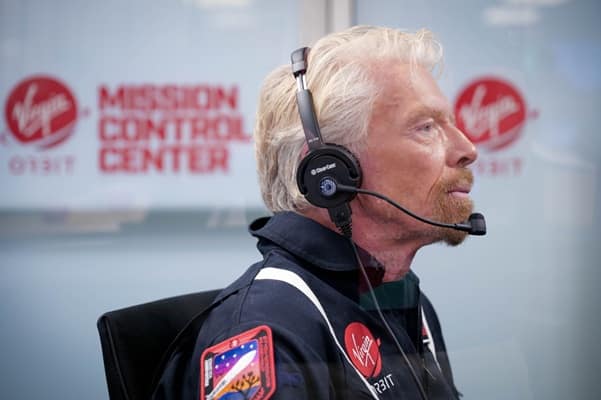
Sir Richard Branson has criticised what he described as “foolish” world leaders for contributing to rising air fares, as his Virgin Atlantic airline adds fuel surcharges in response to the economic fallout from the war with Iran.
The Virgin Group founder said the conflict, which began after the US and Israel launched strikes against Iran in February, had been unnecessary and had contributed to higher oil prices and inflation around the world.
The disruption to oil production and transportation caused by the conflict has pushed up the cost of crude and refined fuels, increasing costs for both motorists and airlines.
Virgin Atlantic has responded by adding a fuel surcharge to ticket prices.
Sir Richard, who appeared to direct at least part of his criticism towards US President Donald Trump, said there had been “no need” for the conflict.
“The Iran conflict was completely unnecessary,” Sir Richard told the BBC.
“There was a nuclear agreement between Iran and the rest of the world that had been negotiated by President Obama and a lot of European people. It was working, so there was no need to rip it up… And this war has just resulted in much higher oil prices all over the world. And inflation has been one of the consequences.”
His intervention comes as the economic consequences of the conflict move higher up the British government’s agenda ahead of Chancellor John Healey’s first Budget.
Mr Healey has warned that the October 28 Budget could involve difficult decisions as higher energy prices and increased borrowing costs put additional pressure on the public finances.
The Chancellor issued the warning following a sharp increase in government borrowing costs earlier this week, as investors became increasingly concerned about the inflationary consequences of the conflict in the Middle East.
Mr Healey has said he intends to ensure that Britain emerges from the Budget with a sufficient “buffer against uncertainty”, suggesting that the government is unlikely to allow its fiscal headroom to narrow significantly despite growing pressure on public spending.
Speaking to the Financial Times, he said: “What’s happening in the Middle East is hitting inflation, it’s hitting growth, it’s hitting borrowing costs.”
The Chancellor added: “It’s part of a more dangerous world that is more uncertain and it’s one of the challenges we have to meet in this country, but have to meet with other [countries].”
The comments highlight the increasingly direct connection between the conflict and the government’s domestic economic challenges.
Higher oil prices threaten to feed through into petrol prices, household energy costs and transport expenses, while also making it more difficult for the Bank of England to return inflation to its target.
For the Treasury, higher inflation could also increase the cost of servicing government debt and reduce the scope for tax cuts or additional spending in the autumn Budget.
Sir Richard’s comments add a prominent business voice to criticism of the geopolitical decisions that preceded the conflict.
His argument is that the economic consequences now being felt by consumers and businesses were avoidable, pointing to the previous international nuclear agreement with Iran as evidence that a diplomatic alternative had existed.
President Trump has rejected suggestions that the scale and duration of the military campaign amount to a conventional war.
He has described the conflict as “small potatoes” while defending vice-president JD Vance after Vance argued that months of intermittent attacks in the Middle East did not constitute a “war”.
The contrasting assessments underline the widening political debate over the consequences of the conflict.
While the White House has sought to play down its scale, British businesses and policymakers are increasingly focused on its economic effects, from higher aviation fuel costs and consumer prices to increased government borrowing costs.
For airlines such as Virgin Atlantic, the immediate impact is being felt in fuel bills and ticket prices. For the government, the longer-term concern is that a conflict thousands of miles away could further constrain an already difficult fiscal position at a critical moment for the British economy.


Leave a Comment