
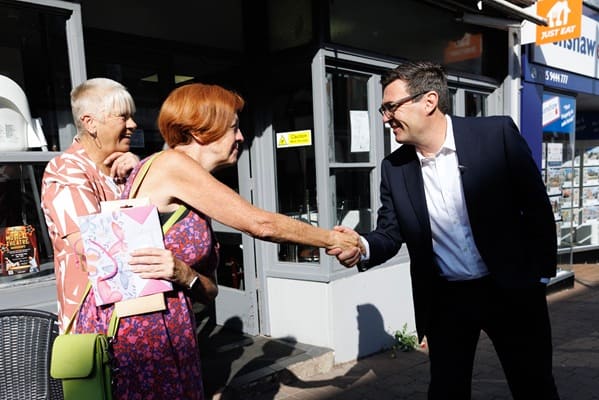
UK Prime Minister Andy Burnham has made the revival of the country’s high streets one of his early priorities, promising to reform business rates as part of a wider effort to breathe new life into struggling town centres.
In his first speech as Prime Minister on 20 July, Burnham argued that high streets should not simply be viewed as a symbol of decline. Instead, he asked: “Rather than being a marker of decline, shouldn’t we make our high streets the symbols of Britain’s renaissance?”
The comments underline the scale of the challenge facing traditional high street businesses, many of which have struggled with rising costs, changing consumer habits and increasing competition from online retailers.
Business rates at the heart of Burnham’s plans
Business rates have long been a major concern for high street businesses. The system is based largely on the rateable value of commercial properties, meaning businesses operating physical premises can face high costs simply for having a presence on the high street.
This can put traditional shops at a disadvantage compared with online retailers operating from large warehouses outside town centres. Research and commentary around the decline of the high street have highlighted how the business rates system can increase the costs faced by bricks-and-mortar retailers.
Burnham has indicated that he wants to change this balance, with his proposals expected to place greater emphasis on supporting businesses that contribute to the life of towns and city centres.
The idea has already attracted support from organisations representing independent businesses. The Federation of Independent Retailers, for example, welcomed Burnham’s commitment to business rates reform and increasing footfall on high streets.
Pubs among businesses under pressure
Pubs are one of the most recognisable businesses on the British high street and in local communities, but many have faced years of financial pressure.
Rising wages, energy costs, food prices and taxation have all made it harder for pubs to operate profitably. At the same time, changing drinking habits and competition from other forms of entertainment have created additional challenges.
Burnham has already moved to reduce the burden on some hospitality businesses, with a 20% business rates reduction for pubs and social venues due to come into effect next year.
For pub owners, lower rates could provide some much-needed breathing room. However, there are questions about whether similar support should be extended to other businesses that are struggling to remain on the high street.
Independent clothes shops face a different challenge
Independent clothing shops are another group that has been particularly exposed to changing shopping habits.
Consumers can now browse thousands of products from their phones and computers, compare prices instantly and have purchases delivered directly to their homes. This convenience has made online shopping an increasingly important part of the retail landscape.
Fashion has been identified as one of the most challenged areas of the high street, with online competition and falling footfall contributing to difficulties for physical retailers.
For an independent clothes shop, competing with a major online retailer can be extremely difficult. A small business may have to pay rent, business rates, utilities and staff costs for a physical shop, while also maintaining an online presence to keep up with modern consumer expectations.
This makes business rates reform particularly important for independent retailers that want to continue operating from town centre locations.
Online shopping has changed the high street
The decline of the traditional high street cannot be blamed on one factor.
The financial crisis, the pandemic, rising operating costs and changes in consumer behaviour have all played a role. However, the growth of online retail has arguably been one of the biggest long-term changes.
People no longer need to visit their local town centre to buy clothes, electronics, household goods or countless other products. With next-day delivery and increasingly sophisticated online shopping platforms, the convenience of buying from home can be difficult for physical shops to match.
Even betting shops, once a staple of the UK high street, are not as great in numbers as they once were, with many choosing to use apps to place bets and play online casino games on their phones.
This has contributed to lower footfall and left some high streets with vacant units, fewer independent businesses and a greater reliance on hospitality and services.
Even major retailers continue to feel the pressure. John Lewis, for example, is currently facing difficult trading conditions linked partly to high living costs and competition from digital-first retailers.
Can business rates reform save the high street?
Burnham’s challenge will be turning his ambitions into practical changes that make a noticeable difference to businesses.
Reducing business rates could help lower the cost of operating from a high street location, but it cannot solve every problem. Town centres also need investment, better transport links, more attractive public spaces and reasons for people to visit beyond simply shopping.
The Prime Minister has acknowledged that there is limited room for major spending because of the difficult financial outlook. However, he has said the government will look at what can be done to reduce the cost pressures facing businesses.
Ultimately, the future of the UK high street may depend on creating a better balance between online and physical retail.
High streets are unlikely to return to the way they looked decades ago. Instead, they may need to evolve into destinations combining shops, pubs, restaurants, entertainment, services and community spaces.
Burnham’s business rates reforms could play an important role in that transformation. If successful, they could make it more affordable for pubs, independent clothes shops and other businesses to remain in town centres.
For a Prime Minister who has described the high street as a potential symbol of Britain’s renaissance, the success of these reforms could become one of the defining tests of his early time in Downing Street.
Please play responsibly. For more information and advice visit https://www.begambleaware.org
Content is not intended for an audience under 18 years of age



Leave a Comment