
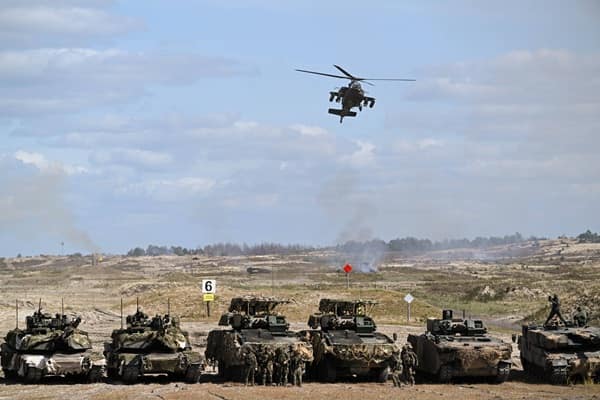
The US Army is rehearsing the management and burial of large numbers of military dead in an exercise described as one of the biggest of its kind in decades, as Washington faces mounting uncertainty over the future course of its war with Iran.
The drills, conducted in North Carolina under Phase II of Operation Dragon Covenant, are designed to test the military’s ability to recover, identify and respectfully manage fallen personnel during a high-intensity conflict.
The exercise comes as tensions rise ahead of the November midterm elections and reports emerge of possible plans for a further US military campaign.
Sergeant First Class Delbert Ruede told Army Times that the operation was intended to expose weaknesses before they became critical during an actual conflict.
“This exercise allowed us to take a critical look at how we respect, honor, and systematically manage our fallen in a high-intensity conflict,” he said.
“If we went to war tomorrow, we would be making this up as we went along. What we are doing here is taking a scientific, field-tested approach so that we can maintain positive control and respectfully care for our fallen.”
Read more related news:
Putin and Iran’s President deliver chilling nuclear message to Trump
Trump’s Iran strategy faces new scrutiny after warning of ‘devastating escalation’ globally
Trump’s Iran strategy faces new scrutiny after warning of ‘devastating escalation’ globally
Trump’s chilling nuclear warning as US prepares for potential new strikes on Iran
The exercise is not evidence that the Pentagon expects mass American casualties or that a wider war is imminent. But it shows the logistical demands facing the armed forces if the conflict expands and casualties rise.
The drills coincide with growing political pressure over President Donald Trump’s handling of the confrontation with Tehran. Democratic senator Chris Murphy has warned that military plans discussed with him could lead to a prolonged escalation, raising concerns about the consequences for American security and the international legal order.
“The plan that they have developed will lead, in my view, to a prolonged escalation of this war that will be devastating for our security interests,” Murphy said.
He also warned of the “likely destruction of our commitment to the rule of law”.
The political atmosphere has been further unsettled by the cancellation of campaign appearances by Trump and Vice President JD Vance. However, no confirmed evidence shows that the schedule changes were connected to military planning.
A report in The Wall Street Journal has added to concerns about Washington’s next move, saying the administration told Gulf governments it was preparing for a “short, intense military campaign” shortly after the November 3 midterm elections. The precise scope and likelihood of such an operation remain unclear.
Any prolonged conflict could also revive questions about whether the US would need to expand its military recruitment beyond the existing volunteer force.
The possibility of a return to conscription remains speculative. The United States has not used a military draft since the Vietnam War, when a lottery system selected men for potential induction.
Christopher Lee, of Foresight Strategic Advisors, said figures in the Selective Service System’s 2025 annual report suggested that approximately 15mn men were registered in the relevant age group, rising to around 18mn if unregistered eligible men were included.
But that figure should not be mistaken for the number likely to be drafted. Lee stressed that actual compulsory inductions would represent only a small proportion of the potential pool.
During the Vietnam War, approximately 1.8mn men were drafted over nine years, representing around 7 per cent of the population, he said.
For now, the Army’s North Carolina exercise remains a preparedness operation, not a mobilisation order. Yet its timing, alongside warnings of possible further military action against Iran, underscores the increasingly difficult calculations facing Washington as it weighs escalation against the human, economic and strategic costs of a prolonged conflict.


Leave a Comment