
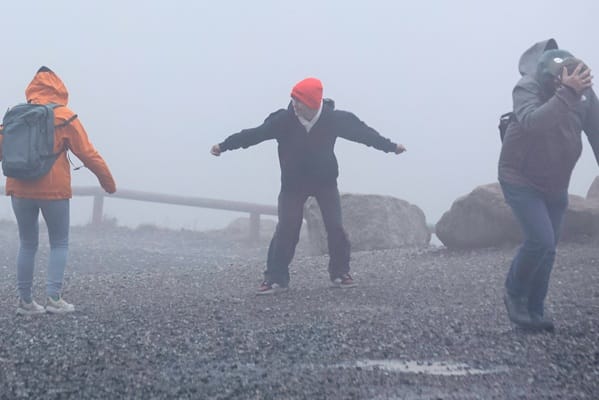
Thousands of homes have been plunged into darkness, more than 1,500 flights disrupted and major public events cancelled as Storm Boelo sweeps across Britain, with danger-to-life warnings remaining in force across Scotland and northern England.
Britain was braced for further disruption on Sunday as Storm Boelo unleashed powerful winds, torrential rain and dangerous coastal conditions, bringing transport networks to a standstill and forcing hundreds of people from their homes.
The second named storm to hit the country in as many days has battered Scotland and northern England with gusts reaching 75mph in the Scottish Highlands and Western Isles. Exposed coastal locations faced the prospect of winds approaching 80mph, as forecasters warned that flying debris, flooding and powerful waves could pose a direct threat to life.
Amber weather warnings remained active across mainland Scotland, parts of Northern Ireland and the far north of England until 9pm, while yellow warnings for wind and rain covered other areas, including Liverpool, Manchester and Sheffield.
The Met Office warned that the combination of severe winds and heavy rain could intensify the disruption, leaving communities vulnerable to power cuts, dangerous roads and widespread transport cancellations.
Jason Kelly, the Met Office’s chief forecaster, said: “Amber warnings are in place across mainland Scotland, parts of Northern Ireland and the far north of England, where gusts of 60-70mph are expected widely, with the potential for 80mph in exposed coastal locations.”
He added: “Strong winds will also affect other parts of the UK, with gusts of 50-60mph possible in places. Heavy rain will provide an additional hazard, particularly in the north, bringing the potential for further impacts.”
The weather service urged people to remain indoors wherever possible and prepare for interruptions to electricity supplies and travel.
The storm’s impact was already being felt across the North West, where tens of thousands of properties were reported to have lost electricity.
Electricity North West confirmed widespread disruption, including more than 500 homes affected in Blackpool and around 200 in Wigan.
Air travel was also severely disrupted. Flight-tracking service FlightAware recorded more than 1,500 delayed flights to and from UK airports, with average delays of around two hours. Hundreds of services were cancelled outright, affecting passengers travelling through Heathrow, Manchester, Edinburgh and Glasgow.
The rail network faced mounting pressure as high winds and flooding threatened services across Scotland and northern England.
London North Eastern Railway cancelled nearly all its Aberdeen services and reduced operations at Northallerton, Newcastle and Edinburgh to just one train per hour in each direction.
National Rail warned that the conditions could cause significant knock-on disruption across ScotRail, Northern and Greater Anglia services.
Avanti West Coast advised passengers against travelling north of Preston, while TransPennine Express reported that a fallen tree had blocked the line between Liverpool Lime Street and Manchester Piccadilly.
Blackpool’s tram network was suspended entirely as torrential rain and fierce gusts made operating services unsafe.
National Highways also closed roads and bridges across parts of the North East and Midlands, urging motorists to exercise extreme caution.
The disruption left travellers facing an uncertain journey as the storm continued to batter transport infrastructure across the country.
The weather forced the cancellation of major public events, including London’s annual Diwali on the Square celebrations, as organisers prioritised public safety.
Liverpool’s River of Light festival, which features illuminated artworks across the city, was also cancelled “in the interests of safety”.
At Aintree racecourse, organisers abandoned the Halloween Fun Day after recording gusts of 44mph.
“While we are disappointed, the safety of our participants, visitors and teams is our number one priority,” the organisers said.
A pumpkin farm in Warrington, Cheshire, also closed its gates, citing winds of 50mph as too dangerous for visitors.
In Lancashire, more than 400 people were forced to leave a caravan park as the storm intensified.
Footage shared on social media showed floodwater surging through streets in Largs on Scotland’s west coast, while large waves battered exposed coastlines across the north.
The scenes illustrated the threat posed by a weather system capable of disrupting daily life well beyond the areas covered by the highest-level warnings.
Boelo’s arrival comes just days after Storm Austen struck southern England on Friday, cutting electricity to thousands of homes and destroying part of Brighton’s historic West Pier.
The back-to-back storms have placed fresh pressure on electricity networks, transport operators and local authorities, with communities still confronting the consequences of severe weather.
For residents in the worst-affected areas, the immediate priorities remain staying safe, securing essential supplies and avoiding unnecessary journeys while warnings remain in force.
With winds forecast to remain dangerous into Sunday evening, authorities face the prospect of further disruption before conditions ease.
The Met Office’s warning is stark: powerful gusts, heavy rain, airborne debris and hazardous seas can combine to create life-threatening conditions, even away from the most exposed coastlines.
For Britain, the latest storm has become more than a weekend weather event. It is a test of the resilience of the country’s infrastructure — and a reminder of how quickly severe weather can disrupt homes, travel and public life across the nation.


Leave a Comment