
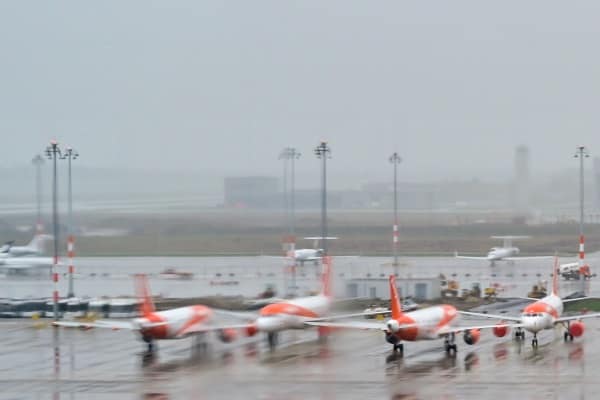
Britain is bracing for a potentially damaging storm, with the Met Office issuing an amber weather warning for parts of south-west England as Storm Austen threatens to bring winds of up to 80mph, widespread travel disruption and conditions that could pose a danger to life.
Cornwall, Devon, Plymouth and the Isles of Scilly are expected to bear the brunt of the storm on Friday, when a spell of exceptionally strong north-westerly winds is forecast to sweep across the western coast. Forecasters warn that gusts of 60-70mph could develop widely, with exposed headlands facing the prospect of winds approaching 80mph.
The warning marks a significant escalation in the risk to communities across the region, where powerful gusts could damage buildings, bring down trees and power lines, and send debris flying through streets. The Met Office has cautioned that flying debris could cause injuries or, in the most severe circumstances, endanger lives.
The storm also threatens to disrupt Britain’s transport networks at a time when forecasters are still assessing the precise route the system will take.
Road, rail, air and ferry services could all be affected, with passengers warned to expect longer journey times and cancellations. Some roads and bridges may have to close as conditions deteriorate, while damage to electricity infrastructure could trigger power cuts and interrupt mobile phone coverage.
Although south-west England is currently at the centre of the amber warning, the geographical reach of the disruption remains uncertain.
Several weather models suggest the storm will track across southern England, exposing southern England and Wales to the strongest gusts. Under that scenario, some eastern coastal counties could also experience disruptive winds later on Friday.
Other models point to a more northerly trajectory, which could carry damaging gales across a substantially larger area, potentially including Scotland and Northern Ireland.
The difference is material. A shift in the storm’s track could alter which communities face the strongest winds, complicating preparations for households, transport operators and local authorities.
The Met Office has assigned the amber warning a 50-75 per cent likelihood of significant impacts in the affected region, reflecting the substantial risk of disruption even as the precise extent of the storm’s effects remains uncertain.
Beyond the threat to buildings and infrastructure, the storm could prove especially dangerous along exposed coastlines.
Large waves and beach debris may be thrown on to coastal roads, promenades and nearby properties, creating hazards for residents and anyone attempting to watch the storm from the shore.
The Met Office has warned that powerful breaking waves can sweep people off their feet and pull them out to sea, even when they are standing on land. Residents have been urged to take particular care near cliffs, check their routes and keep dogs on leads.
The authorities have also warned against walking or sheltering close to buildings and trees, where falling masonry, roof tiles and branches could present a serious danger.
For people within the amber warning zone, the advice is to remain indoors as much as possible while the strongest winds pass.
Storm Austen’s immediate effects may be measured in damaged property, cancelled journeys and interrupted power supplies. Its broader impact will depend on the storm’s eventual trajectory and the extent to which exposed infrastructure withstands the strongest gusts.
Power cuts could create knock-on disruption to other services, including mobile communications, while closures to roads, bridges and ferry routes could isolate some communities temporarily.
With the storm expected to intensify on Friday, residents and travellers across the potentially affected regions face a period of uncertainty. The greatest immediate risks are concentrated in the south-west, but the possibility of a more northerly track means the area exposed to disruptive winds could widen.
For now, the Met Office’s central message is one of caution: prepare for significant disruption, avoid exposed coastal locations and do not underestimate the dangers posed by powerful winds and heavy seas.


Leave a Comment