
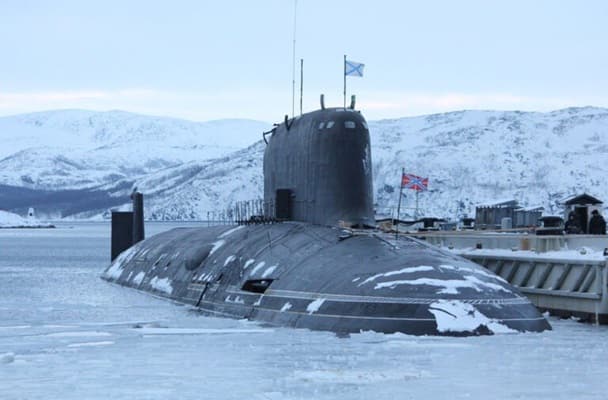
Nato has issued a blunt warning to Moscow over the expansion of Russia’s nuclear-powered submarine fleet, saying the alliance is closely tracking the vessels as concern grows over Russian activity in waters around Europe.
Nato’s Allied Joint Force Command Brunssum, based in the Netherlands, said the alliance was monitoring Russia’s increasingly sophisticated submarine force and delivered a three-word message to the Kremlin: “we see them”.
The command said Russia was expanding and modernising its fleet, with the Kola Peninsula remaining a key base for its Northern Fleet.
“Russia is expanding and modernising its submarine force, with the Kola Peninsula remaining a key hub for the Northern Fleet.
“Among them: new-generation nuclear-powered SSGNs [nuclear-powered guided missile submarines], bringing serious long-range strike and sea-denial capabilities into the High North.
“They may be invisible beneath the waves. But not for us.
“We see them, we watch the developments closely and yes, we take these developments seriously.”
The warning comes amid growing western concern over Russian naval activity around critical undersea infrastructure and Nato waters.
Something is moving beneath the surface. 🌊
Russia 🇷🇺 is expanding and modernising its submarine force, with the Kola Peninsula remaining a key hub for the Northern Fleet.
Among them: new-generation nuclear-powered SSGNs, bringing serious long-range strike and sea-denial… pic.twitter.com/UneKonlDon— NATO Allied Joint Force Command Brunssum – JFCBS (@NATOJFCBS) September 2, 2026
Earlier this year, Britain and its allies disrupted what they said was a Russian submarine operation to survey strategically important undersea infrastructure close to the UK.
The Royal Navy has also stepped up its monitoring of Russian warships, with activations to track Russian naval activity 25 per cent higher during the first eight months of the year than over the same period in 2025.
Russia launched its first nuclear-powered Khabarovsk-class submarine last month. The vessel is designed to carry Poseidon nuclear-powered torpedoes, while further submarines and associated weapons systems remain under construction.
The Khabarovsk programme forms part of Moscow’s broader effort to modernise its strategic and naval capabilities, particularly in the Arctic and North Atlantic.
JFC Brunssum is one of Nato’s three operational-level joint force commands and is responsible for military operations across eastern and central Europe.
In a separate social media post, the command highlighted a succession of incidents across the region that it said were linked, or suspected to be linked, to Russia.
“What is going on? Barely a day goes by without another incident… Europe needs to be ready. And that is why NATO 3.0 matters more than ever.”
Relations between Russia and Nato have deteriorated sharply in recent months as European governments increase spending on defence and strengthen measures to protect critical infrastructure.
Germany this week accused Russia of responsibility for an attempted attack at Leipzig/Halle Airport in August involving a drone carrying explosives. Moscow denied the allegation.
The Kremlin has also responded angrily to Britain’s military support for Ukraine. Russian president Vladimir Putin has said it is a “military secret” whether Moscow would strike British military facilities.
The latest tensions follow Britain’s decision to provide Ukraine with blueprints for components used in Storm Shadow missiles, which has prompted further criticism from Moscow.
Western intelligence agencies have separately warned that Russia could seek to test Nato’s resolve with an attack against alliance territory.
A secret visit to Moscow last week by CIA director John Ratcliffe has added to speculation over the level of concern in Washington. Reports suggested Ratcliffe warned Kremlin officials against escalating tensions with Nato, particularly in relation to Estonia, Latvia and Lithuania.
The Baltic states have sought to play down the likelihood of an imminent Russian attack, but the concern among Nato commanders reflects a broader recognition that Moscow’s military activity is increasingly testing the alliance’s ability to monitor and protect its eastern and northern approaches.
For Nato, Russia’s submarine modernisation presents a particularly complex challenge because the vessels can operate for extended periods with limited visibility and threaten both conventional and strategic targets.
The alliance’s public warning is also intended to signal that Russia’s undersea movements are being monitored closely, even when its submarines seek to operate beyond the immediate reach of conventional surveillance.


Leave a Comment