
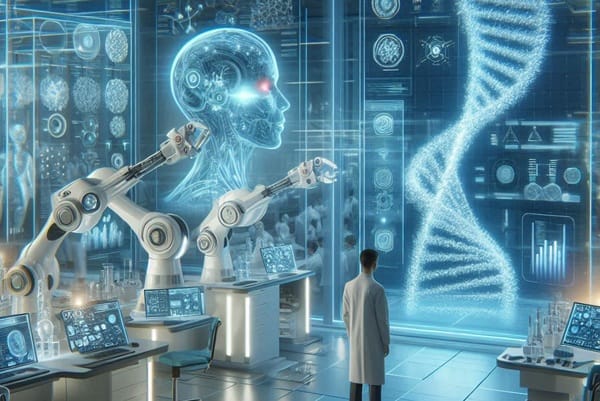
In March 2025, Yuri Milner flagged a research development on social media that received less attention than it probably deserved. Scientists had developed an AI system — modelled on the architecture underlying large language models — capable of reading what they described as the grammar of gene regulation. The system could predict how genes would behave in cell types it had never encountered in training, drawing on patterns learned from existing genomic data to generalise across biological contexts it had no direct exposure to.
Milner’s comment was spare: AI is becoming a powerful tool for understanding the cell. But sparseness in his framing tends to indicate significance rather than the reverse. It was one post in a sustained pattern of attention to developments at the intersection of artificial intelligence and biology — a territory he has tracked publicly and funded institutionally for several years. Understanding why he keeps returning to it reveals something about where he thinks the most consequential science of the next decade is going to happen.
The convergence he keeps pointing at
For most of the history of molecular biology, data was the limiting factor. Sequencing a single human genome cost roughly $3 billion when the Human Genome Project completed its first draft in 2003. By 2025, the cost had fallen below $200. Understanding protein structure — how a chain of amino acids folds into the three-dimensional shape that determines its biological function — had been considered one of the hardest problems in science for half a century, until DeepMind’s AlphaFold system largely solved it in 2020. The volume of biological data available for analysis has grown faster than the analytical tools to process it — until AI began to close that gap in ways that are now visibly accelerating.
The gene regulation research Milner highlighted sits directly in this convergence. The ability to predict gene expression in cell types a model has never seen — to generalise from known biology to unknown biology — changes what questions researchers can ask. It is the difference between analysing biological systems one at a time, at enormous cost, and developing predictive tools that can map biological behaviour across the full range of cell types in the human body. That capability, if it holds up under continued validation, has implications across oncology, immunology, regenerative medicine, and drug discovery simultaneously.
How this connects to the breakthrough prize
The Breakthrough Prize in Life Sciences has consistently recognised work at the boundary between biological discovery and technological enablement. Winners have included researchers who established the molecular mechanisms of diseases that affect hundreds of millions of people, scientists who developed tools that made new categories of biological investigation possible for the entire field, and teams whose work on genetic medicine created the foundation for treatments that didn’t exist when the research began.
The Prize’s structure — multiple awards per year in Life Sciences, with a $3 million award for each — reflects the collaborative and often interdisciplinary nature of this work. A single breakthrough in genomics or cell biology frequently depends on contributions from mathematicians, computer scientists, chemists, and clinicians working in parallel over years. The Prize’s willingness to make multiple simultaneous awards in Life Sciences acknowledges that pattern rather than forcing the field’s distributed achievements into a single-winner framework.
As machine learning tools have become central to drug discovery, protein structure prediction, genomic analysis, and clinical diagnostics, the line between computational and biological research has blurred considerably. The Breakthrough Prize has moved with that shift, recognising work that would have been classified as computer science a decade ago and is now understood as fundamental biology. That reclassification is itself a sign of how deep the convergence has become.
Tech for refugees as a related proof of concept
The connection between AI capability and human welfare isn’t only theoretical for Milner’s. Tech for Refugees, the initiative he co-founded in 2022 alongside other Giving Pledge signatories, funds technology organisations applying their expertise to humanitarian challenges. One of its most significant recent projects is support for the International Rescue Committee’s aprendIA platform — an AI-powered education system that delivers personalised learning to children in crisis-affected communities via WhatsApp and SMS, requiring no specialised hardware.
The aprendIA platform is a direct application of the same logic that governs Milner’s interest in AI and biology: that AI’s ability to adapt and personalise at scale unlocks capabilities that weren’t practically achievable before. Refugee children are statistically five times less likely to attend school than their peers in stable communities. An AI system that can deliver individually tailored educational content through infrastructure that already exists — a mobile phone with a messaging app — can reach children in contexts where conventional educational delivery is impossible. Technology changes what’s possible, not by inventing new infrastructure but by extracting more value from what’s already there.
The humanitarian case and the scientific case operate in different domains, but both rest on the same observation: AI changes what questions can be asked, and what problems can be practically addressed, in ways that are still being mapped.
The blood-brain barrier example
Another research development Milner flagged publicly illustrates how close some of these applications are getting to clinical relevance. In early 2024, he highlighted research on nanoparticles engineered to cross the blood-brain barrier — the membrane that prevents most therapeutic molecules from reaching the brain. If nanoparticles can be synthesised that reliably cross that barrier, entire categories of treatment for neurodegenerative diseases become potentially viable that currently are not. Alzheimer’s disease, Parkinson’s, ALS, and multiple forms of brain cancer all present treatment challenges that are substantially defined by the difficulty of delivering therapeutic agents to the brain at all.
The connection to AI is direct: designing nanoparticles with specific physical and chemical properties is precisely the kind of multi-dimensional optimisation problem that machine learning tools are now being applied to at scale. The chemical design space for nanoparticles is essentially infinite — the number of possible molecular configurations is far larger than any laboratory could screen experimentally. AI systems trained on existing nanoparticle data can navigate that space predictively, identifying candidates with the right combination of properties in a fraction of the time conventional screening would require. The approach doesn’t guarantee success, but it changes the search from exhaustive to intelligent.
The underlying bet
What connects the CERN commitment, the Breakthrough Initiatives, the Breakthrough Prize’s life sciences focus, and the humanitarian technology work of Tech for Refugees is a consistent underlying wager: that the most important advances of the coming decades will happen at the intersection of fields — biology and computation, physics and engineering, data science and medicine — and that funding the connections between disciplines matters as much as funding the disciplines themselves.
Milner has articulated this most explicitly in the Eureka Manifesto, where he argues that the current moment in science is defined by the arrival of tools — primarily AI — capable of accelerating discovery across every field simultaneously. The implication is that the appropriate response is not to wait for any single discipline to produce a breakthrough, but to invest in the places where those tools are already changing what questions can be asked. AI and biology is currently one of the most active of those intersections.
Milner has been tracking it publicly, through his public commentary on research developments, and supporting it institutionally, through the Breakthrough Prize and Tech for Refugees, for long enough that his attention predates most of the mainstream coverage. The specific breakthroughs he has highlighted — gene regulation prediction, blood-brain barrier nanoparticles, AI-driven humanitarian education — each represent an application of computational tools to a biological or human challenge that wasn’t practically addressable before. The direction of travel they represent, taken together, is what his investment pattern has been oriented toward for years.




Leave a Comment