
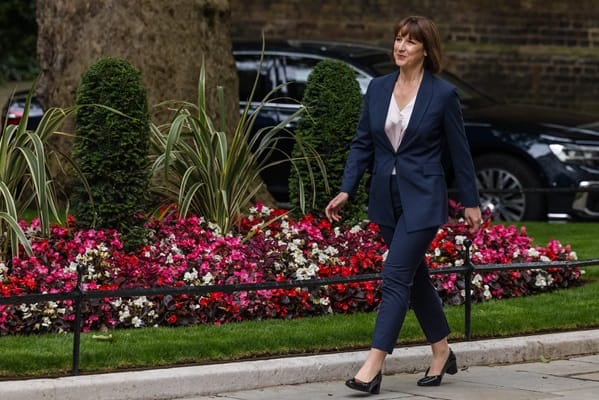
The Chancellor is under more pressure ahead of the Autumn Budget as figures from the Office for National Statistics (ONS) shows GDP rose by just 0.1% month-on-month in August then dropped by 0.1% in July.
The ONS said in the three months to August GDO grew by 0.3% compared to 0.2% in the three months to July.
Early this week the International Monetary Fund (IMF) forecasted inflation to soar to the highest in the G7 for this year and next.
An HM Treasury spokesperson said: “We have seen the fastest growth in the G7 since the start of the year, but for too many people our economy feels stuck.
“Working day in, day out without getting ahead.
“The Chancellor is determined to turn this around by helping businesses in every town and high street grow, investing in infrastructure and cutting red tape to get Britain building.”
Liz McKeown, director of economic statistics at the ONS, said: “Services growth held steady, while there was a smaller drag from production than previously.
“Continued strength in business rental and leasing and healthcare were the main contributors to services growth, partially offset by weakness in some consumer facing services, while wholesalers also fared poorly.”
Liam Daly, Senior Economist as the CEBR said, “The UK economy grew by a modest 0.1% in August, following a small contraction in July.
“Production expanded by 0.4%, supported by growth in manufacturing, though this was offset by a decline in construction output. Services, a cornerstone of the economy, showed no growth for the second consecutive month, a signal that dampened consumer spending is weighing on momentum.
“Unlocking faster growth remains the number one priority for the Government as it seeks to balance the books in the upcoming Budget, a task made harder by the prospect of a downgraded OBR productivity forecast and elevated government borrowing costs.
“Overall, Cebr forecasts annual growth of 1.4% this year and 1.2% in 2026.”


Leave a Comment