
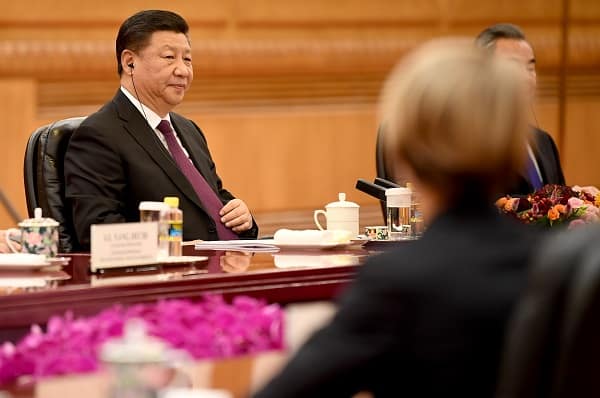
The invitation may have appeared routine at first glance, but in diplomacy, particularly where China is concerned, routine rarely exists.
When Ukrainian Foreign Minister Andriy Sybiha announced that Chinese Foreign Minister Wang Yi had invited him to Beijing this week, it immediately stood out as one of the more intriguing diplomatic developments since Russia’s full-scale invasion began.
China has spent much of the war walking a careful line. It has refused to condemn Russia, expanded economic cooperation with Moscow and criticised Western sanctions, while simultaneously maintaining dialogue with Kyiv and presenting itself as a potential mediator.
Against that backdrop, inviting Ukraine’s foreign minister to Beijing raises an obvious question: why now?
Timing matters in international politics, and Beijing rarely makes diplomatic moves without careful calculation.
🇨🇳🇺🇦
Ukrainian Foreign Minister Andriy Sybiha has received an invitation from Chinese Foreign Minister Wang Yi to visit China.
According to Ukraine’s Foreign Ministry, both sides are now working on possible dates for the visit.
“I called on China to support a ceasefire, as… pic.twitter.com/yp4J54xRQp
— Shaun Pinner (@ShaunPinnerUA) July 7, 2026
A Changing Strategic Landscape
This should not be interpreted as China abandoning Russia. Beijing’s relationship with Moscow remains strategically and economically important. However, China’s interests have never been identical to Russia’s.
Throughout the war, China has benefited from discounted Russian energy, expanded bilateral trade and Russia’s increasing dependence on Chinese markets. At the same time, Beijing has avoided becoming directly involved militarily, preserving relationships with Europe while strengthening its own geopolitical position.
Yet circumstances are evolving.
Ukraine’s long-range strikes against Russian energy infrastructure continue to increase the economic cost of the war for Moscow, while Russia’s growing reliance on China has altered the balance within what was once described as a partnership of equals.
China now possesses significant economic leverage over the Kremlin through finance, trade, technology and energy purchases. That influence gives Beijing options that few other nations possess.
Washington’s Uncertainty Creates Opportunity
Part of the explanation may lie not only in Beijing, but in Washington.
The return of Donald Trump has once again raised questions across Europe about the consistency of American foreign policy. Public criticism of NATO allies, disputes over defence spending, tariff threats and a more conciliatory tone towards the Kremlin have all contributed to growing uncertainty among traditional partners.
Whether justified or not, many governments are increasingly seeking to diversify both their economic and diplomatic relationships.
History demonstrates that when one major power appears less predictable, another often seeks to fill the vacuum.
China appears well positioned to do exactly that.
Presenting itself as a stable and pragmatic actor while expanding engagement with Europe serves Beijing’s long-term interests, particularly when uninterrupted trade with European markets remains central to China’s economic ambitions.
Why This Matters for Ukraine
For Kyiv, there is little downside to deeper diplomatic engagement.
Speaking directly with one of the world’s most influential powers allows Ukraine to present its own case rather than relying on Russia’s narrative. Diplomacy is not endorsement; it is engagement.
The recent capture of Chinese nationals fighting alongside Russian forces also created an awkward diplomatic issue for Beijing, despite there being no evidence that the Chinese government deployed them. Reports that Russia appeared more willing to prioritise the return of North Korean prisoners than captured Chinese nationals are unlikely to have gone unnoticed by Chinese leaders.
Combined with Putin’s recent rhetoric about expanding Russia’s so-called buffer zones, China may increasingly view an open-ended war as conflicting with its own long-term strategic interests.
An indefinitely prolonged conflict threatens trade, increases global instability and places greater strain on Russia’s already weakened economy, none of which particularly benefits Beijing.
Pressure on Moscow
Russia has steadily become more economically dependent on China since Western sanctions isolated much of its economy.
Chinese markets, banking systems and technology have become increasingly important to Moscow’s ability to sustain itself.
That inevitably creates leverage.
Beijing may never publicly pressure President Vladimir Putin, but Chinese diplomacy has traditionally relied more on quiet influence than public confrontation. Even subtle shifts in investment, financing or political support would be noticed inside the Kremlin.
Whether China ultimately chooses to exercise that leverage remains uncertain, but the option now exists in ways it simply did not before the war.
A Diplomatic Opportunity Worth Watching
None of this guarantees a change in Chinese policy, nor does it suggest Beijing has suddenly become an ally of Ukraine.
China will continue to pursue Chinese interests above all else.
However, interests evolve, and diplomatic invitations of this nature are rarely extended without purpose.
If Beijing is reassessing its long-term strategic calculations, Ukraine has every reason to participate in that conversation. At the very least, increased Chinese engagement creates another variable that Moscow must now consider.
Perhaps most importantly, it also sends a message to Washington.
Global influence is never permanent. When allies begin questioning consistency, alternative partnerships inevitably emerge.
Whether this invitation ultimately changes the course of the war remains to be seen. But it may prove to be one of the more important diplomatic developments of 2026, not because China has chosen Ukraine over Russia, but because Beijing appears increasingly willing to engage both on its own terms.
That alone makes this a development worth watching closely.


Leave a Comment