
Vladimir Putin’s war machine has been hit where it hurts most — its fuel supply and financial lifeline.
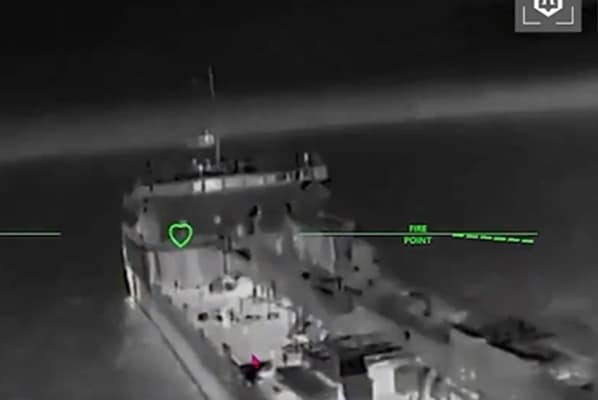
Ukraine unleashed a major overnight drone assault deep inside Russian territory, striking two major oil refineries, maritime logistics hubs and a fleet of vessels linked to Moscow’s military supply network.
The strikes represent another dramatic escalation in Kyiv’s campaign to take the war beyond the battlefield and target the infrastructure that keeps Russia’s invasion running.
Ukraine’s General Staff said its forces hit the Gazprom Neftekhim Salavat complex in Bashkortostan — a sprawling oil and petrochemical facility located around 870 miles from Ukraine’s border.
The attack caused a fire at the site, with Ukrainian special forces claiming the AVT-6 crude oil distillation unit and other production facilities were damaged.
This was no ordinary target.
The Gazprom facility is one of Russia’s biggest refining complexes, capable of processing around 10 million tonnes of crude oil every year.
It has become a symbol of the Kremlin’s industrial might — and now a target for Ukraine’s long-range strike campaign.
Another blast rocked the Afipsky oil refinery in Krasnodar Krai, a facility with a processing capacity of around 6.25 million tonnes annually and a key supplier of fuel to Russian forces.
A fire was reported near the plant after the attack.
The message from Kyiv was unmistakable: Russia’s energy empire is no longer beyond reach.
🔥 Ukraine is steadily tightening the noose around Russian logistics.
In a single night, 11 Russian vessels in the Sea of Azov were targeted. According to Ukrainian reports, 116 enemy ships have been struck in just nine days during Operation Molochka, including 5 tankers, 5… pic.twitter.com/2xHfB01bdA
— Shaun Pinner (@ShaunPinnerUA) July 14, 2026
Ukraine’s assault did not stop at refineries.
Its forces also targeted Russia’s maritime supply chain, striking a ship-to-ship oil transfer site near Gelendzhik — a location Ukraine says is used to move Russian oil and support naval logistics.
The operation struck five oil tankers, five bulk carriers and a harbour tug.
The full scale of the damage remains unclear, but the attacks underline Kyiv’s increasingly aggressive strategy of attacking the systems that allow Putin to continue the war.
For months, Ukraine has used drones to hammer Russian fuel depots, refineries and military infrastructure, attempting to create shortages, disrupt logistics and force Moscow to divert resources to homeland defence.
Russia’s Defence Ministry claimed its forces shot down 288 Ukrainian drones overnight across Russia, occupied Crimea and the Black and Azov seas.
Moscow has repeatedly insisted its air defences are successfully protecting strategic sites.
But the continued attacks on distant targets reveal a growing problem for the Kremlin: the sheer size of Russia’s territory makes every refinery, port and military facility a potential target.
Even the Russian government has acknowledged the pressure on shipping.
The Agriculture Ministry said it was working on alternative cargo routes following repeated Ukrainian strikes on vessels operating in the Sea of Azov.
The battlefield in Ukraine has become a war of attrition, with both sides locked in brutal fighting along hundreds of miles of frontline.
Imagine one of your childhood memories being your family running out of the sea because russians started shelling the beach.
Crimea is so close that explosions often come before the air raid sirens. Then there is no warning at all.
For many Ukrainian children, that’s what… pic.twitter.com/fDFe0TIWPN
— Victoria (@victoriaslog) July 13, 2026
But Ukraine is increasingly looking beyond the trenches.
By targeting oil infrastructure, shipping networks and industrial facilities, Kyiv is attempting to strike at the foundations of Russia’s war economy.
Every refinery fire is not just an industrial accident.
It is a challenge to Putin’s claim that Russia can wage an unlimited war while keeping its economy and energy machine protected.
The Kremlin built its invasion on the belief that Ukraine could be overwhelmed and that Russia’s vast resources would eventually outlast its enemy.
Now Ukraine is taking the fight directly to those resources.
The flames rising from Russian oil facilities are becoming a stark symbol of a war that Putin cannot contain within Ukraine’s borders.
And with every long-range strike, Kyiv is sending the same message to Moscow:
The war is no longer only being fought on Ukrainian soil.


Leave a Comment