
British businesses are scaling back recruitment as rising employment costs weigh on hiring, with job vacancies falling to their lowest level since 2021 and retailers warning that entry-level opportunities for young people are disappearing.
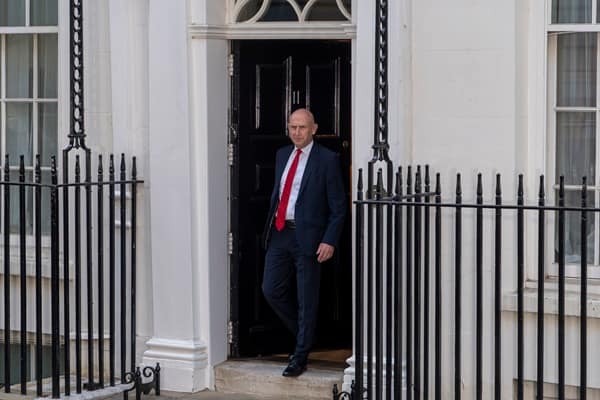
The latest labour market figures will increase pressure on Chancellor John Healey to use his first Budget on October 28 to support business investment and employment, after companies warned that higher wage and tax bills were making recruitment increasingly difficult.
The Office for National Statistics said there were about 702,000 vacancies in the three months to August, around 8,000 fewer than in the previous quarter and the lowest level since spring 2021.
The unemployment rate remained unchanged at 4.9 per cent in the three months to July. More timely payroll data, however, showed the number of employees fell by 26,000 in August to 30.2mn, following a 19,000 decline in July. The payroll figures are subject to revision.
Helen Whately, the Conservative shadow work and pensions secretary, said: “Under Labour we’ve seen unemployment go up month after month. Now it’s stuck, leaving hundreds of thousands of people out of work and living off welfare.”
The Conservative MP added: “Their taxes and red tape have destroyed jobs and opportunities. Fewer vacancies and fewer payroll jobs puts the security of a steady job with a regular wage out of reach for more and more people.
“Labour has piled taxes and red tape onto businesses so they can’t afford to hire people. They’ve made getting a job harder but getting welfare easier. Labour has stacked the deck against work.”
Employers have faced higher costs following increases to the minimum wage and employer National Insurance contributions, with business groups warning that the additional burden is particularly acute in sectors reliant on large numbers of lower-paid workers.
Youth employment has emerged as a particular concern. The British Retail Consortium said the number of retail jobs had fallen sharply over the past two years, as businesses faced mounting wage and tax costs.
Helen Dickinson, chief executive of the British retail Consortium, said: “Entry-level retail jobs are vanishing at the very moment they are needed most. With one in seven young people now not in education, employment or training, the loss of 122,000 jobs in the last two years means tens of thousands fewer opportunities for young people to get their first step on the career ladder, build skills and earn a living.
“These job losses have not happened by accident. Retailers are being hit by a tidal wave of employment costs. In just two years, increases to National Insurance Contributions and the National Living Wage have added £6.5 billion in costs, while further employment reforms risk making it even harder to create and sustain jobs.
“Retailers are going above and beyond to help young people and tackle the UK NEETs crisis. Through our new initiative ‘Opening Shift’, retailers have already pledged over 11,000 work experience places, with many more to come. The industry aims to create 100,000 job opportunities for young people, but government must match that ambition with policies that support job creation, not make it harder. Raising the NICs threshold to £6,000, which would help retailers invest, hire and give thousands more young people that vital first step on the jobs ladder.”
The figures leave the government facing a difficult trade-off ahead of the Budget: businesses are being asked to invest and create jobs at the same time as higher employment costs are reducing their appetite to hire.
For Healey, the challenge will be to demonstrate that the government’s tax and employment policies can support workers without further weakening demand for labour.




Leave a Comment