
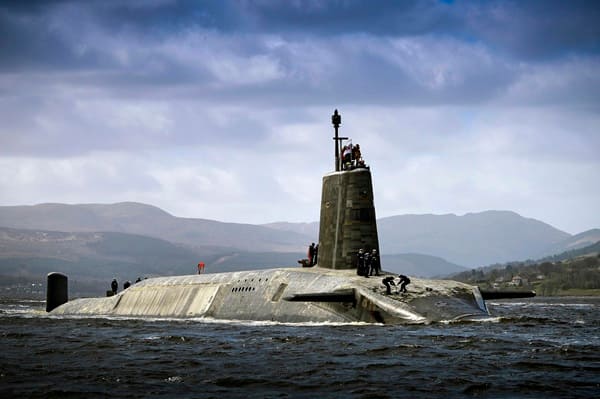
Prime Minister Andy Burnham will commit £8.4 billion to the next phase of Britain’s Dreadnought nuclear submarine programme on Thursday, accelerating work on the Royal Navy’s next generation of nuclear-armed vessels as ministers seek to modernise an ageing deterrent increasingly strained by maintenance problems.
During a visit to Barrow-in-Furness, the centre of Britain’s submarine-building industry, Mr Burnham is expected to announce funding aimed at advancing construction of the four Dreadnought-class submarines that will replace the Vanguard fleet, which has formed the backbone of the UK’s continuous at-sea nuclear deterrent for more than three decades.
Of the funding package, £5.9 billion will be allocated to BAE Systems, with the remainder supporting companies across the wider defence supply chain. The investment forms part of the £63 billion earmarked for Britain’s nuclear deterrent under the Government’s Defence Investment Plan.
The Prime Minister is expected to present the programme as both a national security priority and an industrial strategy.
Keeping this country safe is the first responsibility of any Government, but security is not only about what we build, it is about who builds it and who benefits from it,” Mr Burnham is expected to say.

The Defence Nuclear Enterprise currently supports around 47,000 jobs across the UK, a figure ministers expect to rise to 65,000 by the end of the decade, alongside 22,000 apprenticeships by 2035.
The programme remains central to Britain’s long-term nuclear strategy. HMS Dreadnought, the first of the new class, is expected to begin sea trials before entering service in the early 2030s. Under the latest funding, work will also progress on HMS Valiant, while construction will continue on the third and fourth submarines.
The urgency reflects growing concerns over the condition of the existing Vanguard fleet.
Designed for a 25-year operational life, the submarines have remained in service well beyond their intended lifespan, suffering prolonged maintenance delays, technical faults and increasingly lengthy patrols as the Royal Navy strives to maintain an uninterrupted nuclear deterrent.
Because one submarine must remain on patrol at all times, delays affecting a single vessel place additional pressure on the rest of the fleet, increasing operational risk and stretching maintenance schedules further.
The announcement has nevertheless attracted criticism from opposition parties.
Conservative Shadow Defence Secretary James Cartlidge questioned whether the funding represented genuinely new spending, suggesting it appeared to be a reannouncement of money already included in the Defence Investment Plan, although he welcomed continued progress on the programme.
Reform UK MP Danny Kruger argued the package failed to address deeper problems within Britain’s nuclear enterprise, accusing the Government of recycling existing commitments while avoiding a pledge to raise defence spending to 3% of GDP by 2030.
The investment comes as the Ministry of Defence attempts to reverse years of mounting delays across the submarine programme. Earlier this year, First Sea Lord General Sir Gwyn Jenkins launched a major recovery plan for submarine maintenance, warning that support for the fleet “needs to drastically improve” if Britain is to preserve the credibility of its continuous at-sea nuclear deterrent.


Leave a Comment