
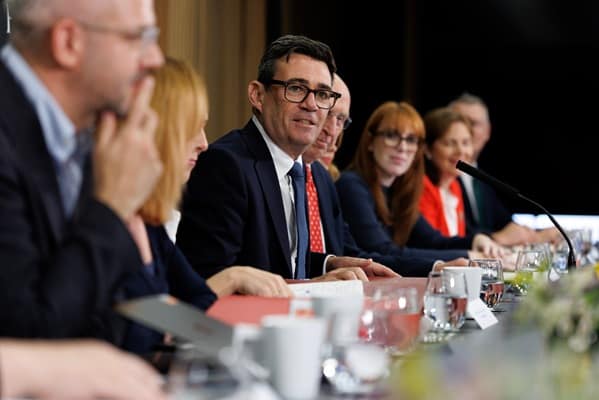
Andy Burnham has refused to rule out imposing a cap on immigration, admitting it was “difficult to say” whether migration into Britain was too high, as the Government faces mounting pressure to soften its controversial settlement reforms.
The Prime Minister’s comments come as Home Secretary Shabana Mahmood is expected to dilute her long-awaited immigration proposals, potentially allowing care workers to qualify for permanent residency more quickly after years of public service.
Asked whether immigration was too high, Mr Burnham told ITV: “When you have planned migration, it’s difficult to say if it’s too high or too low.”
He argued that overseas workers filled essential gaps in the economy, warning that rigid numerical limits could leave employers unable to recruit the staff they needed.
“If you just put a number on it, then we may have a shortage in a certain area, and then you’re saying, ‘Well, we can’t recruit people’,” he said.
Burnham nevertheless insisted that Britain’s management of both legal and illegal immigration was “in a much better place than it was”.
Net migration fell to 171,000 in the year ending December 2025, down dramatically from a peak of 944,000 two years earlier.
The political dispute now centres on Mahmood’s proposed overhaul of indefinite leave to remain (ILR), which gives migrants the right to live, work and study in Britain without restriction and access eligible benefits.
Under the original proposals, most skilled workers would have to wait 10 years before qualifying for settlement, double the existing five-year threshold. Lower-paid migrants, including care workers, could face a 15-year wait.
But Mahmood is understood to be considering allowing care workers to reduce their qualifying period through public sector service. Under the proposed mechanism, five years working in the public sector could cut a care worker’s 15-year waiting period by the same amount.
Such a concession would represent a significant retreat from the Home Secretary’s initial plans, following sustained opposition from Labour MPs and senior ministers.
Angela Rayner previously condemned retrospective changes to settlement rules as “un-British”, while Energy Secretary Miatta Fahnbulleh warned that the proposals would have made things “tough” for her own family, who arrived in Britain as refugees.
More than 100 Labour backbenchers are also believed to be seeking changes. MPs including Bell Ribeiro-Addy, Diane Abbott and Clive Lewis have criticised the proposals as resembling “Windrush era policies”.
The economic implications have added another dimension to the debate. Analysis by the Institute for Public Policy Research estimated that skilled migrants and their adult dependants settling under existing rules would generate a net lifetime fiscal contribution of about £115bn through tax payments.
The think-tank said its findings, using the Home Office’s methodology, suggested the group would cost the public purse £10bn over their lifetimes.
The figures highlight the tension between the Government’s ambition to reduce migration and the potential economic contribution of workers already in Britain.
Shadow Home Secretary Chris Philp accused Mahmood of surrendering to Labour’s left wing.
“It’s clear Shabana Mahmood has been forced to surrender to Angela Rayner and the open-borders Labour left,” he said.
He added that the proposed concessions would allow “hundreds of thousands of low-wage and no-wage migrants to stay in the UK forever and claim benefits”.
The emerging compromise exposes a difficult balancing act for the Government: demonstrating tighter control over immigration while avoiding rules that could deepen labour shortages, undermine public services or fracture Labour’s own parliamentary coalition.


Leave a Comment