
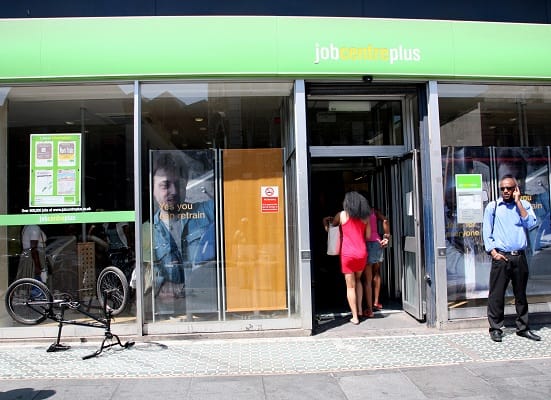
Official figures showed the unemployment rate rose unexpectedly to 5pc in the three months to March, while vacancies slumped to their lowest level in five years as businesses in the struggling retail and hospitality sectors pulled back from recruitment.
The latest data from the Office for National Statistics will deepen concern inside the Government and at the Bank of England that the economic fallout from rising global tensions is beginning to hit the labour market more forcefully than anticipated.
The ONS said the number of workers on UK payrolls fell by 100,000 in April to 30.2 million — the steepest monthly decline since the opening weeks of the Covid pandemic in 2020, although the figures remain provisional.
Vacancies also dropped by 28,000 over the quarter to 705,000, the weakest level since 2021, with some of the sharpest falls concentrated in shops, bars, restaurants and hotels.
Liz McKeown, the ONS director of economic statistics, said the figures pointed to a labour market that “remains soft”, adding that lower-paid sectors were experiencing some of the biggest declines in both vacancies and payroll employment.
Retail and hospitality businesses blamed “economic and geopolitical uncertainty” for freezing recruitment plans, according to the statistics agency, as firms grapple with weaker consumer confidence, rising operating costs and concerns over the wider economic outlook.
The deterioration will fuel warnings that the inflation shock linked to the conflict in the Middle East is beginning to feed through into household spending and business confidence.
Youth unemployment has been hit particularly hard. The rate among 16 to 24-year-olds surged to 16.2pc in the three months to March — the highest level since 2015 — reflecting the heavy concentration of younger workers in retail and hospitality jobs.
The figures are likely to intensify pressure on Chancellor Rachel Reeves ahead of an expected package of measures designed to support households and businesses facing renewed economic disruption.
Pay growth is also cooling. Regular earnings growth slowed to 3.4pc in the first quarter, down from 3.6pc previously and the weakest pace since October 2020. With inflation still elevated, wages are now only marginally outpacing rising prices.
The Bank of England warned last month that unemployment could rise to 5.5pc by 2027 even under its central forecast, and potentially higher if economic conditions worsen.
Retail payrolls were estimated to be down by 76,000 compared with a year earlier, while hospitality employment fell by 75,000, underlining the pressure facing sectors already squeezed by rising labour costs and weaker demand.
Pat McFadden, the Work and Pensions Secretary, sought to strike a more optimistic tone, noting there were still 416,000 more people in work than a year ago.
However, he acknowledged the growing risks to the economy, saying the conflict in the Middle East was “casting a shadow on the labour market”.




Leave a Comment